
Mirepa Investment Advisors had to do a lot of groundwork to raise its maiden impact fund, which backs enterprises that are too large for grants but still considered too early for commercial investors or mainstream private equity and venture capital investors.
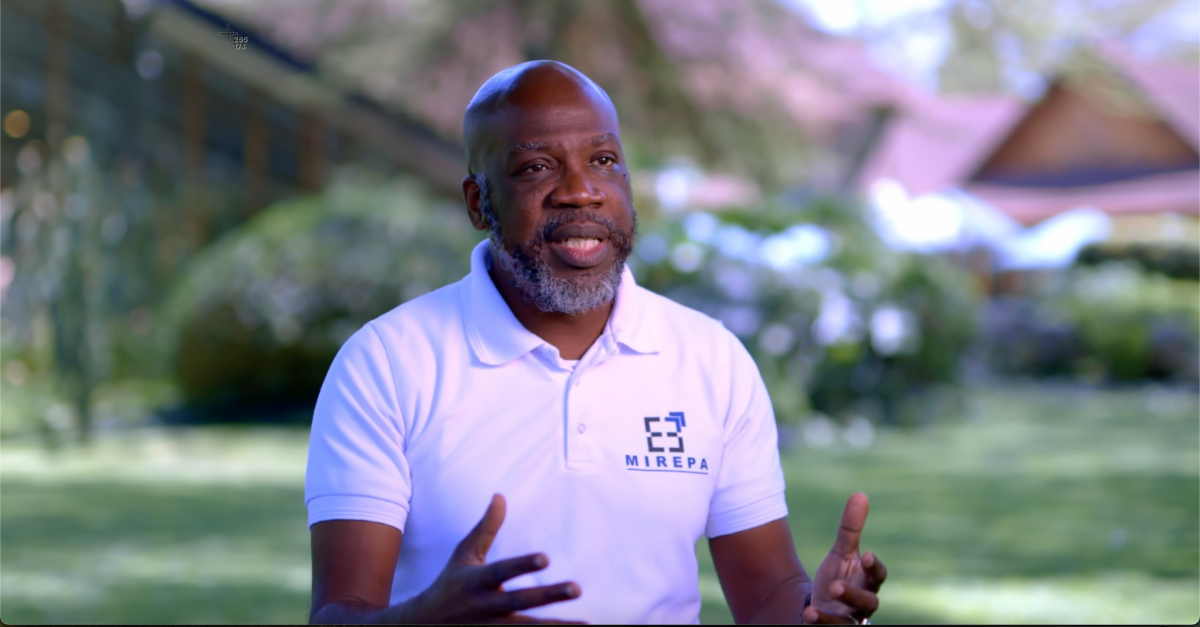
“We had to get the regulator to understand what we do. We had to get the pension funds involved,” Mirepa’s Samuel Yeboah explains in a video interview with ImpactAlpha, part of the series “Pathways to Growth,” produced with the Collaborative for Frontier Finance.
To engage with financial regulators and help them understand and legitimize private equity as an asset class, Mirepa worked through bodies like the Ghana Venture Capital and Private Equity Association and Impact Investing Ghana to collectively advocate for supportive government policies and institutional capital allocation.
“We realized very quickly it couldn’t work if just one private equity or venture capital fund manager was engaging,” Yeboah says.
Yeboah sought to mitigate currency risk by targeting export-oriented companies or those that already earn foreign exchange as suppliers to multinationals. Its goal is to keep the fund’s returns from shrinking due to currency depreciation, as had been witnessed in Ghana due its sovereign debt.
The silver lining to the government’s debt crisis and subsequent default in 2022 is that it encouraged pensions to turn to alternative asset classes instead of just banking on government bonds. But Mirepa still had to nail down those commitments and close the fund. He pulled together local pension funds, asset managers and a venture capital fund of funds backed by the government of Ghana.
The fundraising climate has rarely been tougher. Yeboah has persisted to reach a final close, with 90% of that financing coming from local capital providers and pension funds in Ghana.
“No foreign investor. No external investor,” Yeboah boasted. “For us, that’s pretty significant. It demonstrates that we actually can mobilize capital locally.”
Growth capital
Global investors still have a role to play in financing growing businesses in emerging markets. This week, Switzerland’s SECO Startup Fund relaunched with $6.3 million to provide debt financing for post-revenue businesses in Africa, Asia and Latin America. Singapore-based Circulate Capital’s Latin America and Caribbean closed at $75.8 million with commitments from the LATAM Impact Fund, Heading for Change and others to back plastic recycling companies.
For Africa’s pension funds, the pitch that appears to be working is that investments in growing small businesses create jobs and that means new savers for the pension funds themselves. (see, “Ugandan pension fund is creating new savers with investments in small business and agriculture (video).”
“Pension funds actually benefit from pension contributions that come from the jobs created as a result of our investments,” Yeboah says.
Yeboah’s investment thesis was born of his experience in building a startup, leading its commercial strategy and helping it attract capital from chip manufacturer Intel. After exiting with nearly six times his input, he turned to investing in Ghanaian small and medium-sized businesses with growth potential. (for additional background, see; Samuel Yeboah, Mirepa Investment Advisors: Helping Africans invest in Africa).
As he set out to help other companies attract funding, he realized the startup ecosystem lacked the growth capital to replicate his success.
“I quickly realized that the capital wasn’t there,” he said. “So essentially we were shepherding these companies off a cliff.”
Mirepa is taking stakes in local exporters as well as small and medium-sized firms in agribusiness, education, financial services, healthcare and business services, with check sizes of half a million to around $2 million.
Mirepa has been quick with its deployment and is looking at investing 70% of its capital by the end of this year. Last year, it invested in Wami Agro, a company that aggregates produce from farmers and sells them to international markets, alongside providing them with credit, inputs and agronomic advice. It also backed True Moringa, a supplier of moringa-based natural skincare and wellness products to the US, Asian, and European markets.
Mirepa is already registering its second fund, to be denominated in dollars instead of the Ghanaian cedi. It will build on its predecessor’s track record of already delivering significant returns in foreign currency. Mirepa is working with GVCA to launch a fund manager development program to address the needs of first-time African fund managers.
“The pressure is on us to actually show some very good results, so that it gives the local investors some comfort and confidence that, despite the fact that this asset class has inherent risk, it is worth doing because the upside is exciting.”