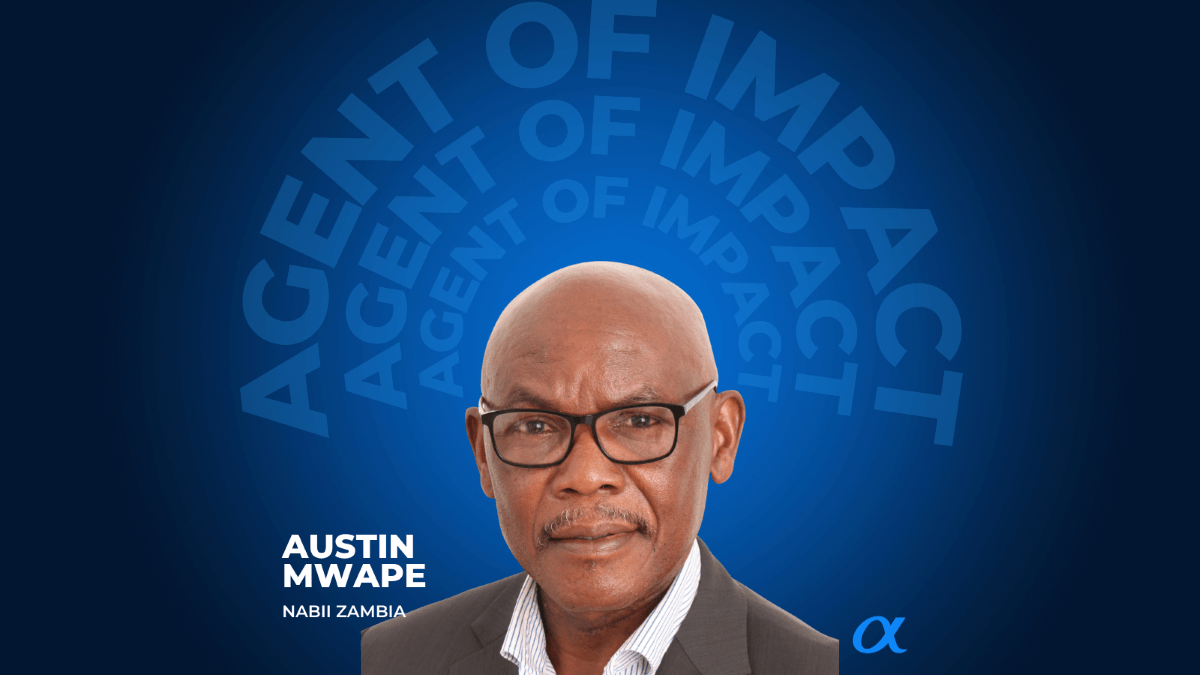

Austin Mwape learned the ins and outs of banking as the deputy governor of the Bank of Zambia and chair of both Absa Bank and Stanbic Bank in the country. Now with the Zambia National Advisory Board for Impact Investment, Mwape is working with his former colleagues at the central bank to unlock financing for small businesses while building a more supportive lending ecosystem.
Mwape is playing a leading role in the Small Business Growth Initiative, a partnership between the Bank of Zambia and Zambia’s national advisory board for impact investing. The fund of funds will make debt and other investments in lenders, fund managers and microfinance institutions enabling access to affordable financing for small businesses in the country (see, “African investors warm to regional funds of funds to finance small business growth“).
The central bank is seeding the funds with $200 million in first-loss debt to catalyze other investors to participate.
“Over time, we expect this to scale and start impacting the Sustainable Development Goals and other outcomes desired in a meaningful way,” Mwape told ImpactAlpha in a video interview produced in partnership with the Collaborative for Frontier Finance for our series, Pathways to Growth. “We expect job creation to go up and the contribution of this sector to GDP to go up.”
African pension funds and other institutional investors that have not historically invested in small businesses lack a deep understanding of the sector. The central bank’s first-loss position in the short-term debt pool is one way to mitigate the perceived risks for such investors.
SGBI is also setting up a credit guarantee fund with $175,000 from the Catalytic Capital Consortium to further derisk the vehicle. The guarantees will cover 40% to 80% of loans to incentivize lenders to take on more small business borrowers and to reduce collateral requirements for the small businesses, Mwape explained.
The fund of funds structure is informed by previous efforts to mobilize commercial capital for Zambia’s small businesses. The Bank of Zambia in 2020 set up a $545 million fund, known as the Targeted Medium-Term Refinancing Facility, to provide credit to both businesses and households reeling from shutdowns during the Covid pandemic.
“Even though that facility was provided, commercial banks did not change their behavior, and the outcomes that [the central bank] was hoping for were not attained,” said Mwape.
This time, SGBI is pairing its financing with a “learning lab” initiative to track loan disbursements and repayments in hopes of making credit more scalable and affordable.
“We need to start expanding,” Mwape said. “Expansion is what will generate jobs.”