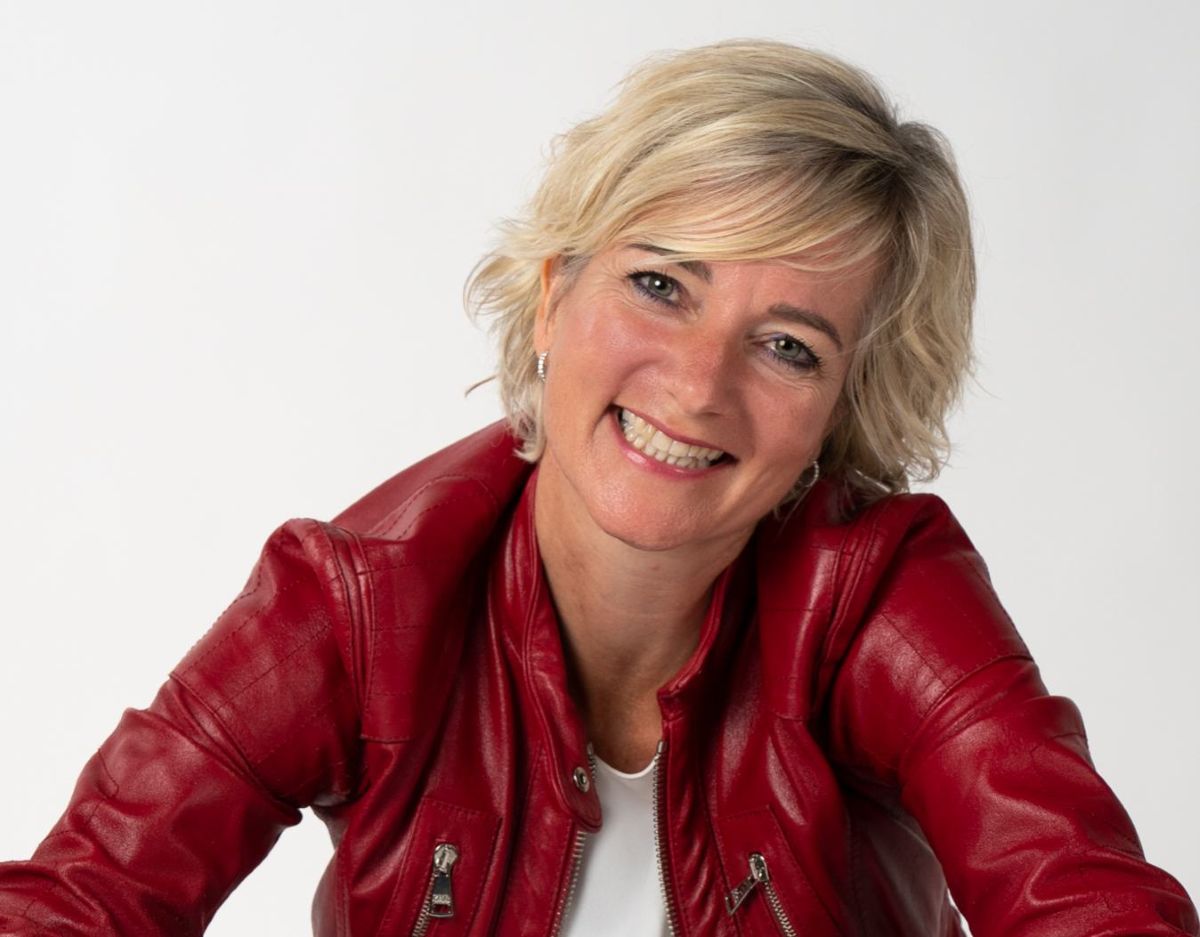

Maaike Doyer remembers walking into her university’s math program in the Netherlands and realizing she was one of only four women in the entire cohort.
It became a pattern she would see throughout her career, first at major accounting firms and later as an angel investor — experiences that led her four years ago to launch Epic Angels, one the world’s largest female-only investor networks.
“If we want to get more money to female founders, we simply need to change who the investor is,” she tells ImpactAlpha. The model breaks from convention: members can start with just $1,000 per investment.
The network curates monthly deal flow, runs joint due diligence where members pool expertise, and teaches women to get comfortable with early-stage uncertainty.
Old school.
After stepping off the partner trajectory — “it wasn’t my thing,” she says — Doyer joined a colleague to start Business Models Inc., a consulting firm that helped entrepreneurs turn rough ideas into companies. The two also co-authored Business Model Generation, a handbook that has sold over 4 million copies.
The work put Doyer at the center of Europe’s emerging startup ecosystem, where she helped design some of the continent’s first accelerator programs.
She was soon on the move, to San Francisco, where she began angel investing, and then to Singapore. The differences were stark: The Bay Area had small check opportunities, accessible deal flow, and educational opportunities. In Asia,
“Everything was extremely old school,” she says. Minimum ticket sizes were $50,000, and instead of white men dominating the angel ecosystem, it was Chinese men. Singapore has one of the highest percentages of female CEOs in the world, yet none of the executive women she met were angel investing.
New markets.
Doyer asked three friends to co-invest alongside her.
Six weeks later, the women made their first deal. More women asked to join. Then startups began reaching out directly.
Today, Epic Angels counts more than 750 members in Asia Pacific and in Latin America, where it recently expanded. The portfolio spans fintech to climate tech, including Colombia-based Muta, who helps companies track and source recycled materials, and Arogga, a healthtech platform based out of Bangeladesh.
Since moving to Latin America a few months ago, the nomadic Doyer has trained more than 220 women and closed five investments in Colombia, Mexico, and Peru.
Last week, the network backed Mexico-based BioPlaster Research, a women-led startup turning sargassum — the brown seaweed piling up on Caribbean coastlines — into biodegradable packaging materials.
“I always say to women, ‘It’s cheaper to put $10,000 in startups each year than to get an MBA,’” Doyer says, “‘and I guarantee you’ll learn more.’”