
Every emerging impact market has someone that spots it early. In Peru, that’s Luis Lira.
Two years ago, Lira launched Aliados de Impacto as Peru’s national advisory board on impact investing, joining the Global Steering Group for Impact Investment’s network of more than 50 countries.
Backed by Peru’s national development bank Corporación Financiera de Desarrollo (COFIDE), the Swiss State Secretariat for Economic Affairs (SECO) and the Canadian Embassy, the platform aims to promote impact investment in Peru through community building, education, policy creation and market development.
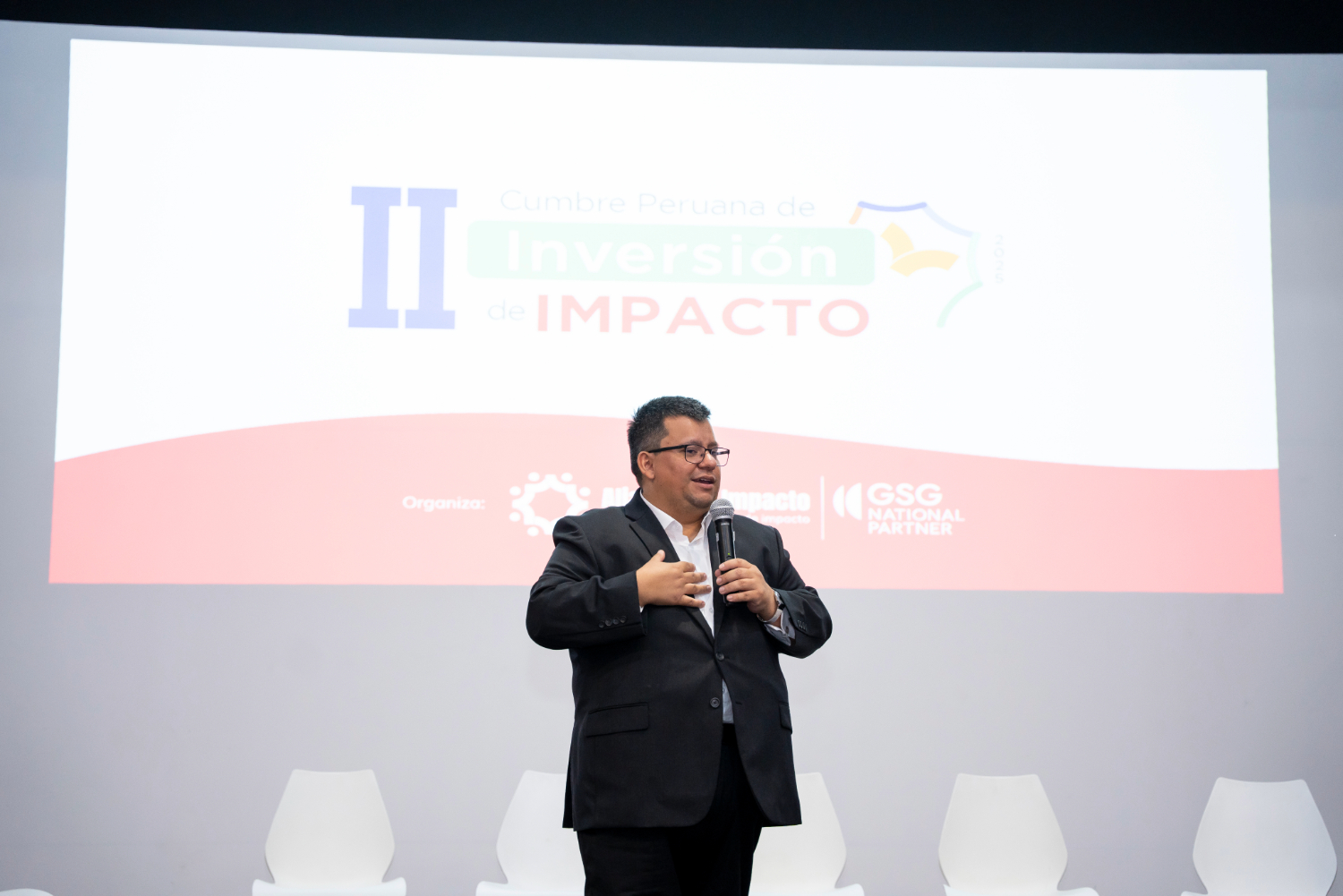
“We’re not just looking for returns on the economic side, but we’re also trying to cause an impact,” Lira told ImpactAlpha in a video interview at this month’s Peruvian Impact Investing Summit. “People that are investing in these types of [impact] businesses are what moves the needle here.”
The group’s third annual summit in Lima brought together fund managers, entrepreneurs and investors to discuss closing capital gaps in Peru’s impact economy. “We see Peru at the beginning of building an ecosystem, with opportunities to connect local funds with global sources of capital,” says Lira.
Financial inclusion
Lira sees financial inclusion as a key leverage point for impact capital. In Peru, he sees a robust network of entrepreneurs that lack the financial resources to scale. Lira wants to help elevate these.
“There are many companies right now in Peru that are merging technology with financial inclusion, bringing finance to over 6 million Peruvians that were not able to access financial institutions before.”
The challenge is scale – Aliados de Impacto positions itself as a conduit to help these entrepreneurs attract more capital by learning from global examples. Says Lira, “We’re bringing in examples from foundations, investors and corporations in other countries and showing how they could work in Peru – inspiring local companies to adapt and ‘tropicalize’ those models to the Peruvian context.”