
Eight years ago, 20 or so impact fund managers gathered at Harvard Business School to create a network for market-rate investment managers committed to positive social impact. Fund managers like DBL, Bridges and SJF Ventures were never a square fit with either impact-first networks or purely returns-seeking investment firms.
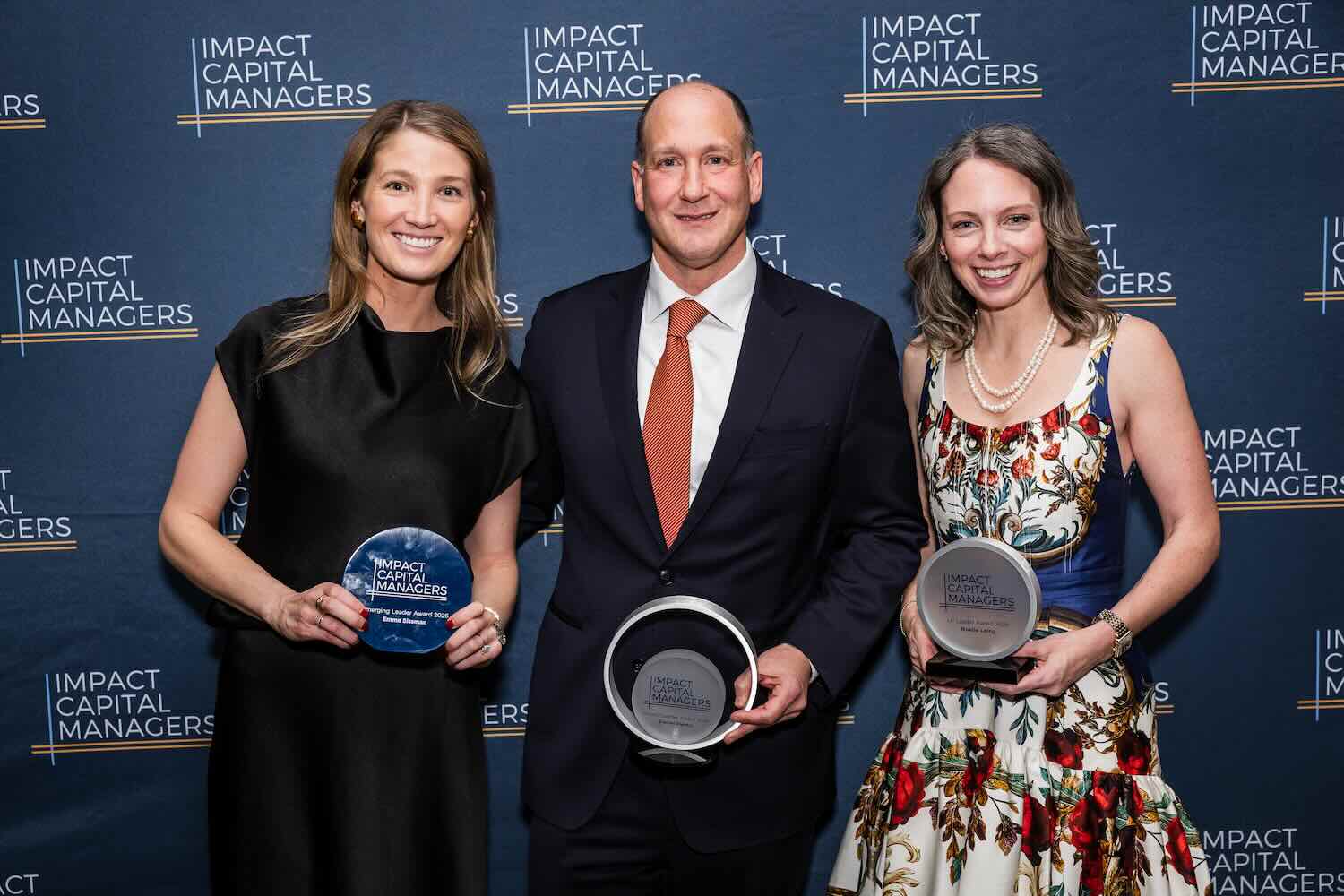
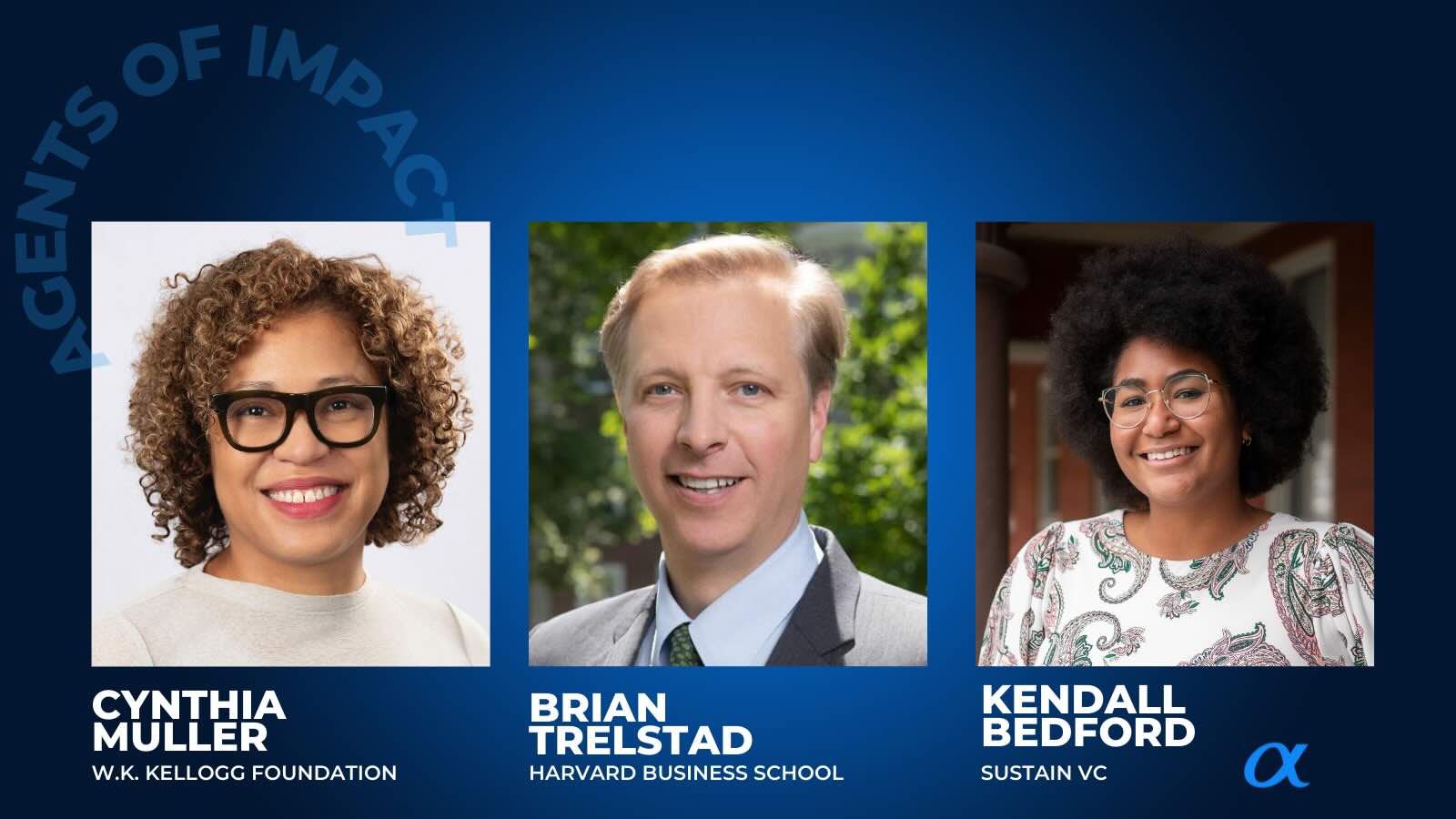
That meeting led to the creation of the Impact Capital Managers, an association of fund managers seeking “superior returns and meaningful impact.” Next month, the group will honor individuals that have been central to building the network—and the field. Brian Trelstad, a partner with Bridges’ US Sustainable Growth Fund, helped catalyze ICM and many other core impact institutions. Cynthia Muller of the W.K. Kellogg Foundation was one of its first funders and a trailblazer in broadening the scope of impact investments. Kendall Bedford, an associate at SustainVC, is this year’s “emerging leader” awardee.
As misperceptions around impact and financial performance have been put to rest by the track records of these early pioneers, ICM has grown to more than 140 members with $70 billion in assets under management.
The business case these managers have helped build will be critical in navigating an uncertain and sometimes hostile new landscape. ICM’s members will converge on Capitol Hill to press their case on March 18, ahead of the group’s awards gala.
Even in these uncertain times, “there are huge opportunities for private capital to step in and continue to finance solutions that really make a measurable difference in everyday people’s lives,” Bridges’ Trelstad tells ImpactAlpha.
Public goods
“All impact investing roads lead to – or from – Brian Trelstad,” says ICM’s Marieke Spence, in explaining why the group is honoring him.
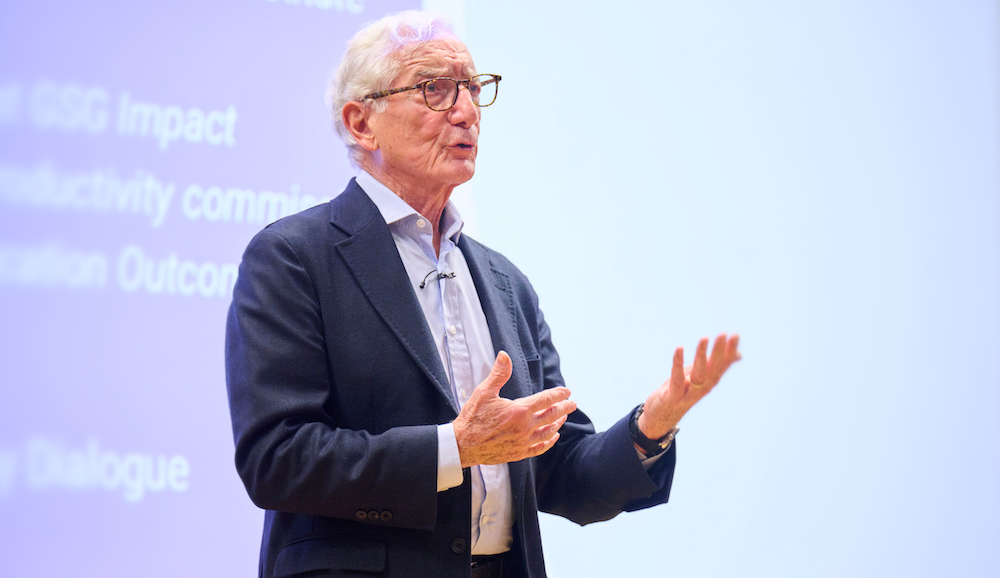
Trelstad has been instrumental in launching the Aspen Network of Development Entrepreneurs, the Turner MIINT, Impact Frontiers, and ICM, among other initiatives. “I’ve always had an eye towards seeing the public goods or collective actions that no single fund could address, but collectively we might be able to make progress towards developing,” he says. “I feel like this has been how I’ve connected with and given back to the field of impact investing as it has been emerging.”
With Bridges’s US fund fully invested and the majority of its investments sold, Trelstad is spending more time teaching at Harvard Business School, where he is a senior lecturer and faculty chair of the Advanced Leadership Initiative. (He remains on the board of Bridges UK). That feeds his passion for “sense-making and synthesizing.”
Trelstad’s classes range from social entrepreneurship and investing for impact to the social purpose of the firm. He is heartened by “the optimism and resilience of this generation of students,” in the face of interconnected challenges such as climate change, economic inequality, and challenges to democracy.
Business case
The W.K. Kellogg Foundation has made $340 million in mission-driven and program-related investments over 17 years. Muller has directed those investments since 2018, with a focus on supporting emerging managers.
Among the managers the Battle Creek, Mich.-based foundation has backed are VamosVentures, Founder’s First Capital Partners, and Harlem Capital Partners, all of which are diverse led and focused.
“It has been truly a gift watching and supporting each one of these GPs through their journeys,” says Muller.
Like many in the impact field, Muller is concerned by what she sees as a “dismantling” of much of the impact support system. At the same time, she says, impact professionals need to separate the signal from the noise and find opportunities in the tumult.
“It’s all about the business case,” she says. “And we have to adapt that voice into our work.”
She also has her eye on the inevitable opportunities once the dust settles. “We know how to rebuild. We’re the electricians and the construction workers,” she says. “So yes, we are watching so many really challenging things and processing that. But in the back end, I’m holding space for the rebuilding.”
Building the future we want
The attitude carries over to young professionals building impact careers. Bedford, an associate at SustainVC and a former ICM Mosaic fellow, started out as an ecologist and worked for a climate startup. As a woman of color, she says, “over time for me, the conversation about climate just wasn’t enough. I wanted to start having more conversations about, how can we help Americans that look like me or who just don’t have access to the same quality of resources get those services?”
Bedford did her masters thesis at Wharton on diversity in impact investing (while the methodology was imperfect, she says, impact firms scored better on gender than racial diversity). At SustainVC, she gets the opportunity to work on sourcing and vetting deals across the firm’s dual themes of climate and inclusive access to education, healthcare, financial systems, and jobs. She also participates in fundraising.
“I get to really be a part of shaping what the future of SustainVC will be. And that’s really exciting.”
As for the gathering political storm that threatens to stall so much progress, Bedford is holding steady.
“The most important thing that I would advocate for right now is that we all keep on keeping on, in terms of doing the work that we’re proud of and we believe in,” she says. “We shouldn’t let any discouragement get in the way of creating the future that we want to see in the world, and that’s why I’m happy to be involved in impact.”