Ownership is in the air. Momentum for strategies that enable workers to share in the value they help create continues to build, despite the divisive political climate.
“Ownership isn’t just about assets. It’s about agency, equity and opportunity,” said Lindsay Zizumbo of Sorenson Foundation, which is funding key initiatives to advance ownership opportunities. “It’s how we close the wealth gap, strengthen communities and ensure more people share in the success they create.”
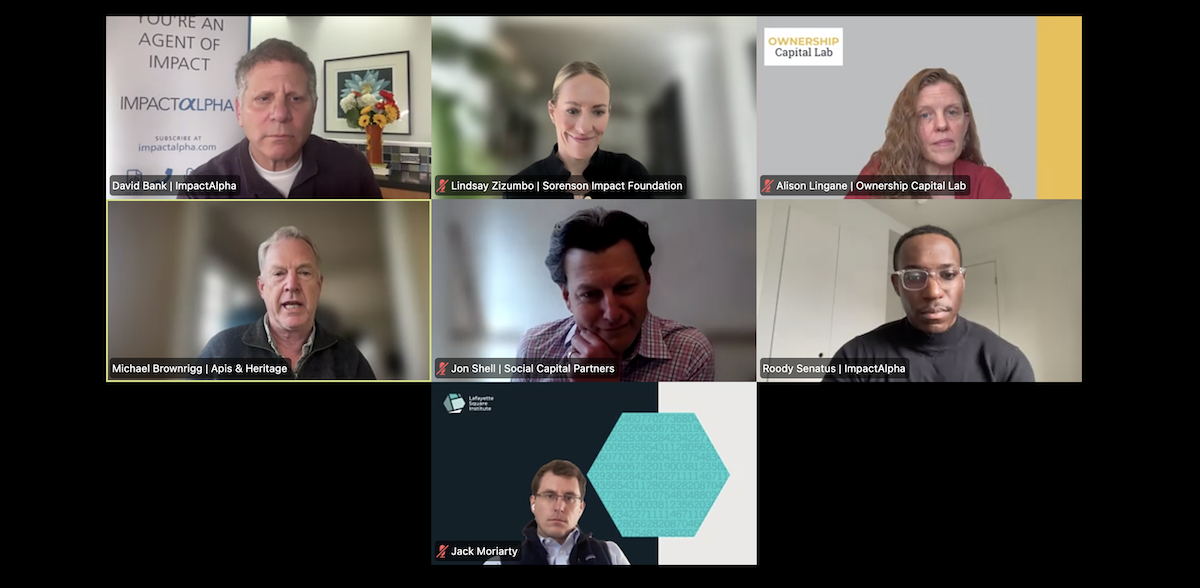
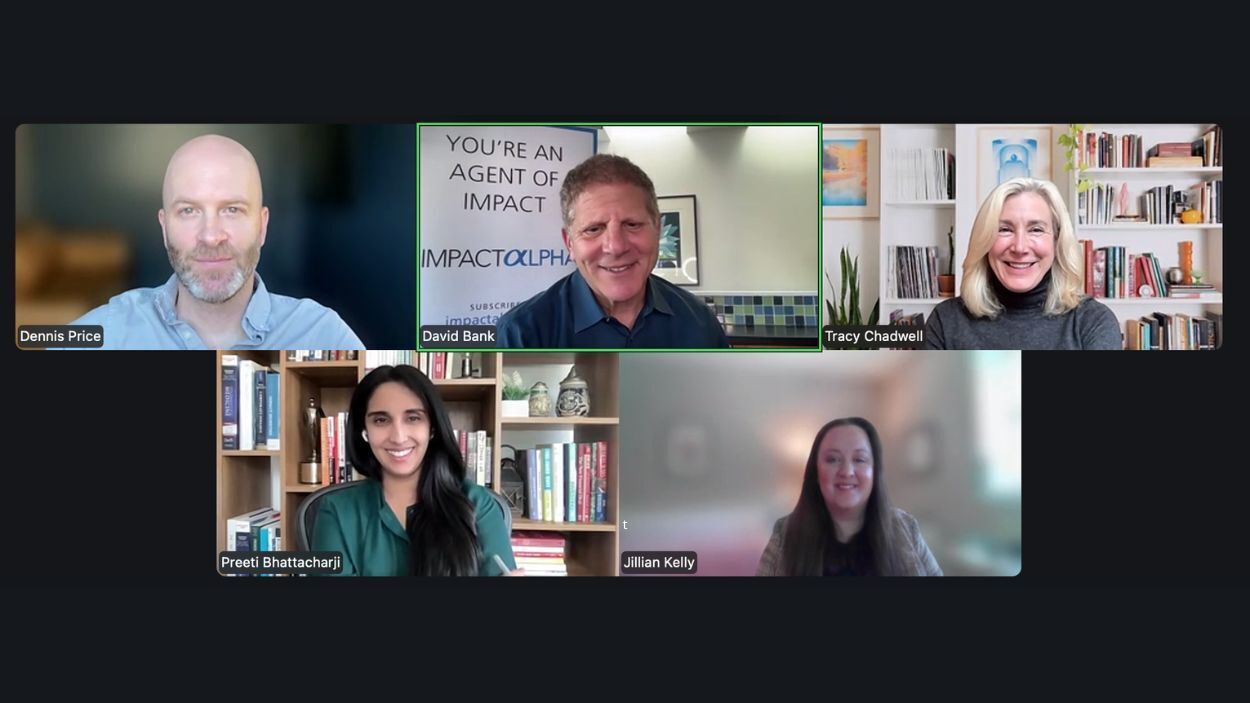
Like supporting small businesses and community lenders, worker ownership resonates with political leaders on both sides of the aisle. “It’s radical pragmatism,” says Lafayette Square Institute’s Jack Moriarty. Moriarty and Zizumbo joined other employee ownership leaders and hundreds of Agents of Impact on ImpactAlpha’s latest Agents of Impact Call this week.
In Canada, the ownership economy message has been recast as a form of predistribution, rather than redistribution. “Economic populism has become a very strange concept that doesn’t often benefit lots of people,” said Jon Shell of Social Capital Partners. “Ownership turns that on its head and says, if we can achieve more ownership for more people in local communities, in whatever country you’re talking about, that achieves economic populism without it looking like redistribution.”
That was the case Shell made to Canadian policymakers before crafting the country’s employee ownership trust, or EOT, legislation. Amid Canada’s trade war with President Donald Trump and an upcoming election, “what’s new, or at least what’s become more prominent, is the sovereignty aspect,” he said. Employee ownership offers an opportunity to place Canadian companies in the hands of Canadians, instead of selling to prowling American investors (see, “In Canada, employee ownership trusts offer a path to shared prosperity and national sovereignty”).
In the US, employee ownership-focused policy advocates see an opportunity for impact investors to go on offense. “I often get asked these days, ‘new Congress, new administration, where does employee ownership fit into all this?’ And my three words that I often respond with are: full speed ahead,” said Moriarty. “We have a real window of opportunity here.”
Moriarty counts secretary Marco Rubio and labor secretary Lori Chavez-DeRemer as employee ownership allies, having co-sponsored Democratic Senator Chris Van Hollen’s Employee Equity Investment Act. Chavez-DeRemer, in particular, “is now in an extraordinary position to advance and deal with some of the regulatory pain points,” Moriarty said.
Ownership funds
Alison Lingane’s Ownership Capital Lab is working to help mobilize different pools of capital for nearly two-dozen funds raising a combined $670 million to finance high-impact transitions to employee ownership.
“Investors are coming together to learn about employee ownership investing, inviting funds to do closed door pitch sessions, and even going as far as sharing due diligence with each other as a way to learn,” Lingane said. Her nonprofit has launched a four-part virtual course for foundations, philanthropic institutions and advisors to learn how to get grant capital and program-related investments in ownership strategies.
With Apis & Heritage Capital Partners’ second employee-led buyout fund, which is seeking $250 million, the firm’s Michael Brownrigg sees an opportunity to bring in capital providers who aren’t impact-first and are looking for market-rate returns.
“You can earn a really good return, and then you can help the economy get healthy,” he said. Investors can also “address not just the moral imperative of helping hourly workers have a real life, to be able to afford a vacation and so forth, but frankly, the public policy imperative.”
Apis & Heritage’s first $58.1 million fund has transitioned five companies to employee ownership, with a combined value of $65 million. The second fund is looking to create ownership access for up to 3,000 low- and moderate-income workers.
Essential workers
“We are really focused on those huge parts of the economy, those huge swaths, where humans still drive a large part of value for companies given the critical nature of their work,” says Malini Ramanarayanan Moraghan, who joined The Call via recorded video.
Think of medical transport, food manufacturing, senior care and logistics workers. These frontline employees are critical “to the operating stability of their companies and are living at a level of economic precarity that’s not just moral failing, but also bad for their businesses,” she says.
Moraghan’s Essential Workers Fund helps such workers share in the enterprise value that they create for their employers. It offers debt and equity to finance non-control employee ownership conversions. The fund is structure agnostic, with flexibility to support a wide range of deals from ESOPs to EOTs.
“I think every single American company should be at least 30% employee owned,” she says. “When that happens, we will have a kind of social stability, community stability, that I think is something we’ve all been working for.”