
Mash Makes already has much of what every climate tech startup wants.
It has commercialized its advanced pyrolysis process from technology developed at the Technical University of Denmark. It has two commercial plants operating in Karnataka, India. And, in the Danish shipping company Norden, it has a solid corporate offtaker as well as a major investor.
What Mash Makes doesn’t have is a simple business model.
The company, based in Denmark and India, makes biofuels for shipping companies; biochar to help farmers improve soil health and sequester carbon dioxide; and even electricity, as a byproduct of pyrolysis, that could provide renewable energy for rural communities.
“We have this rainbow of potential impact,” Mash Makes CEO Jakob Bejbro Andersen tells ImpactAlpha. “We want to make sure that every potential for impact – whether social, biodiversity, green house gas emissions – is pursued.”
“That means that we have a rather complex business model, and business in different verticals, but I don’t really see us having any choice here.”
Sustainable shipping
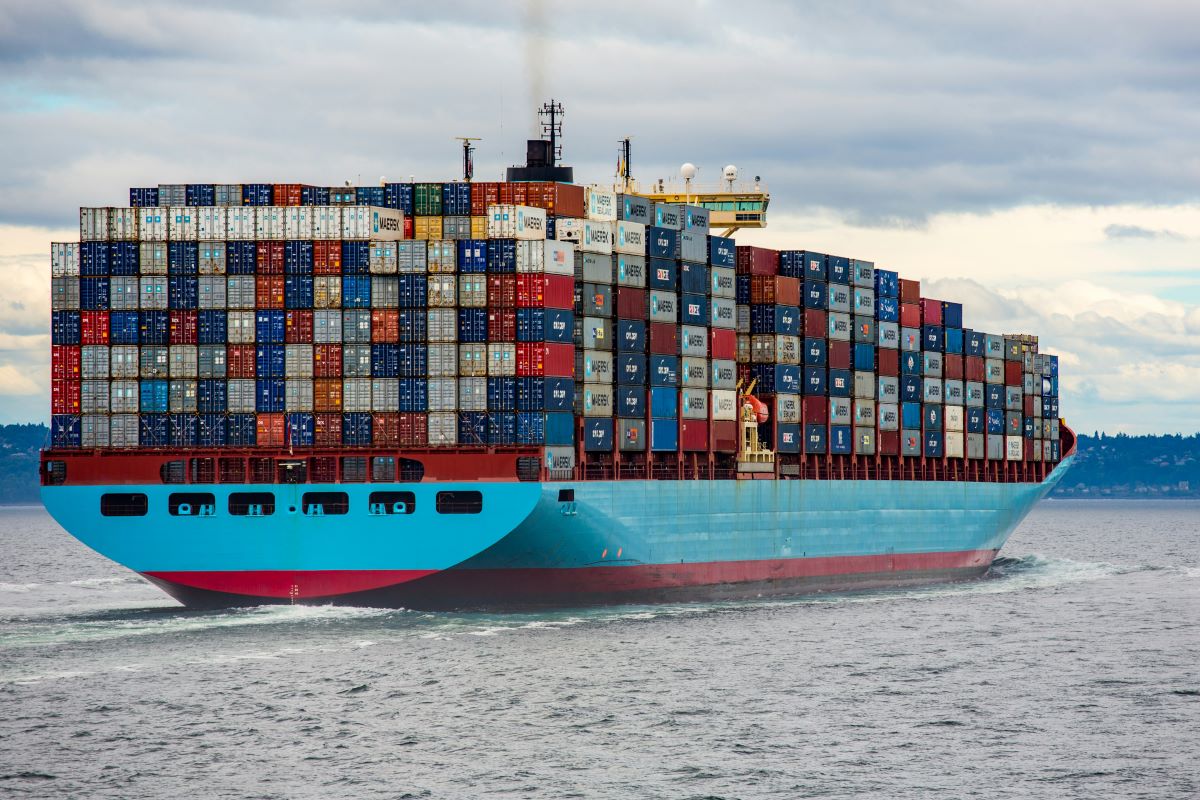
For immediate revenues, Mash Makes is capitalizing on the strong demand for biofuels as commercial shipping companies move to decarbonize their fleets. Transportation is among the top three largest emitters of greenhouse gases. Most ships use heavy fuel oil, a crude and a low-cost source of energy, but a massive polluter of air and water. Sustainability concerns are creating a shift toward electric vessels and the use of biofuels and liquified natural gas.
The International Maritime Organization is pressing shippers to seek out these low-carbon alternatives. In April, IMO introduced emission limits and a global pricing mechanism for emissions, aiming for net-zero emissions in shipping by 2050. The directive is expected to be adopted next month, targeting shipping companies that account for over 85% of shipping emissions. A new fund, the IMO Net-Zero Fund, will reward compliant, low emission companies.
“The demand is completely outpacing supply right now,” Andersen says.
Los Angeles-based WasteFuel in 2023 closed on $10 million in Series B financing, led by bp ventures, after inking an offtake agreement with the shipping giant Maersk.
Mash Makes itself received €3.7 million ($4 million) in loans from the Nordic Green Bank Nefco in 2022 and 2024 to support the development of its two commercial plants in Karnataka, India. The company is raising capital to set up four commercial plants by the end of the year. The plants in India use cashew press cake as a primary feedstock. Mash Makes is running experiments in Kenya and South Africa, using invasive plant species as an alternative feedstock.
Mash Makes closed its Series A financing in 2023, with Danish shipping company Norden investing €12.5 million ($13.4 million) for a minority stake. The deal helps Norden expand its supply of biofuel while helping Mash Makes reach more buyers in the shipping industry. Prior to the investment, Mash Makes was making cruder versions of the biofuel.
The increasing production lets Mash Makes leverage technology learning curves and lower its costs. In solar, for example, each doubling of technology capacity meant a 20% reduction in cost, a ratio that has come to be known as Wright’s Law.
Value for farmers
But biofuels still release emissions when burned; their lower carbon footprint comes from the more sustainable, non-petroleum input. The Mash Makes pyrolysis process can also produce biochar, turning agricultural waste and other biomass into stable carbon that can be stored in soil or other sinks, removing carbon from the atmosphere.
Last year, Mash Makes produced 1,300 tons of biochar, twice its production of biofuel.
As a fertilizer, biochar restores soil health, increasing farmers’ yields and incomes and reducing the use of synthetic and often imported fertilizers. From its trials, Mash Makes claims its biochar has cut drought-induced losses by over 60% for soybean crops.
On global voluntary credit markets, high-quality carbon removal credits are fetching $120 per ton or more (see “Rubicon Carbon’s ‘all of the above’ plan to diversify and rate the market for carbon credits”).
Andersen believes biochar shouldn’t just be treated as a carbon sink to generate credits. The focus should be on proving biochar’s agricultural value first. Andersen says carbon removal is “the least interesting thing about biochar,” in comparison to the increased yields farmers can reap through its use as a fertiilizer.
“We have a product that creates a crazy amount of value for the farmers,” he says. “If you’re not aware of how that value is created and you’re not deliberately chasing opportunities where you can create that value, then you are doing a disservice to the green transition and to the farmers.”
Nonetheless, Mash Makes competed for the $100 million carbon removal X Prize and emerged as one of 20 semifinalists. The company has an ambition to remove a gigaton, or a billion tons, of carbon dioxide from the atmosphere by 2040.
For now, Mash Makes is providing biochar for free or at a very low cost for Indian farmers. Andersen insists on this model as a way of market making, deliberately giving access to farmers who can’t currently afford it since they stand to benefit most from it.
Non-governmental organizations and philanthropies are helping subsidize these costs. The company is building a client base of larger agricultural offtakers to use the biochar as a soil amendment.
Mash Makes ambitions don’t stop at biochar and biofuel. It received grants of nearly €2 million ($2.1 million) from Horizon Europe to develop its TwoStage gasifier machines, which convert gases that are a byproduct of pyrolysis into electricity. The company plans to test these machines in Ghana and Madagascar, providing renewable energy for rural communities while producing biofuel and biochar.
“Whereas others might simply ignore the other verticals, I see that as wasteful,” Andersen says. “I’d rather take the complexity over the wastefulness.”