
One of the central themes in the Oscar-nominated film, “Sinners,” is the demand for a cultural experience that is both for us and by us.
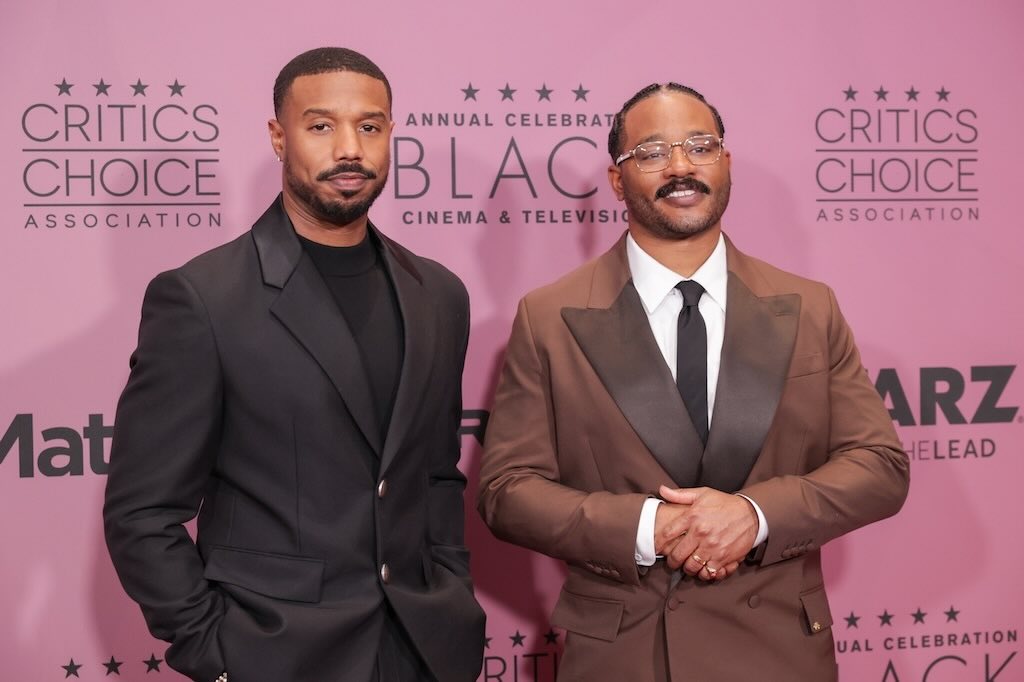
For director Ryan Coogler, that also means owned by us.
Coogler, together with his manager, Charles D. King, negotiated a groundbreaking deal with Warner Bros. for the rights to distribute “Sinners.” In addition to an estimated $90 million production budget and creative control over the final cut, Coogler reportedly received what’s called “first-dollar gross” that gives him a percentage of all ticket sales. He will also gain the rights to the film starting in 2050, which will allow him to control future licensing deals, potential sequels, and streaming revenue.
It’s the type of deal that made “Hollywood lose its mind” because it flipped the economics of who gets to benefit from the success of a creative project, what form that ownership can take — and how studio executives will respond to these demands.
Collective experience
“Sinners” was inspired by the stories Coogler says he heard about his uncle and grandfather, who left Mississippi as part of the “Great Migration” that began in the early 20th century. Because the film was based on a deeply personal experience, Coogler was motivated to retain ownership over the final product.
The film follows twin brothers, Smoke and Stack, (both played by Michael B. Jordan), who decide to start a juke joint for the Black community around Clarksdale, Miss. to celebrate their music, food, and culture.
It’s not long before their tills are bursting and their floors are bouncing with excited revelers. One of the most memorable scenes from “Sinners” is the five-minute musical medley that takes viewers through a lightning history of African-American music and dance. Blues. Hip-hop. West African tribal music. Gospel. Rock ‘n’ roll. These genres of music blend together into a mosaic that tells an authentic story of Black culture in a way audiences almost never get to see.
For Coogler, the story was about “why some people chose to stay,” and why “to migrate means to leave something behind.”
In an interview last year, Coogler spoke about how for many Black people, the South is “a place that’s associated with a lot of pain, a lot of shame, a lot of discomfort.” But, he said, “to completely look away from it is to not look at what else was there. The resilience, the brilliance, the fortitude, and also the art, the artistic wonder, the cultural wonder.”
Culture, policy and possibility
“Sinners” isn’t just a movie – it’s part of a movement.
It’s no secret that what gets produced by the major film studios is often a reflection of the demographics of Hollywood-approved writers, directors, and actors. This means that the stories of under-represented communities rarely make it to the screen, in part because the traditional gatekeepers don’t think there’s enough audience demand for these types of stories.
Creatives are taking matters into their own hands by demanding more creative freedom and a greater share of the profits – effectively rewriting the rules of the entertainment game to benefit artists rather than just major studios and distributors.
For King, a Hollywood super-agent and founder and CEO of the film finance and production company MACRO, the deal Coogler was able to cut represented a capstone in his effort to “elevate underrepresented artists and perspectives” in front of a mass audience. MACRO specifically looks for “stories with great content that serves a greater purpose” based on the conviction that “emerging voices are the driving force that shapes the cultural zeitgeist.”
As ImpactAlpha reported in early 2023, MACRO raised $90 million from a coalition of investors, including BlackRock’s Impact Opportunities Fund, Goldman Sachs Asset Management, and HarbourView Equity Partners. This is on top of $150 million in earlier funding from a cohort of impact investors, including Emerson Collective and the Ford, Kellogg, and Libra foundations.
“Storytelling shapes culture, policy and possibility,” said Cynthia Muller of the Kellogg Foundation, which invested in MACRO through the foundation’s mission driven investments portfolio.
“When ownership in Hollywood excludes communities whose stories drive our culture, opportunity is constrained. MACRO represented a chance to invest not just in content but in ownership — in building an institution led by and accountable to underrepresented creators.
It was also King who convinced Coogler to start his own production company, Proximity Media, with a mission to “bring audiences closer together through stories involving often overlooked subject matters.” In addition to “Sinners,” Proximity has also produced critically acclaimed works like “Creed III,” “Judas and the Black Messiah,” and “Ironheart.”
Both MACRO and Proximity Media are examples of what Muller sees as important proof points, “demonstrating that when diverse creatives have control, capital, and autonomy, the market responds.”
The success of “Sinners” demonstrates the growing market demand for these stories. The film has earned approximately $330 million at the worldwide box office, a haul that would put “Sinners” in elite territory among horror films and in the top 10 domestically for all films released in 2025. “Sinners” also scored a record 16 Oscar nominations in addition to other prestigious honors, including awards for Best Screenplay (BAFTA Awards) and Best Ensemble (Actor Awards, Critics Choice Awards, Gotham Awards, NAACP Image Awards).
Creative ownership
Coogler is not the only creative to demand more ownership over his work.
- In January 2026, Ben Affleck and Matt Damon made a first-of-its-kind deal with Netflix that created performance-based bonuses for their entire 1,200-person crew if their film, “The Rip,” meets viewership targets in its first 90 days on the streaming platform. The deal was negotiated through Affleck and Damon’s production company, Artists Equity, which pursues an innovative business model committed to ensuring “that all can truly participate and realize the value they bring to a project.”
- In November 2025, Matthew McConaughey and Michael Caine signed a deal with AI company ElevenLabs to license their voices for digital recreation via the company’s Iconic Voices Marketplace, which also includes other Hollywood stars (both dead and alive) like John Wayne, Judy Garland, Maya Angelou, and Babe Ruth.
- In October 2025, Taylor Sheridan (creator of hits like “Yellowstone” and “Landman”) signed a multi-year deal worth up to $1 billion with NBCUniversal that gives him more creative freedom and includes guaranteed production slots that ensure his multiple projects go straight to series. Sheridan reportedly made the move after growing frustrated with Paramount executives for trying to cut costs on his projects and impose unwanted creative changes.
- In May 2025, Taylor Swift bought back the rights to her first six albums after a contentious battle with her former record label, which had sold the master recordings to Scooter Braun’s Ithaca Holdings in 2019 instead of giving Swift the chance to own her own music.
Each of these creatives has the fame and influence to demand these kinds of deals. But right now they are the exception, not the norm. These deals may not seem like an option for many up-and-coming filmmakers, actors, or musicians who are still waiting for their first big break. But given all the recent hand-wringing about Hollywood being turned upside down due to industry consolidation and AI technology, it’s worth examining what a sustainable model of creative ownership could look like.
“For too long, many creatives — especially women and people of color — have generated extraordinary cultural and financial value without sharing proportionally in the wealth created,” said Muller. “Compensation has to move beyond fees to participation. Equity stakes, profit-sharing and revenue participation models matter because they turn talent into long-term stakeholders.”
Impact and upside
Other trends cut in the opposite direction, such as the determination of studio executives to cut costs to fund their expansionist ambitions (see: Paramount post-WBD acquisition).
There are also difficult questions about who should get to participate in the long-term upside and in what form, “from contract labor to asset ownership,” as Muller put it. Creative professionals will be fighting an uphill battle without the support of impact investors.
Take for example filmmaker Ava DuVernay, who in late 2023 raised $35 million in blended financing to produce “Origin,” an award-winning film based on journalist Isabel Wilkerson’s 2020 book, “Caste: The Origin of Our Discontents.” Instead of going to Hollywood studio executives, DuVernay made a point of pursuing backers that believed in the story she was trying to tell.
Ford Foundation put in $10 million as the anchor investor, which helped bring in other investors like Emerson Collective (led by Laurene Powell Jobs), MacArthur Foundation, Pivotal Ventures (led by Melinda French Gates), and NBA stars Chris Paul, Karl-Anthony Towns, and Malcolm Brogdon.
“We’re looking to disrupt the systems that ensnare and keep content with purpose in a bottleneck in Hollywood,” DuVernay put it at the time. “I can’t force Hollywood to care about this. Why don’t we make it outside of Hollywood in a different way and reach audiences differently?”
Added Muller: “The challenge is not a lack of talent or ideas — it is the structural concentration of capital and distribution power. Emerging ownership models can shift that dynamic, but they require patient capital and institutional courage. When creatives have both voice and stake, the entire ecosystem becomes more innovative, more resilient and ultimately more reflective of the audiences it serves.”
Impact investors have historically underinvested in the creative economy – in part because of a lack of investable opportunities and a misperception that such investments are inherently risky and/or not that impactful.
Successes like “Sinners” and “Origin” show that the creative industries have the power to shape public imagination and catalyze social change. This is the kind of impact many impact investors are after, going beyond small, iterative improvements to transformational changes with the potential to shift entire systems.