

When venture capital powerhouse Andreessen Horowitz led last month’s eight-figure Series A financing for Slingshot AI, it hailed the AI startup as “the world’s first foundation model for psychology.” Investing alongside a16z was tiny TMV: Lifecycles, a $25 million “proof of concept” fund launched last year by Agnelli, an heir to Italy’s Fiat fortune.
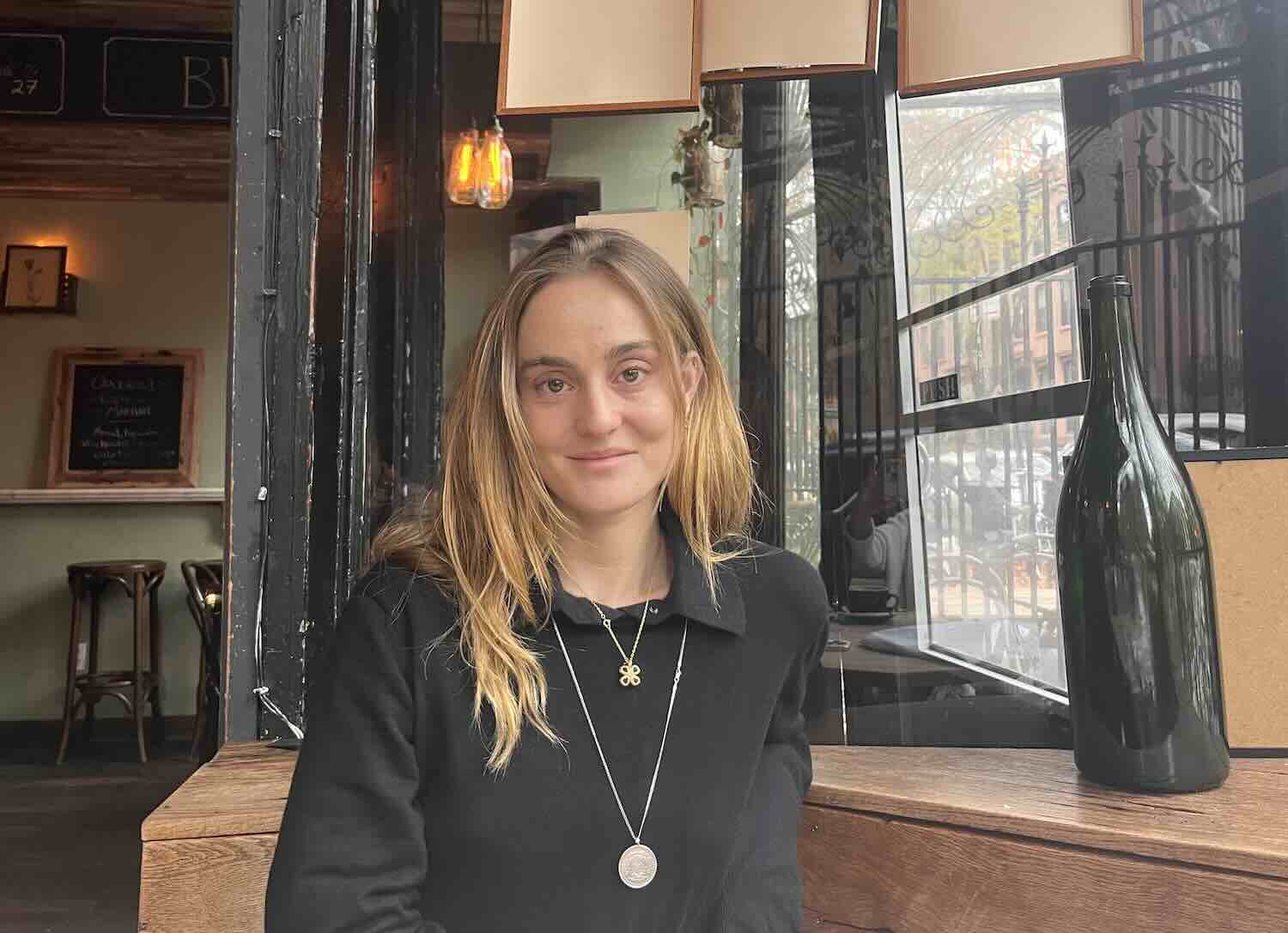
The mental health fund, tucked within the $200 million venture capital firm TMV, has gotten traction and a foot in the door on competitive deals, like Slingshot. “It’s been an active year,” Agnelli, the fund’s sole LP and one of its general partners, told ImpactAlpha over coffee.
Agnelli intends for TMV: Lifecycles to serve as a model for other young heirs looking to have more impact with their wealth.
Rather than stick with charities, donor-advised funds or public equities, she wants to show “next gens” how they can directly invest in founders working on meaningful solutions.
Agnelli discovered her own power — and her passion for mental health investing — only recently. Her father, Giovanni Alberto Agnelli, who was slated to take over the family auto empire, died of a rare cancer in 1997 when she was just a few months old. When she was 18, Agnelli inherited some of her grandfather’s wealth. A privileged situation, for sure, but at the time, she says, it felt like an overwhelming responsibility for which she was unprepared.
She struggled with mental health issues and an eating disorder. In search of answers, she went back to school to earn her masters degree in psychology. With her stepfather, Agnelli set up a foundation, the Azzi Agnelli and John Frieda Charitable Fund, to support cancer research, but chafed at the bureaucracy. The bulk of her wealth, meanwhile, was managed by a “very regimented, classic family office structure,” where she had little say.
It wasn’t until she met Soraya Darabi, a founder and general partner at New York-based TMV, which invests in early stage healthcare and other verticals, that she began to see other possibilities. “It was the first conversation where I felt empowered by women and saw how I could leverage my power,” she says.
Many conversations later, Agnelli teamed with TMV to set up the Lifecycles fund to combine her wealth and clinical knowledge and TMV’s investing chops. Since 2017, TMV has made more than 60 investments, including in unicorns such as CityBlock Health, which provides healthcare to for low-income patients.
“I’m thinking about ways in which you can curb the mental health crisis with preventative measures,” says Agnelli.
Root causes
In its first year, Lifecycles has invested in six startups, including Millie, a tech-enabled maternity clinic that offers “wraparound” patient support, and Banquet Health, a maker of food management software for hospitals to reduce food waste and encourage healthier options. Daylight Health offers insurance-covered mental healthcare as an add-on to primary care plans. Slingshot AI is looking to build a generative AI model informed by psychotherapy that can power digital solutions.
“We’re not naive to the fact that technology has had an outsized influence on some of these factors,” says Darabi, “but we do think technology has to be part of the solution.” Mental health, she adds, cuts across all of TMV’s other verticals, including healthcare, sustainable solutions and the future of work.
Since the COVID pandemic, mental illness and mood disorders have hit epidemic levels. Nearly a quarter of Americans have a mental illness, and almost a third suffer from anxiety. Lifecycles seeks to invest in solutions that get at some of the root causes of mental health issues. Agnelli thinks in terms of Maslow’s hierarchy of needs. If basic needs like shelter, good nutrition and community connection are not met, “something else will be out of kilter,” she says.
In that context, solutions to the housing crisis are fair game, as is healthy food. She’s also on the hunt for a startup addressing the opioid epidemic.
The fund is already attracting potential investors, but Agnelli and Darabi want to build a track record of proven results before opening it up. That will take another two years or so, they figure. In the meantime, a massive generational transfer or wealth is underway, waiting for such options.
“There’s a real awakening happening,” says Darabi. “Women are understanding that finance is the final frontier of feminism and that there is power in autonomy and deploying capital for greater returns.”