
It’s just 1% of the assets of Uganda’s National Social Security Fund, but it could signal a sea-change in financing for small and growing businesses across Africa.
The national provident fund is allocating 1% of its 26 trillion Ugandan shillings ($7 billion) in assets to social impact investments that create jobs, particularly for Uganda’s young people. The simple thesis: those workers will become savers, shoring up the pension fund’s own balance sheet.
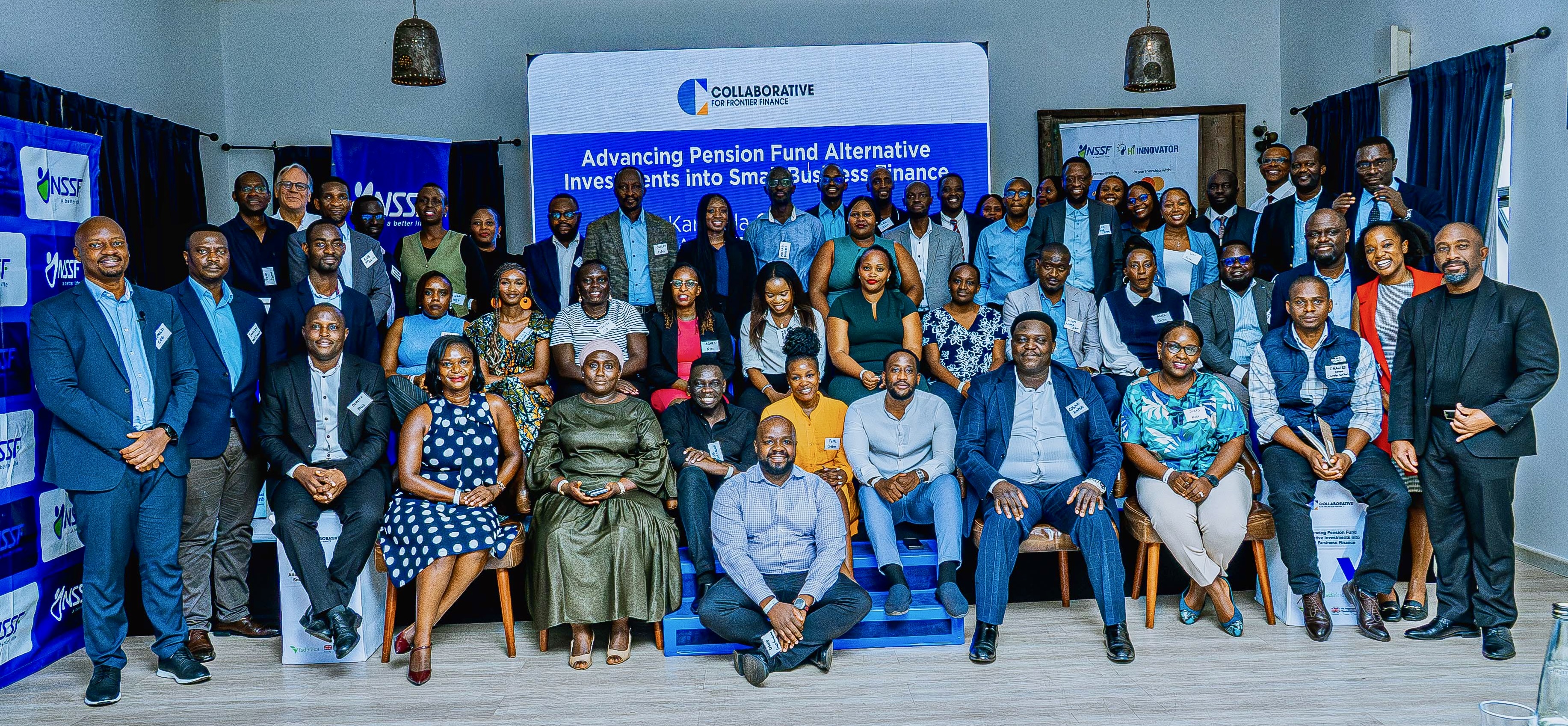
As part of its social-impact strategy, NSSF is readying a $100 million fund of funds to invest with local capital providers that will in turn underwrite the financing needs of growth-stage businesses, which create the bulk of new jobs in Uganda and other countries.
NSSF will anchor the fund of funds with at least $15 million and help secure the rest from other institutional investors in the region. NSSF hopes to launch the fund before next year’s All Africa Pension Summit in March.
“Our definition of return for this part of the balance sheet is not only financial,” NSSF’s Kenneth Owera told ImpactAlpha on the sidelines of last week’s planning meeting for the fund of funds in Uganda. “It’s how many jobs are being created, because this is also a form of return.”
The mobilization of local institutional capital for job-creation and economic development has become even more urgent with the dramatic reduction in foreign development assistance in recent years. African pension funds collectively manage close to $2 trillion in assets. Yet they invest a mere 3% of their portfolios in any kind of “alternative” assets, including private equity, private debt and infrastructure, instead favoring listed equities and government bonds.
The new fund of funds would join similar initiatives in Ghana, Rwanda, Zambia and elsewhere. A key distinction is that the NSSF effort is spearheaded by an institutional allocator itself, giving the fund of funds a huge head start.
“When we were doing it in Ghana, we were doing it from a GP perspective, designing a fund to get an uptick from the pension funds,” said Hamdiya Ismaila, the general partner of Ci-Gaba, which recently reached a first close of $30 million, with two-thirds of the capital secured from Ghanaian pensions. Other investors include FSD Africa Investments, Small Foundation, Netherlands’ FMO and Argidius Foundation which offered working capital.
“This is being led by a pension fund, which is an LP, and so the dynamics are different, and it’s exciting to see that they’re actually taking the lead,” Ismaila told ImpactAlpha. “We did Ci-Gaba as a demonstration, and we want to see this kind of thinking across the continent.”
Hourglass dilemma
Ismaila said the fund of funds model is one of the most practical and scalable ways for institutional capital providers to channel money into private markets on the continent. The financing ecosystem for small and growing businesses has suffered from an “hourglass dilemma,” with institutional investors stymied in their ability to move large amounts of capital into small deals.
The Collaborative for Frontier Finance co-sponsored the gathering and is working with NSSF to develop funding pathways for small businesses. The process looks to ensure that the vehicle designed addresses market realities – providing the appropriate capital as small enterprises grow. Last year CFF surveyed over 100 fund managers and other capital providers for a small business finance “state of play” report and found large pools of capital can be a poor fit with what’s needed in most African markets.
“Local capital managers are playing that incredibly important role in the middle of the hourglass. They can take large pools of capital and disperse it,” CFF’s Drew von Glahn said on ImpactAlpha’s Agents of Impact call last year.
This year, the Rwanda Social Security Board launched the Rwanda SME Growth Fund with $30 million for small businesses, with the aim of growing it to more than $100 million.
Last year, Zambia’s National Pension Scheme Authority or NAPSA, Swedfund, British International Investment launched a similar fund, the Growth Investment Partners Zambia which secured $70 million in its first close. The fund aims to deploy over $300 million in 150 businesses over the next decade and a half.
In 2024, the Uganda-based East African Development Bank alongside the Development Bank of Rwanda and microfinance institutions Duterimbere Imf, AB Rwanda, and Letshego Rwanda launched a $36 million fund to provide loans to over 500 small and growing businesses.
With the new effort, NSSF is taking a fund of funds approach following its Hi-Innovator initiative, which together with the Mastercard Foundationpooled $10 million to catalyze early-stage entrepreneurship. In five years, the program has supported 438 businesses with grants and SAFEs, or simple agreements for future equity. Those investments have in turn generated 14,000 new members for the pension fund.
The SAFE structure gave NSSF an option to take equity stakes in the businesses if certain milestones are achieved, such as a follow-on capital raise. Two companies from Hi-Innovator have been taken up by Uganda-based small and medium-sized business lender Inua Capital.
The program’s reach and multi-year operation was a success, but revealed the structural limitations for NSSF in making direct investments in operating ventures. The lengthy due diligence processes meant that it could often take up to two years to close deals, limiting the scale and speed of capital deployment.
The creation of a fund of funds can help NSSF avoid competition for deals with the local fund managers and capital providers that the pension fund hopes to support to strengthen the local financing ecosystem. It can also diversify risks for the fund and allow for other domestic pension funds to join in, multiplying the availability of capital.
“If there is this elephant that I need to take down I can bring in 10 other individuals, we can attack it from different sides,” Owera said. “NSSF can have exposure to an area that it ordinarily wouldn’t have, and also the whole ecosystem is able to get what it needs.”
Alternative assets
The development of local small-business financing as an investable asset class for institutional investors in Africa is part of a broader effort among allocators to diversify their portfolios. Both by regulation and by habit, the balance sheets of most African pensions have been dominated by government securities and globally listed equities.
In Uganda, there may be less government paper to buy, Owera said. The discovery of oil in the country’s Albertine Graben region in 2006 and the identification of nine potential oil wells in the Kasuruban region, amounting to over 1.65 billion barrels, could reduce the government’s need for local borrowing.
“Increasingly the government seems to be having options in terms of where to get money from,” Owera said. “If yields are to drop suddenly, where else can we get alpha from?” That has opened up the discussion about alternative assets broadly and social-impact investments more specifically.
“We have a fiduciary responsibility to deliver a return to the members, but we believe that we can still deliver this return while addressing other societal issues,” he said.
The redeployment of capital requires a rethinking of return expectations and exit options. Investors have worried about liquidity in private assets in countries with capital markets that are still maturing.
Ci-Gaba, Ismaila said, “built in liquidity” by investing in several debt funds, some of which were already at or near their final close. That meant the funds had already made loans and were collecting payment and thus were able to start returning capital. The fund of funds uses other “self-liquidating” instruments as well to ensure capital is being recycled.
Larger funds can also provide exit opportunities for smaller investors. Even fast-growing African businesses can’t rely on the market for initial public offerings. More often, exits take the form of trade sales and acquisitions. “If I do a $1 million investment in a company, I definitely don’t expect to exit it on a stock exchange,” Ismail said.
She said she is excited by the NSSF initiative as an example of local institutional capital that can strengthen Africa’s ecosystem for financing African businesses.
“We cannot build on the back of institutional capital from somewhere else. It’s not going to happen,” she said. “We need to build Africa on the back of our own money.”