
Streaming on Max (trailer). Spoiler warning: Medium. Total score: 10 (2 Accuracy, 4 Entertainment, 4 Impact)
“What if there were a medicine that could heal almost anything?”
That’s the provocative prompt at the center of Common Side Effects, an animated show from Adult Swim that just wrapped up its first season on Max. The search for a “magic pill” is a common trope in many popular films and TV shows (see: Limitless, Lucy, Spiderhead, Upgrade, and others), whether the characters want to supercharge their abilities or just prolong life. The topic of longevity – or anti-aging – has even become a hot trend in some Silicon Valley circles. At the extreme end, Entrepreneur Bryan Johnson, aka “the man who wants to live forever,” takes over 100 pills and supplements daily as part of his experimental health routine.
Fortunately for viewers, Common Side Effects skips right past the “search” part and instead explores what would happen if such a medicine was actually found. Who would control it? How would it be distributed? Who should get it first?
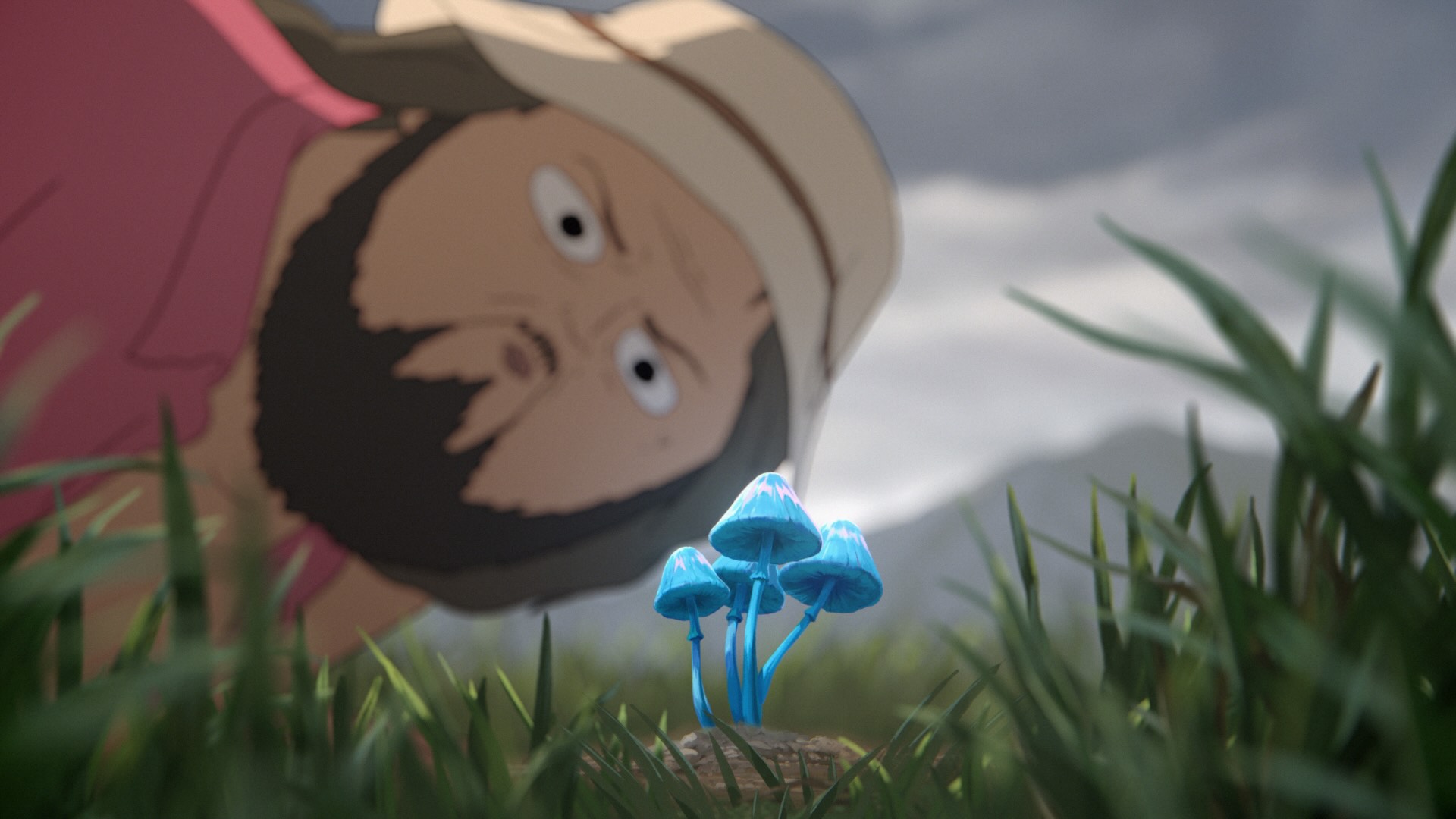
The protagonist faced with many of these questions is Marshall Cuso (voiced by Dave King), who discovers the rare Blue Angel Mushroom while on a mycelial journey in the Peruvian highlands. Marshall refers to it as the “caviar” of mushrooms because it can heal seemingly any illness or injury.
Fall off a cliff? Gunshot wound? Dementia? Just eat a mushroom! (Definitely not medical advice…)
Unfortunately for Marshall, not everyone is thrilled with the idea of a naturally occurring substance that can’t be patented and that would upend the healthcare industry as we know it.
For Jonas Blackstein (voiced by Danny Huston), a powerful Swiss financier with his hands in seemingly every cookie jar, the consequences of such a world-changing medicine being available to the public are crystal clear – and clearly bad.
“It could replace everything. Every other drսg we make, every drսg our competitors make. Replaced. It would replace all the people that you employ. All the scientists, the researchers, even our sales reps. To say nothing of the doctors, the hospitals, the insurance people. All of them. Out of business… Cure everybody, and you’re out of business. Why would anyone work?… Economies will collapse. Cartels will arise with their own grip on the mushroom. Killing rivals. If this mushroom heals wounds, every fight is to the death. Wars will be unimaginably ferocious. We’d kill on a massive scale. Everything black and white, no in-between. None of the shade that brings life meaning. Should I be healthy? I’m an occasional drinker. I wake up with a hangover. Balance. You would try to cheat life? Play God?”
This is an awfully cynical position to take, but there are important nuggets of truth to be found here. It’s true that such a drug would put much of the pharmaceutical industry out of business. And yes, there is a moral hazard to giving people the power of immortality. It’s easy to imagine how such a scenario would lead to more violence – not less. And humanity already has enough issues with staying within its carrying capacity. What would happen if populations continued to increase indefinitely?
These are philosophical questions, not pragmatic ones. And a magic mushroom perhaps isn’t the most realistic construct to make a social critique about the healthcare system. But show creators Joseph Bennett and Steve Hely have succeeded at crafting a narrative that is as amusing as it is sinister. Those on the side of health see Marshall as a hero, while those on the side of profits see him as a villain. For his part, Marshall just wants to “change the world” by making the medicine free for all.
This is in stark contrast to the pharmaceutical industry, which seems to be more focused on curing illness rather than preventing it. After all, healthy people don’t need to spend huge sums of money on procedures and medications.
Indeed, for Marshall this catch-22 is his primary reason for not wanting to let the mushroom fall into the wrong hands.
“We spend more money than ever on healthcare and everyone’s still sick… think about all the people who make tons of money just from keeping us sick, by keeping us unwell.”
Marshall’s right. In 2023, US healthcare spending reportedly reached $4.9 trillion, or $14,570 per person, representing about 17.6% of the nation’s GDP. Meanwhile, the US lags behind other high-income countries in overall health outcomes, with lower life expectancy and higher rates of preventable deaths. It also has the highest rate of people with multiple chronic conditions and an obesity rate nearly twice the OECD average. Private equity ownership of healthcare providers has also driven up costs and led to declining patient outcomes. And that’s not to mention well-publicized challenges related to access to care and equity of care.
It’s obvious that the existing healthcare system is broken – perhaps irrevocably. The impact investing industry has started to rise to the challenge, as evidenced by the growing number of impact investors and organizations focused on improving health outcomes and democratizing access to affordable and quality care.
We need more of this type of leadership – not just from investors but from the pharmaceutical industry as well.
Dmitriy Iosolevich is the founder of 17 Communications.