
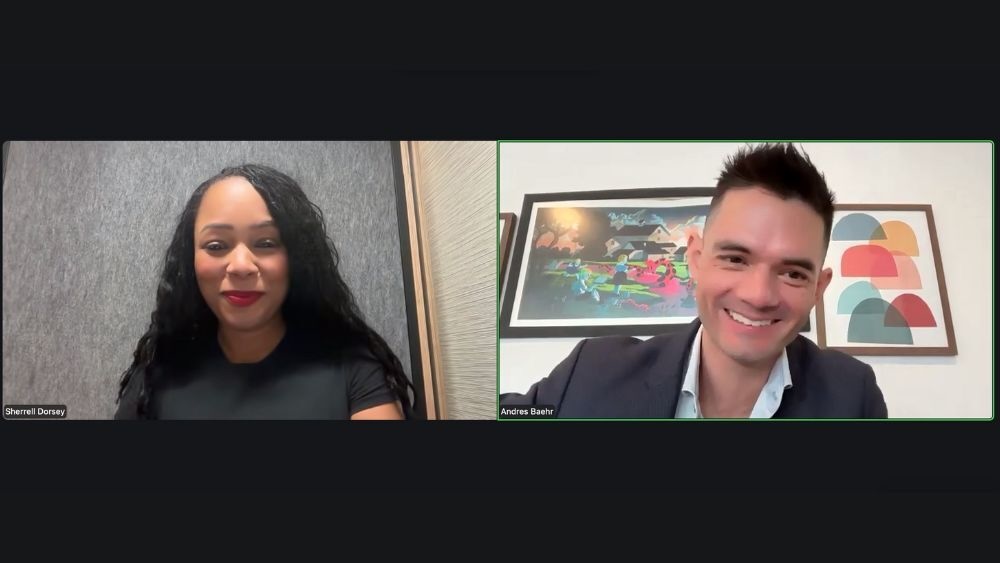
Many people might not think of Birmingham, Alabama, as a capital for climate technology, but the Techstars Energy Accelerator is proving them wrong. By leveraging its unique community and strategic partnerships, the accelerator is nurturing a new generation of climate and energy startups, challenging the notion that innovation can only happen in “sexier” cities.
“Our superpower is we’ve really over-index on community,” Techstars’ Rae’Mah Henderson told host Sherrell Dorsey on the latest episode of PluggedIn. That means giving climate startups in the program quick feedback from local partners such as Alabama Power, a subsidiary of Southern Company. “Would you use this product? And if not, why? Honest feedback that normally would take a long time for other ecosystems.”
In the conversation, Henderson shared what makes the Birmingham accelerator a powerful launchpad for founders and the emerging trends she’s seeing in the energy sector.
Community-first
“Many of the founders come here and they’re like, ‘where’s the dirt roads? You know, I drove here from New York. I never once came across a dirt road,’” Henderson shared. “Because our city is so small and still so genuine, there’s a lot of legacy businesses that are also willing to open their doors to try some of these new technologies.”
The accelerator’s success is deeply tied to its relationships with key local partners, especially Alabama Power. This partnership gives startups access to a major corporate entity for potential pilots and provides a proven blueprint for working with other large companies.
“People have a really good understanding that a rising tide lifts all boats,” Henderson said, highlighting a lack of the “gatekeeping politics” often found in larger tech ecosystems. This open and supportive environment has successfully attracted founders from all over the world, including from Mexico, Colombia, Spain, Germany and India.
Strategic funding
Henderson has noticed a shift in the kinds of solutions founders are developing. While startups from earlier cohorts, including St. Louis-based Accelerate Wind, focused on traditional clean energy sources like wind and solar, recent years have seen a surge in interest in: energy distribution and microgrids; advanced manufacturing and clean solutions for the electrical grid; the electric vehicle (EV) space; and the use of AI in supporting the energy transition.
Post-accelerator, founders are finding success by strategically leveraging government resources. Henderson shared that many companies are using government grants and matching programs from agencies like the Department of Energy to secure non-dilutive capital.
“I’ve seen a lot of founders utilizing matching programs, especially with grants,” she noted, a reality that future climate-focused companies may no longer have the luxury of tapping into now that the Trump administration has drastically cut supportive clean energy projects and funding.
A new deal
Despite significantly reduced federal funding and incentives for climate-related projects and companies, venture-backable initiatives are still on the radar of program runners like Techstars and the greater investing community.
Henderson announced a major update to the Techstars investment model: the capital provided to each company has nearly doubled to $220,000, while the equity Techstars takes has been made more founder-friendly. This new deal, which includes a 5% stake on an uncapped note, reinforces the organization’s commitment to being more founder-friendly and usher in series, scalable companies.
The Techstars Energy Accelerator runs in person from September to December, and Henderson encouraged any founder, even those who might feel they aren’t “ready,” to apply and start the conversation.