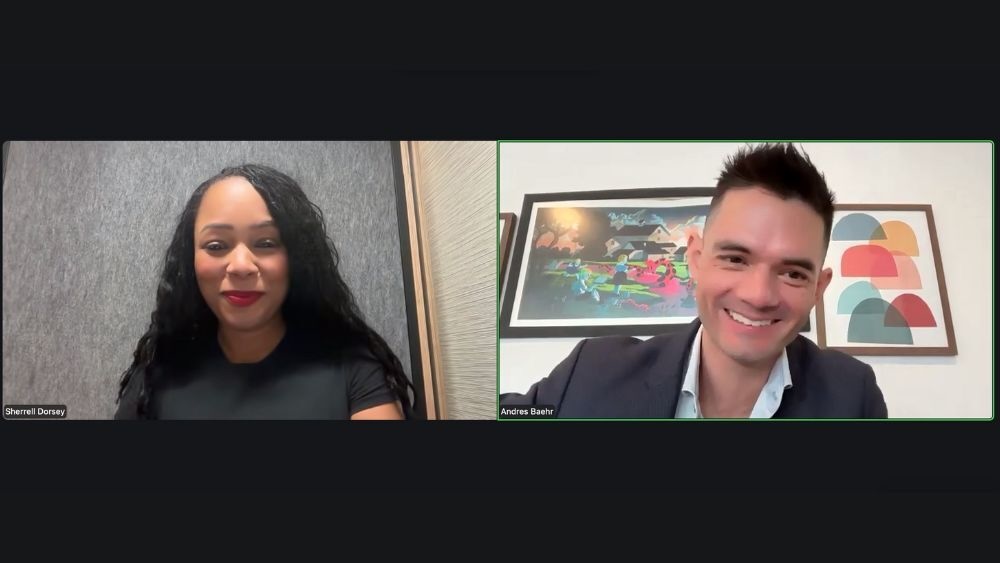
Latin America is quietly emerging as one of the world’s most dynamic frontiers for climate innovation, and investors paying attention early stand to benefit the most. In the final Plugged In conversation of the year, host Sherrell Dorsey sat down with Andrés Baehr, Managing Partner of Mexico City-based Savia Ventures, to explore how the region’s founders are redefining climate solutions and why global investors can no longer afford to overlook them.
“Latin America is the largest untapped climate market in the world,” Baehr said. “It has all the ingredients — biodiversity, minerals, industrial capacity — and founders who have learned to build with resilience and frugality.”
Battle tested
Savia Ventures backs early-stage startups across bio-based materials, grid optimization, urban mining, and distributed energy, ventures often deemed too intense or too complex for traditional VC. “What makes Latam unique,” Baehr explained, “is that founders here are experts at managing inflation, regulation, and scarcity. They’re building solutions that can scale globally because they’ve been battle-tested at home.”
He pointed to a surge of inbound interest from US and European funds, including Breakthrough Energy Ventures and SOSV, that are exploring regional hubs and co-investment opportunities.
“It’s the fintech story all over again,” Baehr said. “Those who came in early captured the upside. Climate will be the same. The market is ready to leapfrog.”
Nature, industry, and the next frontier
With 60% of the planet’s biodiversity and 50% of known lithium deposits, Latin America holds extraordinary potential for nature-based and industrial climate solutions. “The biggest opportunity right now is in industrial decarbonization,” Baehr said. “Near-shoring, bio-based materials, carbon and biodiversity credits — these are emerging fast. It’s not perfect yet, but it’s the closest we’ve come to putting a price on nature.”
He cited early success stories like Pachama, a forest carbon monitoring and measuring platform, which helped prove that carbon and biodiversity markets can create new financial value for conservation.
Building a culture of storytelling and community
Beyond returns, Savia’s strategy emphasizes cultural connection and narrative. “Investors today want more than quarterly reports,” said Baehr. “They want to be part of something — to learn, to engage, to build community.”
Events like Climatica, Savia’s signature gathering with several other community ecosystem partners, combine art, music, and technical roundtables to forge that shared sense of purpose. “Community is part of our due diligence,” he added. “It’s how we create trust in a market that’s still misunderstood.”
A call to investors
For US impact investors seeking diversification and real-world climate impact, Baehr’s message was direct: “Co-invest. Partner with regional funds. Learn the ecosystem. There’s no competition for deals here — just an oversupply of great startups waiting for capital.”
Investors, he said, risk missing out not just on early-stage valuations, but on shaping the next generation of global climate champions. “Latin America isn’t a developing market,” Baehr concluded. “It’s developing the solutions the world needs.”