Next year, America marks two significant anniversaries: 250 years since its founding in 1776, and 150 years since the end of Reconstruction in 1876, which was abandoned a dozen years after the end of the Civil War.
The first event reshaped world history and established the unalienable rights of life, liberty and the pursuit of happiness.
The second marks the moment our nation gave up on a historic opportunity to make good on those ideals for all Americans.
We like to remember 1776, which also happens to be the year Adam Smith published The Wealth of Nations in a kind of coming-out party for capitalism.
We rarely talk about 1876, when post-Civil War efforts to build economic and political democracy were officially abandoned as part of a political sellout after a contested election.
If we want to be around for another 250 years, or even another 150, we need to learn from both historical eras. We’re still staring down the question that was left unfinished in both the first and second foundings: Can we truly share the prosperity that we build together?
What we have learned
Capitalism — as designed — delivered scale: cutting-edge tech, longer lifespans and unprecedented wealth creation.
It also delivered staggering inequality. Today, the top 1% holds over 30% of U.S. wealth; the bottom 50%, less than 3%. It’s a system still coded by extraction. And it’s failed many of the communities that helped build it.
In the so-called land of opportunity, ownership remains a privilege of proximity — to capital, networks, and inherited assets.
What we have forgotten
For a glimpse of what else might have been possible, look to Wilmington, North Carolina in the 1890s, more than two decades after the end of formal Reconstruction.
A multicultural “fusion” coalition of workers, freedmen, industrialists and veterans governed the city. These elected officials expanded the vote, improved schools, and invested in shared economic growth. It worked.
In 1898, the multiracial local government of Wilmington was violently overthrown by a white supremacist insurrection – the only successful coup d’etat in American history (listen to the podcast, “Lessons from the Wilmington coup of 1898”).
The exercise in multiracial democracy was overthrown not because it failed, but because its success threatened to unmask the farce of racial division that allowed entrenched, extractive interests to thrive.
Wilmington was not an isolated miracle: Thriving economies survived well into the Jim Crow era in places like Durham, NC; Rosewood, Florida; Springfield, Illinois; and the Greenwood district of Tulsa, Oklahoma.
Nor did the spirit of fusion economics die in the Wilmington coup, nor in the other massacres that tried mightily to put it down. That’s because it demonstrated a different, more resilient kind of capitalism: participatory, grounded and moral.
What we are building
Today, we’re seeing that vision reemerge — not from the halls of Washington, but from the porches of Main Street. These emerging place-based ecosystems aren’t think tank theories or pilot programs.
These functional models, forged in real communities, are proving that equitable capitalism isn’t fantasy. It’s feasible.
We don’t have a dearth of solutions, only a dearth of commitment (see, “Five promising pages in the playbook for shared prosperity”). From efforts to rebuild the block in West Baltimore to co-op ownership of mobile home parks to affordable and inclusive childcare centers, a wave of new models is flipping the script on ownership and inclusion (add your own page to the playbook).
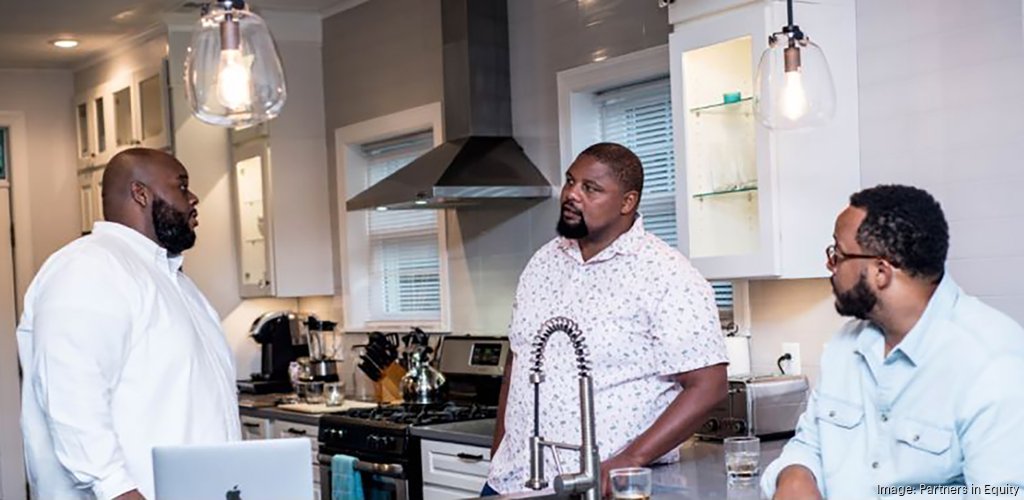
In North Carolina alone, impact finance entrepreneurs like Partners in Equity and Homium are reimagining property ownership through a fusion economics lens — blending innovation, equity, and investor alignment to unlock access for those historically shut out.
Using shared appreciation loans, Homium provides interest-free, no-monthly-payment second mortgages covering up to 35% of a home’s value. Homeowners repay only when the property is sold or refinanced, based on its appreciation — not fixed debt. This model not only lowers the barrier to entry for first-time buyers but also protects against the financial risks that often destabilize low-wealth households (for background, see, “With shared-appreciation notes, Homium aims to help home buyers overcome the down-payment hurdle”).
Through Community Homeownership Trusts, local nonprofits and mission-driven sponsors can deploy capital directly into these loans, building generational wealth within their communities.
By tokenizing these investments, Homium creates a new asset class — one that aligns institutional capital with inclusive growth, not just return. It’s the kind of design-forward, values-aligned infrastructure that makes shared prosperity real.
Partners in Equity takes a similar tack, using equity-based downpayment assistance to help modest-wealth entrepreneurs purchase the commercial properties where they operate. This isn’t just real estate. It’s reviving the promise of Reconstruction. It’s wealth-building. It’s purple populism in action — leveraging capital to uplift, not extract (disclosure: I’m one of three founding partners in Partners in Equity).
Take Kenya T, for example. When I first met her, Kenya was a commercial tenant running a mental health clinic, helping families navigate trauma, domestic violence, and the justice system. After overcoming the stigma of a felony charge at age 19 and surviving cancer, Kenya had built a business from scratch and grew it for a decade. She was simultaneously navigating a real estate market that was constantly threatening to displace her company.
Finally, she was able to negotiate the deal of a lifetime. Kenya had a chance to buy her headquarters building for $400,000, for a property worth twice that. But she almost had to walk away. Not because the deal didn’t make sense. But because all of her liquidity was tied up in the business, and she didn’t have access to the friends or family wealth that entrepreneurs are often expected to pull from.
That’s when Partners in Equity stepped in. With our investment, Kenya closed the deal, secured her headquarters, and became a commercial property owner.
Today, she’s not only running her mental health program. She’s planning to develop the entire site for deeper community impact. She avoided displacement. She created generational wealth. And she’s modeling what real economic mobility looks like.
Re:Construction
What girds stories like Kenya’s and the many others who have benefited from impact financing isn’t charity. It’s prosperous design.
These investments are pragmatic. They’re profitable. And they’re rooted in the belief that justice and growth aren’t at odds. That shared ownership is be a stabilizing force. That markets can — and must — be reengineered for inclusion.
Call it what you want: fusion economics, purple populism, inclusive capitalism. What matters is that it works.
We’re in the early stages of a new Reconstruction. The playbook for shared prosperity is being written in neighborhoods and boardrooms, powered by those who understand that inclusion isn’t just an ethical choice — it’s an economic imperative.
As we mark the 250th year of America and of capitalism, the question isn’t whether the experiment continues — it’s whether it evolves. Growth without justice isn’t progress. An ownership economy that lacks access isn’t opportunity. And prosperity without participation isn’t sustainable.
We’ve seen what happens when we turn away from shared prosperity — Wilmington taught us that.
But in Kenya’s office park, and across the portfolios of the forward-thinking investors and innovators, we’re seeing what happens when we double down on the promises of both the Declaration of Independence and of Reconstruction.
It’s not just a better economy. It’s a better country. Let’s build it.
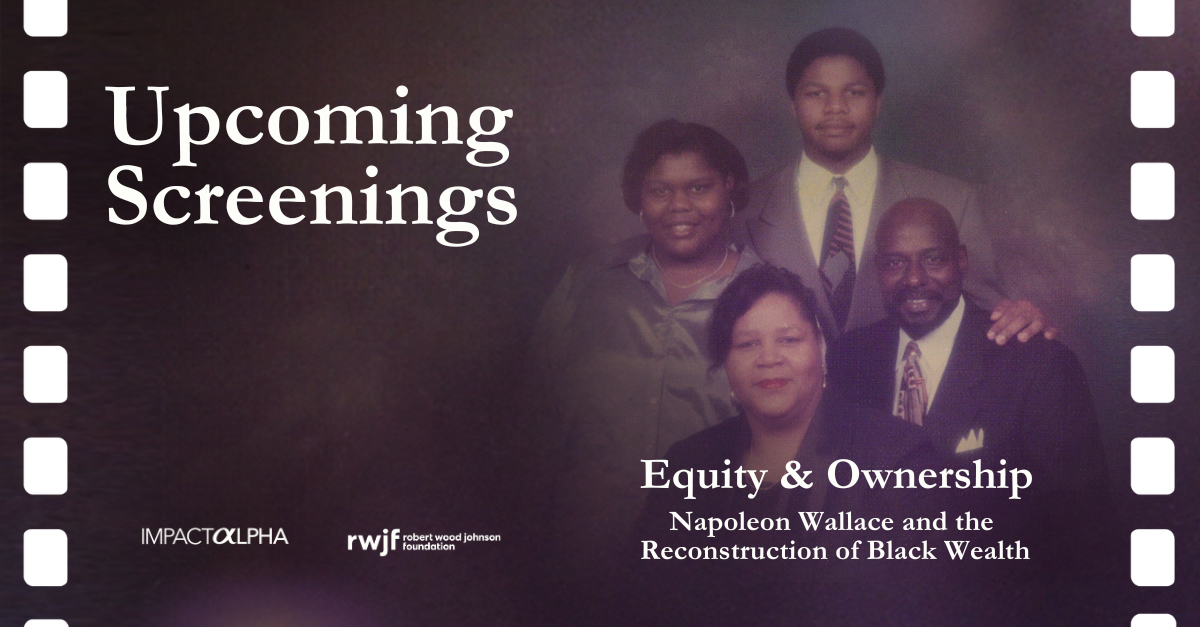
ImpactAlpha contributing editor Napoleon Wallace is a co-founder of GOOD TRBL, Partners in Equity, Activest and other companies and organizations. He is the subject of ImpactAlpha’s mini-documentary, “Equity and Ownership: Napoleon Wallace and the Reconstruction of Black Wealth.”