
Africa is at the center of a new geopolitical scramble for valuable mineral resources. The prize this time isn’t gold or diamonds. It’s copper, lithium and other minerals deemed critical for global defense, energy security and artificial intelligence.
The imperative at this week’s Investing in African Mining Indaba, or convention, in Cape Town: Seize the moment to turn the extraction of the continent’s mineral wealth into a driver for sustainable economic development and shared prosperity.
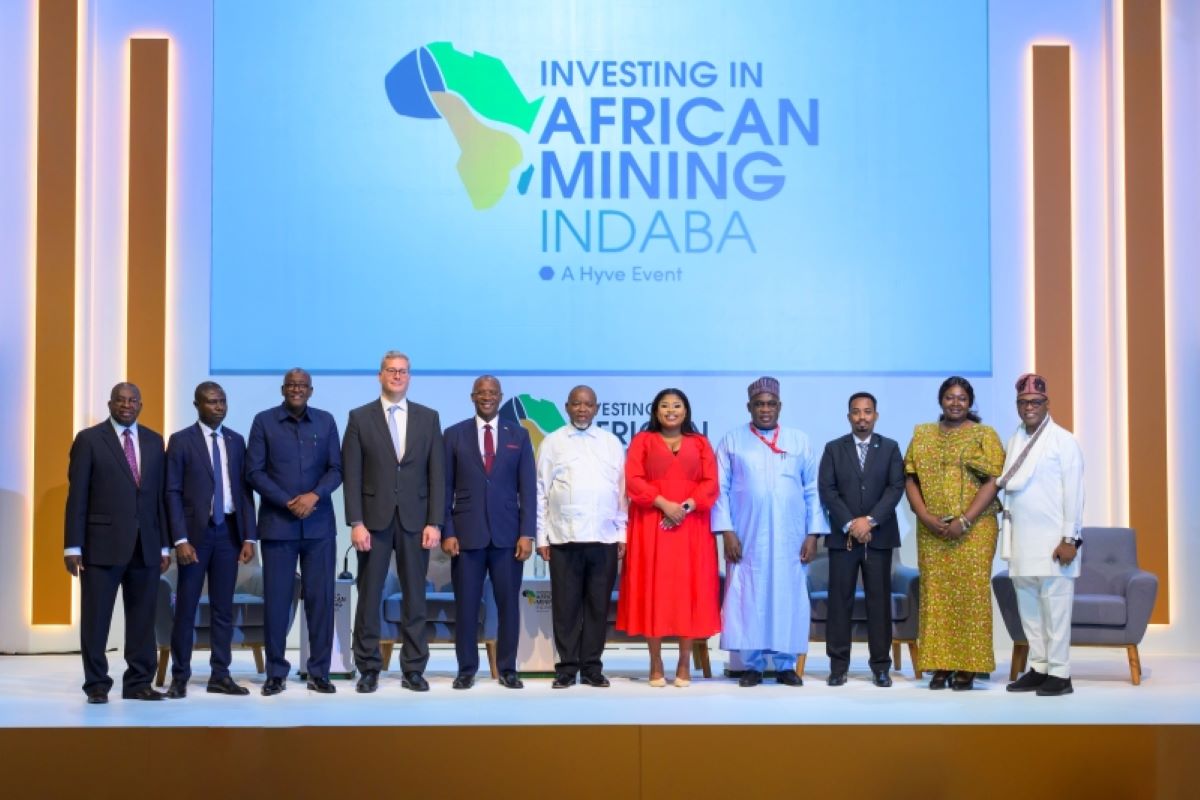
Nearly 11,000 mining executives, policymakers, academics and other stakeholders gathered for the largest convening of Africa’s mining sector, which Cape Town has hosted for more than 30 years. The conference theme: Stronger together.
“Africa must define what ‘critical’ means for us. Critical minerals are not those demanded by global supply chains, but fundamentally, they are those materials essential to fueling African economies,” declared Mining Indaba’s chairman Frans Baleni, who kicked off the three-day conference. “It demands foresight, sustained investment and above all, a political commitment to ensure Africa’s mineral wealth leads to a shared prosperity.”
Last week’s agreement between US President Donald Trump and President Felix Tshisekedi of the Democratic Republic of the Congo served as a counter-example. The deal gives American companies access to the largely untapped minerals in eastern Congo, which are estimated to be worth up to $24 trillion. Local opponents have charged that the deal undermines national sovereignty and does little to stop the fighting with Rwanda-backed rebels who have seized major cities.
The agreement is part of President Trump’s $12 billion “Project Vault” initiative to procure critical minerals as a defense against China, which controls the majority of rare earth minerals mining and processing.
“We are witnessing heightened geopolitical tensions in the world, with competition among some developed economies seeking greater control over the natural resources of developing nations,” Gwede Mantashe, South Africa’s Minister of Mineral and Petroleum Resources, told the conference. “It is not our fault we have deposits here, but the great nations want to have control over those deposits. We have a responsibility to protect them.”
A promising approach: Zambia, which has significant copper and cobalt reserves. The government is making a push to formalize informal and small-scale mines to ensure that local businesses benefit from the demand for its minerals. It also requires that mining companies operating in the country spend at least 20% of their procurement budgets with local suppliers.
“Mining is about empowerment, it’s about equity, it’s about shared prosperity,” said Zambian President Hakainde Hichilema in a keynote address. “Africa should not continue exporting raw materials as the main business. It is imperative that value addition become part of the agenda.”
Building infrastructure and local businesses that can process extracted minerals has a ripple effect through the economy, from direct mining companies down to businesses providing supportive goods and services. “When our countries see their economies grow, that will inject more stability in the operating environment.”
Local context
Conversations at an African convention packed with mining executives might sound unfamiliar to investors and operators accustomed to sustainability or climate conversations in the Global North.
Investments in “critical minerals” to Africa aren’t about defense, or data centers, or electric vehicles; they’re defined as those that drive economic development. “Investing in technology” means carbon capture and storage, or CCS, and other methods to prolong the use of coal. Granular discussions on individual commodities, companies, technologies and geographic markets were all infused with “geopolitics” (read: Trump).
Largely missing from the conversation: “climate change.” Phrases like “green,” “energy transition” and “sustainability” cropped up in every conversation, but in an African context. The coal industry, for example, is a major employer in South Africa, the long-standing world record holder for the highest unemployment rate. Progress toward a “just transition” requires acknowledgement of the crucial role that coal plays in South Africa’s economy.
Across Africa, 600 million people still lack access to electricity. With 80% of the world’s energy poor, renewable energy is about rural electrification, rather than the shift from fossil fuels.
Having constructive conversations about climate change, a low-carbon economy and a just energy transition in Africa requires an understanding of the tension between the need for decarbonization and the need for economic development, observed Julie Courtnage, a scientist with the Mandela Mining Precinct, a mining research initiative. “In the Northern Hemisphere, sustainability means green. In Africa, sustainability is about people.”
King coal
South Africa’s economy runs on coal. So does most of Asia. Coal-dependent emerging economies are under pressure to transition to greener power sources while sustaining economic growth.
The number of conversations about coal at Mining Indaba made it an unofficial theme. Mantashe set the tone for the discussion at the outset, by declaring coal a “critical mineral” in Africa in his opening speech. Panelists speaking on topics like “Is the resurgency of coal investment real and going to last?” and “Why is coal not considered a critical mineral?” spoke about African coal mining as a key to a green transition.
“It’s not coal versus renewables. It’s coal and renewables. Coal will remain part of this transition for a very long time,” said Mike Teke of coal mining company Sereti Resources. “To industrialize, to be able to produce things like wind turbines, solar panels, you need strong energy base-load. In South Africa, our baseload for now is coal,” said Baruya. “It is critical and important to let us invest in this resource for the coming 40, 50 years. It will help us as we transition to renewables.”
Most speakers, like Teke, were representatives of coal mining companies or coal industry research organizations and associations. But even staunch sustainability advocates like Courtnage, as well as commodities analysts who are witnessing global finance shift away from coal, acknowledge the risks of shutting coal off in highly dependent markets like South Africa without a transition plan.
The impact of coal’s decline on coal communities in the US that had little other economic activity is a warning. Once coal-rich Appalachia is one of the poorest regions of the US.
“This long-term decline of the industry has put enormous pressure on the communities that have historically relied on coal as an important source of labor income and public revenue, which have long struggled with persistent poverty, low incomes and high rates of public assistance,” found a Harvard Kennedy School study.
A coal plant was the biggest single employer on the Navajo Nation, the largest tribal territory in the US, before it closed in 2019, taking nearly 1,000 local jobs with it.
If South Africa were to suddenly shut off its coal production and plants, said Paul Baruya of FutureCoal, a global coal advocacy alliance, “You haven’t so much lost a critical fuel; you’ve suddenly created a new set of stranded assets elsewhere in the economy because you’ve undermined the security that coal provided.”
Just transition
South Africa was the first country to sign onto a multilateral agreement to receive international support to wind down its coal dependence. The Just Energy Transition Partnership, or JETP, was designed to help the most coal-intensive countries build their renewables capacity to ensure they can continue developing their economies, but with less carbon intensity. Indonesia, Vietnam and Senegal signed similar agreements.
South Africa’s JETP, announced at the COP26 climate summit in 2021, identified a need for nearly $100 billion in investment to support its renewable energy and decarbonization goals. So far it has mobilized about $13.7 billion from the EU, individual partner countries in Europe and development banks. The original JETP agreement included the US, but the Trump administration withdrew US backing, along with $1.5 billion in commitments, last February.
Sereti Resources’ Teke expressed frustration with ever-moving energy transition goal-posts that shift based on who is in the White House. “Our country, our region, our continent, needs to make decisions that are in [our] interest. We need to be careful of geopolitics misleading us.”
Virtually no one in the coal discussions took an open stance of eliminating its use. The type of coal used for electricity is among the dirtiest; Siphelele Buthelezi of South Africa’s Council for Geoscience and other speakers argued for wider adoption of carbon capture and storage and other abatement technologies.
“The research question for us is not whether coal is critical or not,” Buthelezi said. Rather: “Can emissions from utilization be reduced through technology while we preserve energy security and an economy that serves everyone?”
Pathways to growth
The historically-extractive mining industry is beginning to examine ways to have a more positive impact on the communities it depends on.
“The core business is digging things out of the ground. But that’s not mining anymore. It’s water. It’s land. It’s communities. It’s biodiversity,” Emma Parker of Anglo American’s Impact Finance Network told ImpactAlpha.
A coming wave of closures of South African mines at the end of their lifespans is creating a growing sense of urgency to ensure communities and jobs don’t collapse.
Anglo American, the British mining giant, five years ago developed the Impact Finance Network to support sustainable and regenerative small businesses in its mining communities. The initiative has provided technical assistance and other business support to more than 80 companies in Southern Africa. SwiftVEE in South Africa is a livestock trading platform that connects farmers to buyers. Gradesmatch, also in South Africa, helps students find career opportunities. AgLeaseCo in Zambia provides equipment leasing to unbanked farmers.
Anglo is dialing up the strategy with a concessional financing facility, backed with £4.5 million from the UK’s Foreign, Commonwealth and Development Office. Its aim is to encourage both impact and traditional investors to support locally-owned businesses and fund managers that are creating jobs and building economic opportunities that will survive mining operations.
One of its early investments is to Keyo Ventures, a flexible finance fund for early-stage green companies in Southern Africa. Founder Grace Legodi, an investment banker turned fund manager, launched Keyo three years ago to support founders in the region’s nascent green economy with self-liquidating financing that gives investors a return while “empowering a founder to retain as much ownership in their business as possible.”
Anglo’s impact finance facility, along with FSD Africa, backed Keyo with returnable grants, which helped the fund manager secure its first institutional investor.
Anglo American has tapped the small sustainability-linked bond market to support community education initiatives and carbon projects. It also works in partnership with South African bank Absa to provide low-interest loans to its suppliers through a government mandated corporate supplier development program for Black-owned South African businesses.
“It’s good business to make sure your suppliers thrive,” said Anglo’s Nevashnee Naicker. “You also have to create diversification for that supplier [because] mining is cyclical, and the mine will eventually close.”
In Zambia, the banking sector is supporting the government’s efforts to formalize small-scale mining and drive local mining value addition. The commercial bank Zanaco, for example, is raising a $100 million sustainability-linked bond to support local businesses in bidding for mining contracts.
“We know that mining giants do provide employment opportunities,” said Chali Mwefyeni of Zanaco. “But if they created more value within smaller businesses, after the mines, we’ll have businesses that survive and take communities to the next level.”
Holistic value
An all-women panel for a discussion on circularity in the mining sector – one the only sustainability-themed sessions at the indaba – rejected the premise of the topic, “Is a circular economy just?” by arguing that the framing pits environmental (recycling and waste reduction) against social (employment).
(The room was mostly empty.)
Mining companies are increasingly focused on capturing value from waste streams, and opportunities to build secondary businesses around recycled minerals. But there’s a defensiveness in circularity discussions because companies see it as a threat to primary mining operations. An argument against it is that it’s a job killer.
“We need to put people back in the cycle of nature so that it doesn’t become an environment versus people discussion,” argued Mandela Mining Precinct’s Courtnage.
“In mining ESG, the social side is often only measured in terms of elimination of the negative,” added Marge Ryan of Johnson Matthey, a London-based company working on platinum metals recycling. “There’s no metric for measuring a positive, and that’s something that needs to be fixed.”
“Measures of value need to start including social value, material value, usefulness, rather than just economic,” Courtnage continued. Without holistic consideration of environmental, social and governance factors, “future shareholders may hold the company liable for undermining total value and bringing on liabilities.”
Courtnage underscored the point by polling the audience. “How many people here feel that much of your effort at work is wasted? How many people feel that your job description doesn’t quite fit what you do?”
“People are part of a natural system,” she said. “If we apply that designing-out of waste to people – be it in community or in industries – we will get the best out of people by giving them good jobs and a balanced life.”