
Animal feed production in central Kenya. Dairy production in the nearby Rift Valley. Tractor financing for Kenyan and Nigerian farmers.
Global agriculture NGO Heifer International isn’t known as an impact investor, but with these and other projects, it’s applying catalytic impact financing tools to demonstrate the investability of Africa’s farmers, agriculture businesses and startups.
“Our job is to support them to become bankable,” Heifer International’s Surita Sandosham told ImpactAlpha at CGIAR Science Week in Nairobi, which brought together scientists, development organizations and policymakers to foster partnerships and innovation for Africa’s climate-impacted food systems.
Heifer, historically known for its grant-funded farmer training and technical assistance programs, is alert to changing global development funding priorities. The need to fund training and tech adoption, especially for climate-smart agriculture, is only intensifying in the markets where Heifer works. The organization wants to see more agribusinesses and startups attract private capital so they’re less dependent on government and donor funding.
Heifer is using the grant, lending and technical assistance tools at its disposal as a global nonprofit to get agribusinesses to bankability. Much of this work is happening through its impact investing division, Heifer Impact Capital.
“We provide them with technical assistance so that they understand finance. They build up their own business development, business acumen, they understand how to create a business plan, and we’re also providing them with micro-loans,” Sandosham said.
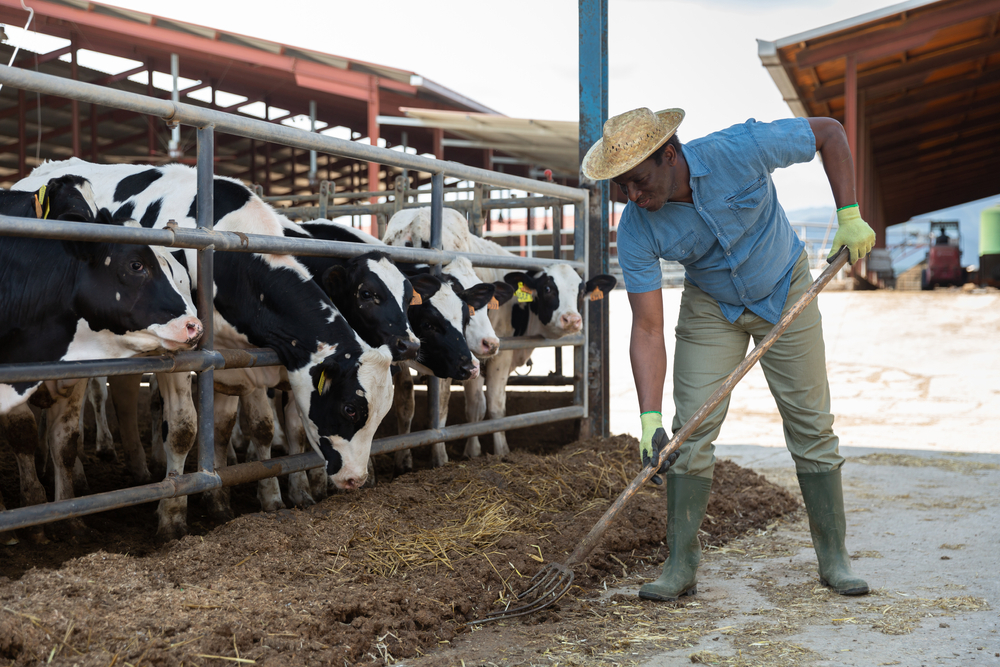
HIC has provided $90,000 in loans to Ainabkoi Farmers Cooperative, a dairy cooperative in Kenya’s Rift Valley that provides milk storage, logistics, animal feed, training, and credit and savings to farmers. The debt capital enabled the cooperative to set up an agri-input shop to offer farmers more competitive prices on their farm supplies. It also allowed the cooperative to set up a vehicle financing program for farmers to buy motorcycles and three-wheelers to transport their milk.
Since taking on Heifer’s loan in 2022, the cooperative has grown from about 770 farmers producing 5,500 liters of milk daily, to 2,100 farmers producing 17,200 liters daily.
Heifer also funded another dairy cooperative, the Mburugu Dairy Farmers Cooperative Society in central Kenya, with a $50,000 loan to produce animal feed.
Crowding in capital
Such loans are both a lifeline to Africa’s businesses and key to their long-term resilience and growth. Even though the sector contributes as much as 40% of GDP in some African countries, the commercial banking sector allocates less than 12% of its lending activity to agriculture.
Heifer International and other agriculture nonprofits are looking for ways to unlock capital from banks and agriculture-focused corporations. Heifer provided Hello Tractor, tractor leasing platform for farmers in Kenya and Nigeria, with a $4.5 million grant to test and seed a pay-as-you-go tractor financing program, which commercial banks had declined to back. The organization’s grant enabled the financing and sale of 300 tractors and spare parts. A third of the borrowers are women.
Since launching its pay-as-you-go program, Hello Tractor has gotten a strategic investment from agriculture machinery maker John Deere.
“They needed enough funding to get to the next level, and we provided that,” Sandosham said. “The result was they attracted more funding from government and corporations.”
CGIAR, a global nonprofit focused on agricultural research, is using funds from the German and Dutch development agencies GIZ and SNV to get farmers in Burkina Faso, Kenya, Mali, Niger and Uganda to adopt biogas systems to both manage farm waste and improve energy access. Its International Livestock Research Institute is using results-based financing to deliver 50,000 biodigesters to farmers. One of the scientists on the project told ImpactAlpha that the organization is looking for ways to engage commercial lenders.
“Things are changing. Foreign assistance has been cut, USAID has basically pulled out. It’s in the interest of corporations that are dealing with the value chains we care about to participate in a more partnership-like way, and involve the farmers,” Heifer’s Sandosham said. “At the end of the day, if you don’t involve the farmers, you don’t get sustainability.”
Heifer, CGIAR and other long-standing nonprofits have a big picture view of Africa’s agriculture value chains and where the pain points are for access to financing, technologies, training and markets. Sandosham believes they can play a role in helping private investors, banks and corporations identify ways to bring more capital and resources closer to farmers.
Heifer last week launched its Practice for Change Program, where it is aiming to mobilize $95.7 million for agriculture value chain efficiency and resilience in more than 25 countries and to improve the livelihoods of more than 625,000 households.
“Often, there’s a requirement for a track record and viability, and that’s where we have a hard time getting [banks and corporates] to think about starting at the beginning, where farmers are most vulnerable,” Sandosham said. “The challenge is figuring out where along the value chain they’re interested in investing and plugging in.”