
Directed by Hunter Nolan, Auberin Strickland and Dundein Strickland
Entertainment: 3.5, Impact: 4.5
WHFF Jury Award winner for Feature Documentary
“This film reminds us of the promise that activism holds in the face of fatigue and disillusionment.“ – Erin Brockovich
There are few images more jarring than seeing a tailings dam burst, unleashing a tsunami of toxic waste capable of flattening nearby communities and devastating local ecosystems.
For some mining operators, such incidents are an inevitable cost of doing business. For investors, they are a serious but manageable risk. For residents and wildlife, they represent an existential threat.
Perhaps the most famous mining incident in recent memory is the catastrophic failure of a tailings facility at Vale’s Corrego do Feijão mine in Brumadinho, Brazil in January 2019, which led to more than 270 deaths and billions in damages, including a 24% drop in Vale’s stock price. In a rare example of how quickly the market can react to underpriced risks, a group of investors led by the Church of England Pensions Board called for a better approach to the management of these facilities. This led a group of investors and the UN in 2020 to launch the Global Industry Standard on Tailings Management, or GISTM, a set of 77 requirements for tailings facilities with “the ultimate goal of zero harm to people and the environment with zero tolerance for human fatality.”
These types of initiatives are worth celebrating and offer a great case study on what happens when investors coordinate with businesses and civil society groups to collaborate on addressing shared challenges. But the real question is how much risk are we willing to tolerate from mining projects, and how to better lift up the voices of the people who are being directly impacted.
After all, mining can be a touchy subject for those in the impact investing and sustainability communities. It’s hard to square the fact that we need metals and minerals for the energy transition with the sobering reality that mining projects can have severe negative impacts on the local ecosystem. There is no such thing as a perfectly safe mining operation – there are mining projects that attempt to minimize environmental harm and those that attempt to maximize profits. What’s often missing from these conversations is the perspectives of people who live near mining projects.
That’s why we need more documentaries like UNEARTH, which tells the story of how Indigenous leaders and commercial salmon fisherman teamed up to fight against the approval of Pebble Mine, a proposed mining project in Bristol Bay, Alaska that had the potential to be North America’s largest-ever copper mine. Directed by John “Hunter” Nolan and brothers / fishermen / cinematographers, Dune and Aube Strickland, the film’s themes will be familiar for anyone interested in environmental scandals like those depicted in Erin Brockovich (who came on as an executive producer) or Toxic Town (which was featured in a previous ‘Pop Impact’ review).
First, a powerful company sees an opportunity to make a sizable profit and leans on its political connections to acquire the necessary permits. Then locals find out about the project and realize how much it would threaten their livelihoods and the local ecosystem. A tit-for-tat ensues as each side uses a combination of lawyers, politicians, activists and media to argue their position.
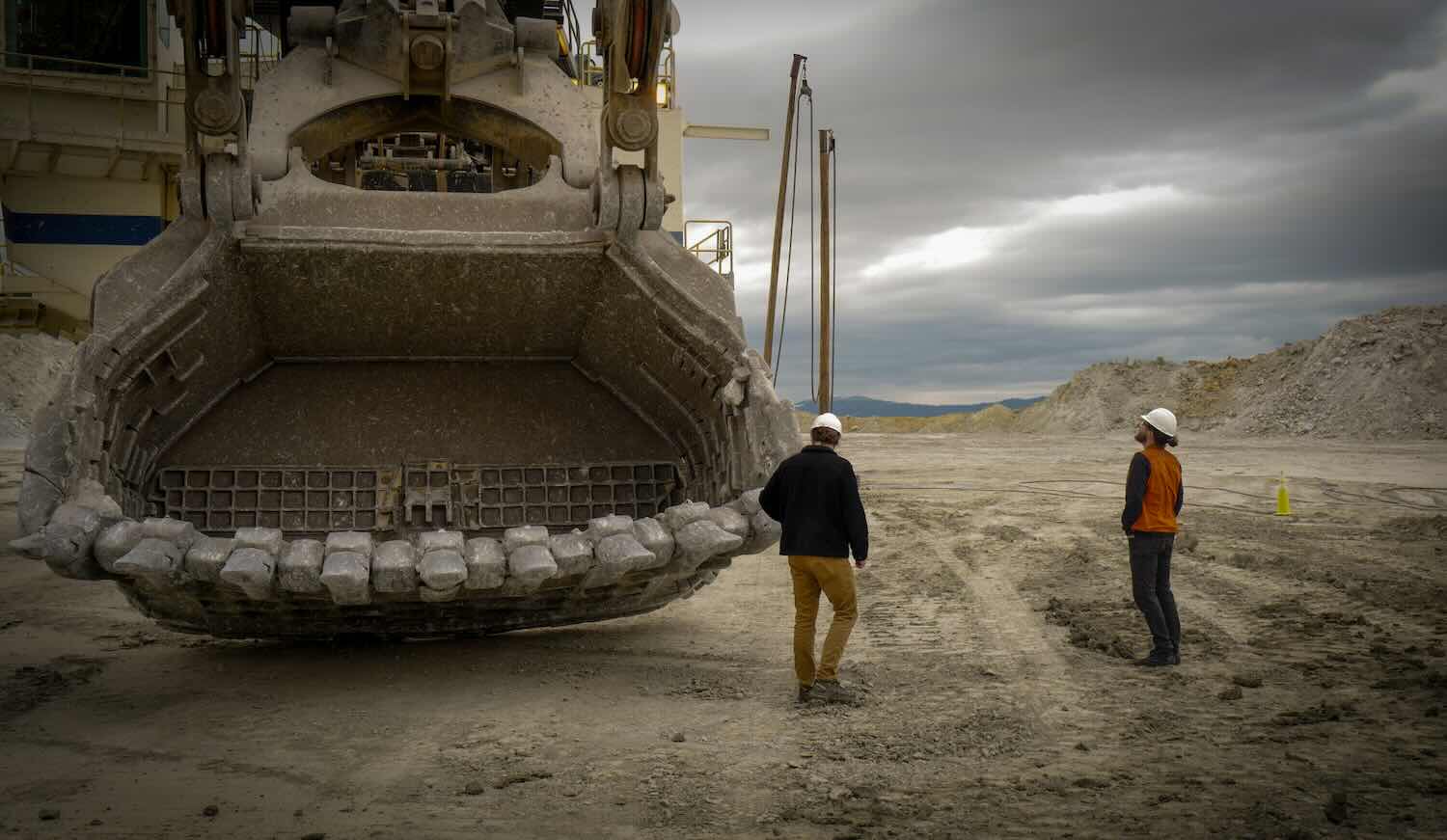
UNEARTH presents this particular David v. Goliath battle as inspiration for a larger debate on how mining interests (i.e., economic interests) often supersede community interests (i.e., human interests). The footage takes viewers from the site of the proposed Pebble Mine to other mines across the country, including those still in operation and those that are now defined by a large hole in the ground and a leftover pond of toxic waste.
Front and center throughout the film are the Strickland brothers and Christina and AlexAnna Salmon, Indigenous community activists who see themselves as “the salmon people of Alaska” given the salmon’s importance to their culture and livelihood. We learn that the area around the proposed mine is home to the world’s largest commercial sockeye salmon fishery, and that the fishing industry accounts for approximately 75% of local jobs. So it’s no surprise that the Salmon sisters are so committed to trying to block the project.
“This is our gift that our ancestors have given us and with that comes this huge responsibility. A lot of time we talk about this for our kids and our village and our future generations and our nation but actually it’s for the world. It’s a planetary scale.”
The Salmon sisters are the clear heroes of UNEARTH, but my favorite scene actually features the Strickland brothers going undercover to Canada for one of the world’s premier mining conferences, a place where important deals are done and harmful deeds are not to be discussed. Posing as scions of a family office with less than $1 billion in assets (technically true!), they roam the corridors pretending to be looking for interesting mining projects in which to invest. Eventually they find themselves at the table of the CEO pushing the Pebble Mine project and got questioned about whether they were one of “those people” – meaning investors that cared about sustainability as well as profits.
I watched with a mix of horror and chagrin as they attempted to maintain their cover as an off-script executive who clearly does not have time to waste for anybody who doesn’t have blood-red capitalism running through their veins.
It’s almost refreshing to hear what mining executives actually think about the sustainability movement. I’ve been to my fair share of finance and sustainability conferences, and the most interesting insights almost never come from what’s said on the stage. Eavesdrop on someone in the breakfast line or catch someone off-guard after a few drinks and you’ll get to hear what some of the industry’s most influential players really think about controversial topics like ESG and DEI.
But we don’t need hidden cameras, elaborate costumes or barrels of alcohol to know what community activists really think. While corporations use profit projections and geological surveys to argue their positions, community members focus on the “human and environmental cost.” Even if mining companies are willing to acknowledge social and environmental risks – especially thanks to GISTM disclosures – profits still take precedence.
In the case of the Pebble Mine, the EPA in 2023 blocked its development, arguing that it violated the Clean Water Act because it “would have unacceptable adverse effects” on Bristol Bay’s salmon fishery. It’s unknown if recent changes to government priorities and efforts to repeal – or at least defang – the Clean Water Act will be enough to revive the project, although the mining company seems intent on continuing to fight.
At least for now, UNEARTH shows that victory is possible even in the face of daunting obstacles. But victory also can’t just rely on the credibility of environmental harm studies and the willpower of regulators – there also needs to be a united and organized opposition. Nobody wants toxic waste in their backyard, let alone in their water or food supply.
Yes, trade-offs are inevitable for almost every aspect of the energy transition. Economic and social interests can sometimes be in direct conflict with each other. But we shouldn’t pretend that corporations and communities have equal bargaining power. One side has billions of dollars and an army of lobbyists, while the other side has its neighbors, a few scientists and occasionally some enterprising filmmakers. It’s never been a fair fight, but it’s a fight that has to be waged all the same every time a mining company proposes making another hole in the Earth.
As Erin Brockovich puts it, “this film reminds us of the promise that activism holds in the face of fatigue and disillusionment.“