
Who would be funding this, if not us?
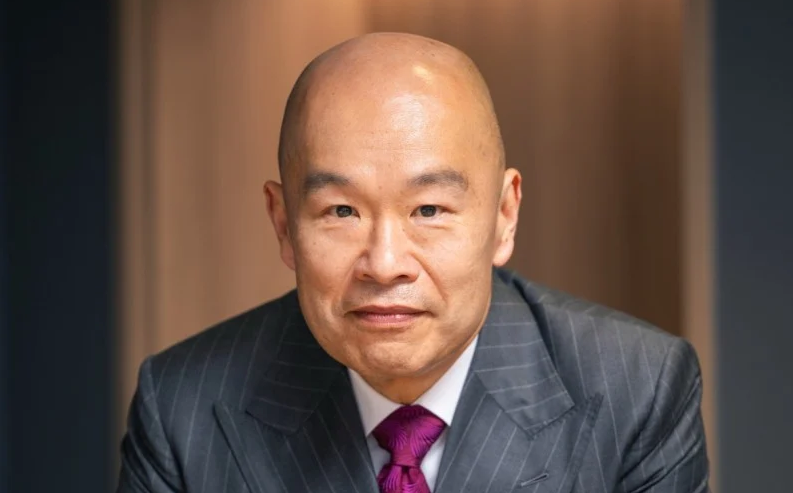
That’s the question Bryan Goh, the CEO and chief investment officer of the Tsao Family Office in Singapore, says his team asks all the time.
“We’re very careful where we fund that we don’t distort things,” Goh says on the latest episode of ImpactAlpha’s Agents of Impact podcast. “We’re always thinking, are we displacing purely financial capital? Are we replacing capital that would invest in any case? We don’t want to fund there. That doesn’t need our funding.”
“We are intentionally looking for stuff where the market is a little bit shy, where it’s our capital that’s additional, it’s not just the project or the business that’s additional.”
Tsao Family Office and Tsao Family Foundation are founding partners of Impact LP, ImpactAlpha’s platform for asset owners for whom LP stands for “leadership potential.”
The Tsao Family Office was established more than a decade ago by the family behind maritime company Tsao Pao Chee Group. The company, TPC, traces its roots to China’s Qing dynasty in the late 1800s. It relocated to Hong Kong after World War II and then to Singapore in 1991.
The family office serves effectively as the family’s charitable trust, investing a corpus to finance the family’s foundations supporting health and the Sustainable Development Goals. Tsao’s impact portfolio includes private credit providers BlueOrchard Microfinance Fund and Wellington Global Impact Bond Fund, and agriculture tech fund manager Omnivore and health care investor Somerset Indus on the private equity side.
Tsao Family Office, for example, stood out among the European quasi-public development finance institutions and multilaterals like International Finance Corp. as a backer of TLG Capital’s second Africa Growth Impact Fund, which provides dollar-denominated loans to African businesses that can’t get them from their local banks.
“We plug an economic inefficiency, which is the shortage of cash, not shortage of risk,” Goh says. “In some markets, the banking system has appetite for risk and doesn’t have enough cash. So we’re, in a sense, renting our cash off.”
Tsao is working to bring more family offices in Singapore and across Asia into impact investing. Families and ultra-high net worth individuals, beholden only to themselves, are better suited to impact investing than insurance or pension funds, which have responsibilities to beneficiaries.
“And I think you can make money doing this as well,” he says. “You’re finding something that’s risky where traditional capital can’t see the endpoint, but we can take a longer-term view.”
First principles
Goh knew private credit and infrastructure as a co-founder of First Avenue Partners in London, and had managed the alternative investment business at DBS private bank before joining Bordier & Cie in Singapore as their Chief Investment Officer. But before he joined Tsao Family Office in 2019, he had no experience with ESG or impact investing.
“I really had to learn the impact from the ground up, from scratch,” he says. When he arrived, he was given only a charter setting out how the family positioned itself in society and in business. The family business, Tsao Pao Chee Group, says it is guided by a “well-being mandate” and “an awakening journey from I to We.”
“The first thing I had to do is take that charter and translate it into a recognizable and practical investment mandate,” Goh recalls. Goh mapped the principles to the concepts of ESG, the risk-reduction framework around environmental, social and governance factors, and then to impact, proactive strategies to match the family’s priorities. He says he borrowed a framework from Norges Bank, which manages Norway’s government pension fund, the world’s largest sovereign wealth fund.
Starting with exclusions in public-equities markets, Tsao has built a full multi-asset, global strategy that includes private markets and public markets (Tsao even has a license, and investment vehicles, to manage outside capital, though it doesn’t market its services). Tsao doesn’t disclose the size of its holdings, but Goh says a majority of assets are aligned with impact or ESG, with just under 20% in what would be considered “contributing to solutions,” or deep impact.
“It’s in private markets where we have the greatest influence or impacts,” he says.
Goh says he is returning to “first principles” to revamp Tsao’s impact framework “and trying to meld that to an economic theory so that what we do is rationally sound and we don’t end up crowding out capital or having unintended consequences.”
As a result, he says, Tsao’s capital deployments may slow. “We’re demanding a coherent, consistent theory of change for everything that we invest in, and we require ourselves to have an internal theory of change that we can benchmark on that GP’s theory of change,” he says.
“We know that our theories, our beliefs, will be shifted by our engagement with GPs as well, as we learn. But it’s going to be a lot more rigorous, is how I would say it.”