
Misperceived risks are among the biggest obstacles to the mobilization of private investment for much-needed infrastructure projects in emerging markets in Africa and Asia.
But such mispriced risks spell opportunity for investors that know how to underwrite investments in projects like solar mini-grids in Nigeria, mobile telecommunications in Senegal and electric motorbike production in Vietnam.
“I probably spend half of my time dispelling the myths around risk perceptions,” says Philippe Valahu of London-based Private Infrastructure Development Group. He tells ImpactAlpha that PIDG’s loss rates are less than one-tenth of what ratings agencies would have predicted, with recovery rates “as good as you’re going to get in Europe or North America or better” (for background see, “Emerging market debt investors debunk risk myths”).
Through its open-ended Emerging Africa and Asia Infrastructure Fund, PIDG provides long-term debt for private infrastructure projects in renewable energy, social infrastructure, transportation, agriculture and digital communications. Through its subsidiary, GuarantCo, PIDG has since 2005 provided credit enhancement and local currency guarantees to crowd in private investment for infrastructure projects in developing countries.
The next step was to launch privately run, domestic versions of its guarantee arm to draw in domestic capital providers. PIDG launched InfraCredit in Nigeria in 2017, InfraZamin in Pakistan in 2020 and Dhamana in Kenya in 2024. That strategy has proved prescient with the reduction in foreign aid and the decimation of USAID, which had co-guaranteed some projects.
“It’s fine for us to go in and provide guarantees, but if we can tap into domestic capital, domestic resources, domestic skills, then we will go out of our way to set those up in a localized solution,” Valahu says.
PIDG scored an exit last month with the sale of its preferred shares in InfraCredit after the local currency guarantee facility listed itself publicly on a Nigerian stock market last April. PIDG sold its preferred shares in InfraCredit for $26 million, which it called “a strong return despite challenging macroeconomic conditions.” PIDG continues to hold common shares in InfraCredit.
“InfraCredit has been able to attract other forms of capital. It has built a pipeline and track record, where there were zero (institutional capital providers) prior to our coming into the market,” Valahu says. “They’ve built an unbelievable team. They’ve built a good pipeline. They’ve got a triple-A rating in the local market. They’ve done extremely well.”
Catalytic capital
Private Infrastructure Development Group was launched in 2002 by foreign development agencies in the UK, Netherlands, Switzerland and Sweden. Australian Aid joined in 2014 and Global Affairs Canada signed on in 2024. PIDG’s aim is to support infrastructure projects in renewable energy, transport, logistics and telecommunications in Africa and Asia and “provide increased access to infrastructure for local communities while developing local capital markets.”
All told, PIDG says it has helped mobilize a total of $47.2 billion in total project finance since 2002. Some of that has come from governments, but nearly $30 billion has come from private investors, including institutional capital providers like Allianz Global Investors, South African bank Standard Bank and Sumitomo Mitsui Banking Corporation in Japan.
In 2024 alone, PIDG says it helped secure a total of $5.5 billion across more than two dozen projects. More than $4 billion came from private investors. According to Valahu, two-thirds of PIDG’s transactions foster resilience, adaptation or other climate-related themes, such as sanitation.
PIDG’s open-ended Emerging Africa and Asia Infrastructure Fund has secured $394 million in debt and sustainability-linked credit. After learning the ropes in Africa, the fund expanded its geographical mandate to include Asia in 2024 (see, “How EAAIF is leveraging its African expertise to drive infrastructure financing in Asia”).
Among those lessons was the need to respond to the needs of local markets. In addition to guarantees through GuarantCo, it offers credit, technical assistance and project development via another subsidiary InfraCo.
GuarantCo, which is able to backstop between $5 to $50 million per transaction for up to 20 years, guaranteed the first local currency bond in Kenya in 2005, as well as the first local currency corporate bond in Nigeria in 2011. GuarantCo also guaranteed the first local currency bond in Sri Lanka and a sukuk or Shariah-compliant bond in Pakistan.
In 2024, GuarantCo provided a $27 million guarantee to Africa GreenCo, a renewable energy buyer and trader in southern Africa. GuarantCo’s guarantees to independent power projects that sell to Africa GreenCo were meant to give them confidence to enter into contracts and build renewable power projects.
“We don’t want to just do a single standalone transaction,” Valahu says. “We’re looking at the product’s impact on the ecosystem.”
Repricing risk
In Nigeria, PIDG had already been issuing credit enhancement solutions for naira-denominated bond issuances.
“We had been doing these transactions on our own account through our own guarantee arm,” he says. “The market begins to understand and accept the usefulness of that as a means of tapping into institutional capital to diversify the capital base for long-term funding needs for infrastructure.”
To set up the local facility, PIDG and the Nigeria Sovereign Investment Authority each invested $25 million. Additional capital came from UK FCDO, KfW, Africa Finance Corp., African Development Bank and domestic pension funds and insurance firms. PIDG’s project development arm, InfraCo, invested another $27 million in InfraCredit in 2020.
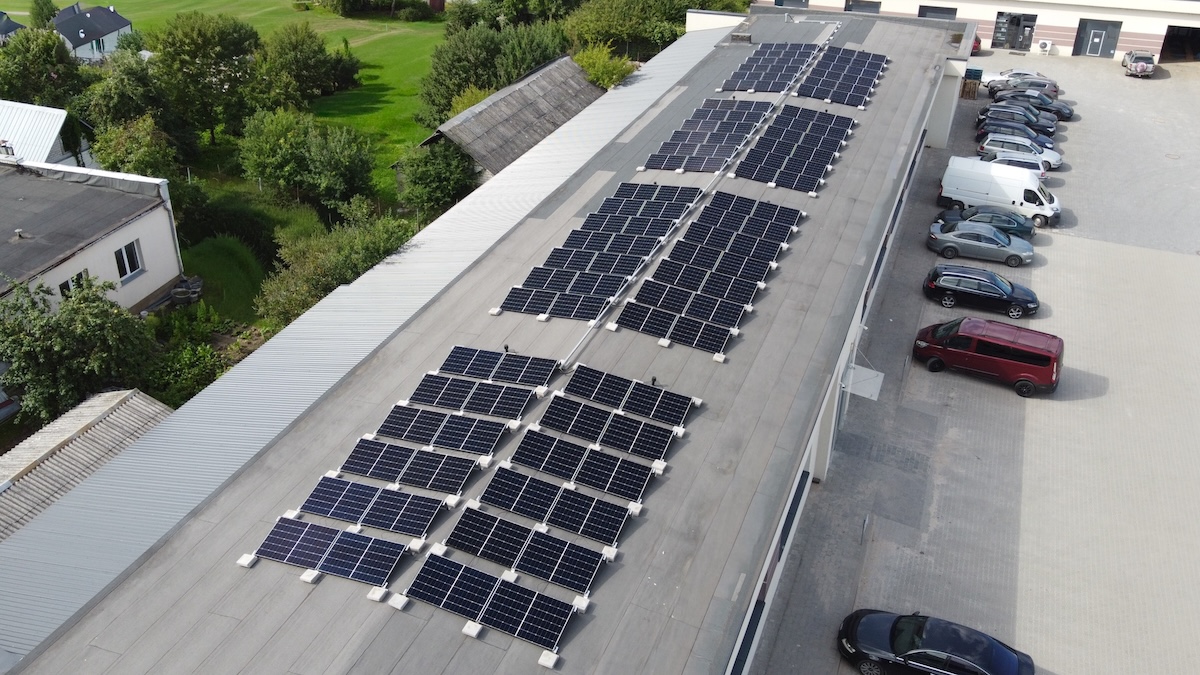
In Nigeria, where the infrastructure gap is estimated to be over $3 trillion over the next 30 years, InfraCredit claims to have mobilised 327 billion naira ($516 million) from over 20 institutional capital providers. Last month, InfraCredit, working with the Climate Finance Blending Facility, completed its sixth transaction, guaranteeing a local currency debt issuance by First Electric Power and Automation Services for 20 “mesh grid” solar projects that are expected to provide electricity for more than 5,000 households and small businesses.
PIDG worked with the Nigeria Sovereign Investment Authority to lift the barriers that had prevented institutional capital providers from supporting infrastructure. In 2010, Nigeria’s National Pension Commission authorized pension funds to invest up to 35% of their assets in corporate bonds and a maximum of 15% into infrastructure bonds (see, “This regulatory reform could unlock African pension capital for impact fund managers”).
Once authorized, local pension funds still have to take the leap. The localization of the guarantee facilities helps mitigate foreign exchange risk and pushes local domestic capital providers to bet on projects in their own countries. PIDG is replicating guarantee facilities in Francophone Africa and another in Ghana this year.
The ripple effects can be substantial. InfraZamin Pakistan and Kashf Foundation launched the first gender bond in Pakistan, a 2.5 billion Pakistani rupee ($8.7 million) issue, which closed with support from 25 private investors. Proceeds of the bond would support women-led infrastructure projects like expansion of schools, low-income housing and their businesses.
In Kenya, Dhamana, was supported by Nairobi’s County Pension Fund, “quite powerful because it sends a signal to the market: ‘What does Nairobi county pension fund know that we don’t know?’”
The track record of infrastructure projects throughout PIDG’s network has helped change some of those misperceptions of risk, Valahu says. Early bond guarantees covered 100% of the investors’ commitments.
“Now there’s a realization that you don’t necessarily need 100% guarantee to manage the risk,” he says. “It’s been an evolution.”