
Environmental, social and governance investing has been under fire from all sides.
BlackRock’s former sustainability chief summed up the critique from the principled left by arguing that the effort was “a dangerous placebo that harms the public interest.” The rightwing attacks on “woke capitalism” have been far more heated—and muscular. Red states have passed anti-ESG legislation and sued asset managers. “ESG,” declared Elon Musk, “is a scam.”
But one critical aspect of the ‘S’—the fight against forced labor—has consistently risen above the fray. That’s because at its core, forced labor, a form of modern-day slavery, is “a crime so monstrous,” as William Lloyd Garrison put it in 1847, “that it throws into the shade all other distinctions known among mankind.” And that crime means enduring risk—and, in its prevention, opportunity—for investors.
A decade ago I founded Transparentem, a non-profit investigative group built to catalyze the eradication of forced labor and other human rights, as well as gross environmental abuses, in global supply chains. I did so at the same time as a bipartisan group of Senators were finally closing a festering loophole in the 1930 Tariff Act.
For 85 years, the Act had prohibited the import of goods made, “wholly or in part,” with forced labor—unless Americans couldn’t make enough of those goods to meet consumer demand. Once that last part was stripped out, Customs and Border Protection, or CBP, went to work. On March 29, 2016, at Newark Airport, CBP seized a shipment of soda ash, allegedly made using forced prison labor in China.
From there, Withhold Release Orders, or WROs — legalese for the detention orders —grew steadily during the first Trump administration. In 2020, for example, CBP’s Office of Trade prohibited over 300 shipments–of everything from cotton to garments to seafood to hair products–with a value of more than $50 million, from entering US markets.
In June 2022, Congress passed the Uyghur Forced Labor Prevention Act, which targeted WROs at products made in China’s Xinjiang Uyghur Autonomous Region. The rebuttable presumption that goods made there were made with forced labor put WROs into overdrive. Under Biden, CBP stopped some $4.5 billion worth of goods from entering the United States.
Entering Trump’s second term, the prohibition of slavery-made goods is no longer just an American effort. On December 12, the EU banned the import of goods made with forced labor as well.
While the EU and US will inevitably clash on most tariff questions in the Trump era, the forced labor ban is a rare point of unity. This isn’t protectionism. It’s the Noble Tariff.
Today, investors who demand transparent accounting of their portfolio companies’ efforts to monitor and combat forced labor in their supply chains are not just virtue signaling. They are protecting shareholder value and mitigating material risk.
Systemic reforms
At Transparentem, our goal has always been to ally with workers and communities to accelerate that transparency and catalyze reform. We work by doing deep-dive, close quarter investigations and bringing evidence of abuse first and foremost to those in the position to drive change: the consumer-facing brands and retailers who place the big orders. We press those companies to work with their suppliers to bring remedy for harm done, and to make systemic reforms to prevent future abuse.
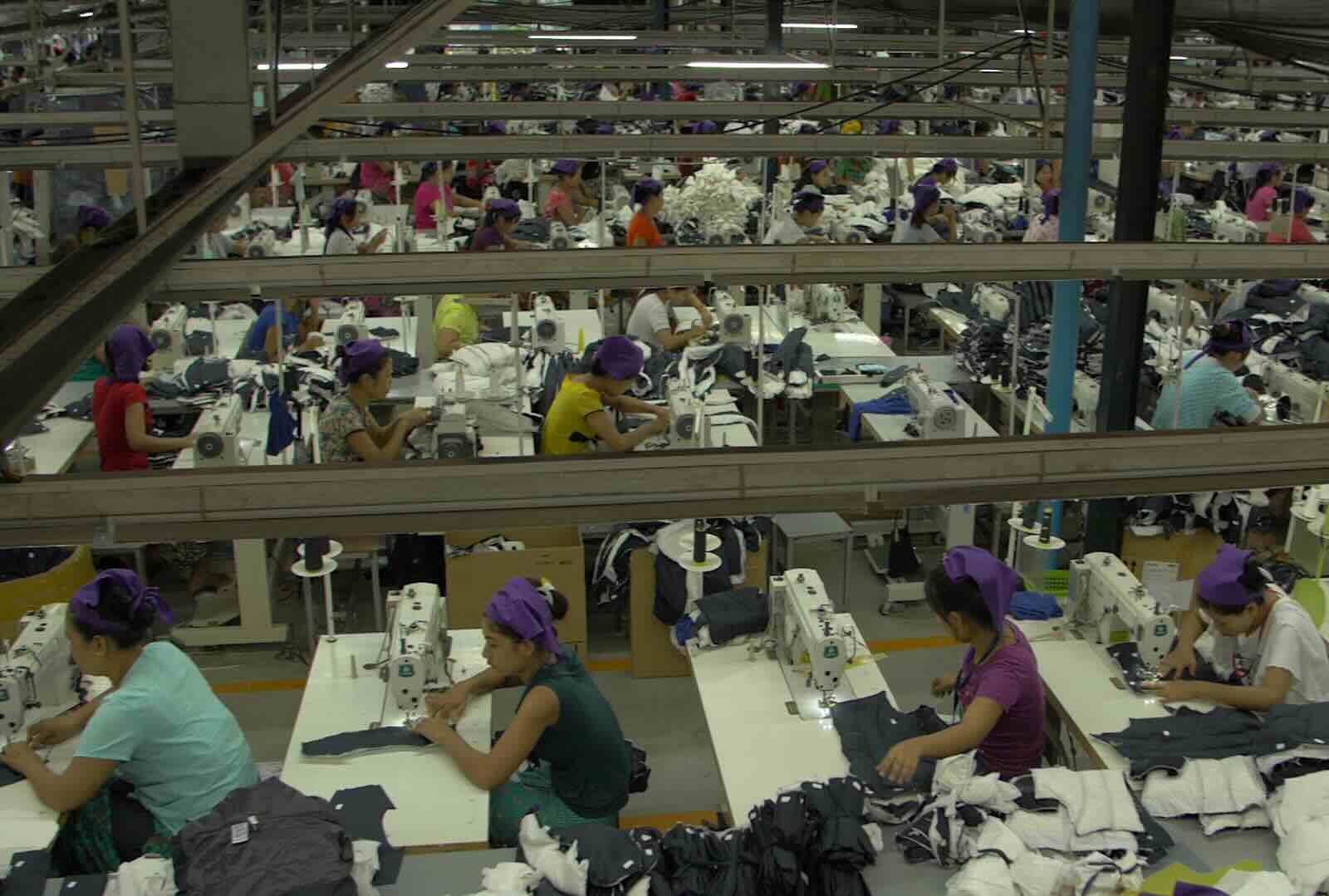
For a decade, we have scrutinized all tiers of apparel production—and the model has proved effective. After our investigations, brands and their suppliers have acted to reimburse workers some $5 million for debt-inducing recruitment fees they had paid to secure their jobs and made sure identity documents were returned to those workers.
To scale those changes systemwide, the American Apparel and Footwear Association partnered with the Fair Labor Association to launch the landmark Commitment to Responsible Recruitment, or CRR, which has been signed by more than 100 of the world’s largest brands, retailers and sourcing managers.
Our most recent effort, which we disclosed this week, and was covered in the Business of Fashion, shows how much more work must be done. Looking at Taiwanese textile manufacturing, we uncovered numerous indicators of forced labor—including the highest worker-borne recruitment fees that we’d found in a decade of work, as well as monthly garnishes by Taiwanese labor brokers.
One worker told us how the factory restricted their movement by “locking people up like animals”—an International Labour Organization (ILO)-defined indicator of forced labor. Another explained: “I came to work to pay my family’s debt, but received another debt.” Debt bondage is another ILO forced labor indicator.
Material risk
While many of the brands that we approached were signatories to the CRR, we found these abuses in suppliers to those companies’ direct suppliers. The fact that abuse occurs not in first tier suppliers, but farther upstream, makes no difference under the CRR. And, materially, that fact is no defense under US and EU laws. Goods made with such upstream forced labor are equally subject to import prohibition.
The onus to find and remedy that abuse is on all brands and retailers—and their investors. Here are some actions that investors can take:
- Recognize that forced labor is not simply an “ESG” issue—it is a material risk, and should be a priority. The question is not who on Wall Street, or in Washington, is against forced labor. Everyone is. But valence is not velocity. Investors should join with companies like the 50 that, in response to our latest investigation, implored the Taiwanese government to combat forced labor. They should work to ensure that the United States retains the lead on preventing slave-made goods from entering US markets.
- Map their portfolios to identify where low-wage migrants might work in company operations or supply chains. Such workers are particularly vulnerable to recruitment-based exploitation. Investors can use their leverage to push their holdings to enact and enforce covenants like the CRR.
- Compel public disclosure of their portfolio companies’ social audits. Checklist social audits, which Transparentem has shown across years of investigations have, as a class, been deeply flawed, are today the fig leaf of many a consumer-facing brand. Full public disclosure of such audits would allow investors—as well as downstream buyers, regulators, civil society, researchers, unions, community groups—to analyze their data and, importantly, evaluate their methodologies. If done at scale, that could mean a flood of data, which AI can be trained to process.
- Explore the capacity of new technology to map supply chains and make transparent the practices therein. Companies like Altana and Prewave are at the vanguard of such efforts, which if widely adopted and made transparent, could be a vital tool in reform.
Getting forced labor out of our marketplace is not a right or left issue. This is neither protectionism nor “woke capitalism.” Sen. Josh Hawley is as passionate about it as Sen. Ron Wyden. And the material risk to shareholders means that even Milton Friedman would acknowledge the free market is best served when workers are themselves free.
_______________________________________________________________________________
E. Benjamin Skinner is the founder and president of Transparentem.