
“We’ve come too far to turn around now.”
Bryan Stevenson of the Equal Justice Initiative says he felt the need to put that simple declaration on the wall of a new square in Montgomery, Ala., dedicated to the city’s role in the civil rights movement.
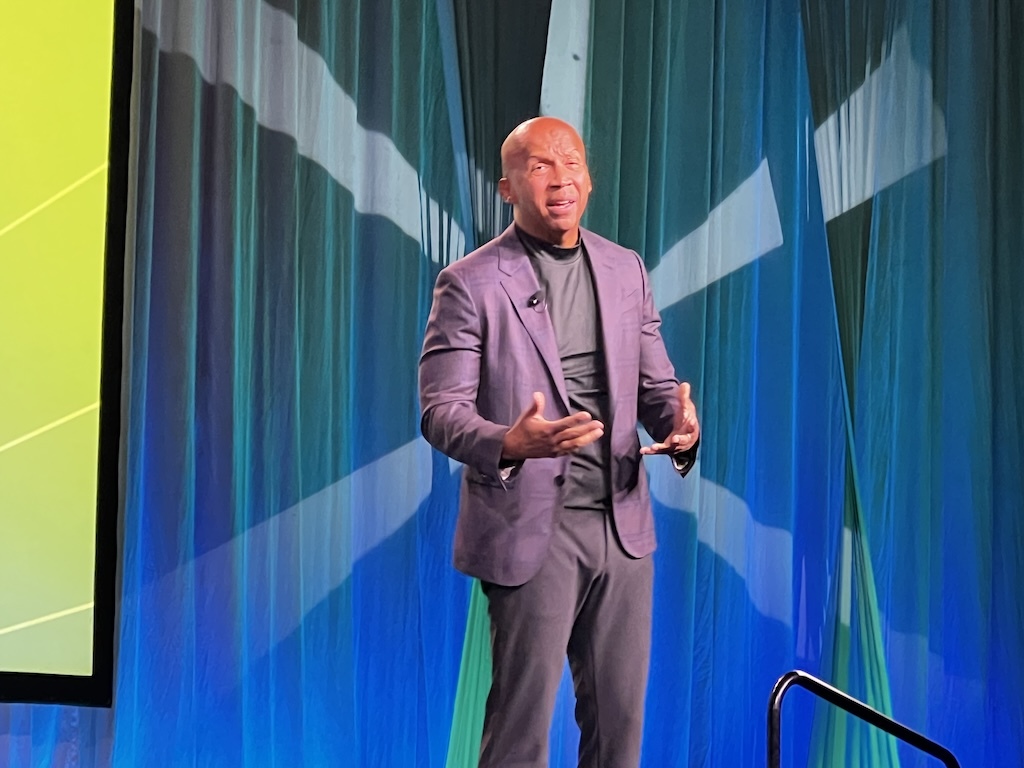
Such resolve resonated as well in Atlanta, another cradle of the movement, where Stevenson delivered the closing keynote of this week’s national conference of Mission Investors Exchange. More than 800 leaders of foundations, family office and field building organizations gathered at the bi-annual gathering to share strategies and steadfastness in a difficult environment.
“What I learned in Minnesota is that democracy is fought on doorsteps, neighborhood streets, commercial districts,” the McKnight Foundation’s Tonya Allen said in a lunchtime plenary, describing the popular response to this winter’s immigration raids in Minneapolis, where the foundation is based. “When you’re in unpredictable times, this is not the time to shrink, but the time to get bolder.”
That boldness goes for McKnight’s financial assets, as well. The $2.6 billion foundation has raised its grant budget and its allocation to program-related investments. “We invest to grow the vision, not so the money can sit nice and safely in index funds,” Allen said.
The through-line across panels and on the sidelines was a call to deploy every tool available: grants, of course, but also so-called program-related investments, allocations from the foundations’ considerable endowments, policy advocacy and the simple acts of standing with, and listening to, communities facing historical and new challenges.
“We are at a hinge moment where we risk losing the democracy we have,” said Stephen Heintz, the outgoing head of Rockefeller Brothers Fund. “If we don’t defend the democracy we have, we risk losing the chance to build the democracy we need.”
The fund and philanthropy more broadly have made progress in his 25 years as president. “But the paradox is that the scale of the problems we’re attempting to address is outpacing our response. We’re behind the curve.”
Ownership economy
Mission Investors Exchange celebrated its 20th anniversary as the convenor of foundations and other asset owners that are expanding their toolkits to include investments of kinds, including equity, debt, guarantees and other financial tools that can expand access and opportunity. Some foundations are on a path to align 100% of their endowments with their philanthropic missions (ImpactAlpha is the media partner of MIE, which covered some travel expenses).
“We cannot be passive consumers and expect the world to change. We have to be active participants. We have to build the world we want to see,” said Javier Hernandez of the California Wellness Foundation, on a panel called, “The Power of 100%.” The foundation, for example, has seeded the Los Angeles Wildfires Recovery and Rebuilding Collaborative Fund with $2 million commitment.
Capital gaps in underinvested communities represent opportunities for investors that prioritize equity and inclusion. “The biggest misconception is that the communities we serve are high risk but really they are just capital starved,” said Martina Edwards of Access to Capital for Entrepreneurs, or ACE, in Atlanta.
On a panel on impact investing in the South, Jahi Wise of the Southern Communities Initiative added, “We don’t lack opportunity in the South, what we lack are strong enough mechanisms to distribute. It’s not a question of if wealth can be generated here, but of who gets access to that wealth.”
Expanding access to wealth-building opportunities through broad-based ownership of appreciating assets emerged as a major theme of the conference, which was organized around “investing in collective prosperity.” The ownership economy includes employee ownership, ownership of homes and other real estate, financial assets such as retirement accounts, and community ownership through land trusts and other mechanisms.
“We already live in an ownership economy. It’s just not distributed and structured in the ways we want to see to build equitable outcomes,” said Margot Kane of Spring Point Partners, a family office based in Philadelphia.
Santhosh Ramdoss of Gary Community Ventures in Denver said the economy’s increasing returns to capital over labor means that increasing wages alone won’t be enough to create financial security for families. Foundations themselves, after all, are based on the ownership of assets, he said.
“Often, our solutions for them seem to be different from the ones that our own endowments are built on, which is owning assets that grow in value,” he said. “Which is why I think this moment around ownership is really critical, and it feels existential to me.”
Ethical AI stack
We’ve been warned, as Axios aptly summarized the accelerating artificial intelligence disruption. How will mission investors respond? With a standing room-only crowd, panelists made the case that foundations and mission investors can no longer sit out the AI revolution.
Ford Foundation is on the hunt for “opportunities or companies that, from the very beginning, have embedded in them the architecture that contains the guardrails that will keep humanity safe,” said Roy Swan of Ford Foundation, which along with Omidyar Network and Nathan Cummings Foundation took a small stake in Anthropic two years ago.
“Use your full toolkit right now,” including endowments, voice, and grant dollars, urged Mike Kubzansky, who is leaving Omidyar Network to stand up Andaris.ai, a platform to lift the voice of allocators who seek a more ethical AI. Kubzansky named Juniper Ventures and Radical Ventures as early fund managers investing explicitly in an trustworthy AI stack.
Daryn Dodson of Illumen Capital, which is rooting out bias across its portfolio of 40 fund managers, offered a sharp caveat: “Trust is a complex word,” he noted, pointing to how the financial system that generates enormous trust systematically excludes fund managers led by women and people of color.
With its acquisition of Radiant Data, Bulbul Gupta of Pacific Community Ventures is hoping to help community lenders use AI “get to yes faster” to provide access to capital for those that traditional finance has excluded. Gupta is mobilizing community development financial institutions to build a data set that documents the real – read, lower – risks of lending into low-income communities.
Without such checks, she said, AI puts at risk the American Dream, said Gupta. “The time is now to make sure that we’re helping to hold that alive and accessible.”
Hope quotient
When in doubt, investors were urged to listen to the people closest to the problem.
“We are trying to guide communities to be more climate adapted and prepared,” Andrew Crosson of Invest Appalachia said on a panel around building local ecosystems. Western North Carolina, for example, is still recovering from the effects of Hurricane Helene in 2024. “It is the intangible social infrastructure, capacity, and networks that are 100% a good bet.”
In Minneapolis, the Groundbreak Coalition is mobilizing capital for an ambitious strategy of affordable housing, community development and economic mobility. “We need institutions who understand we are trying to build for permanence,” said Groundbreak’s Adair Mosley. “This should be our highest aspiration as leaders and institutions. This is the type of resiliency needed within communities.“
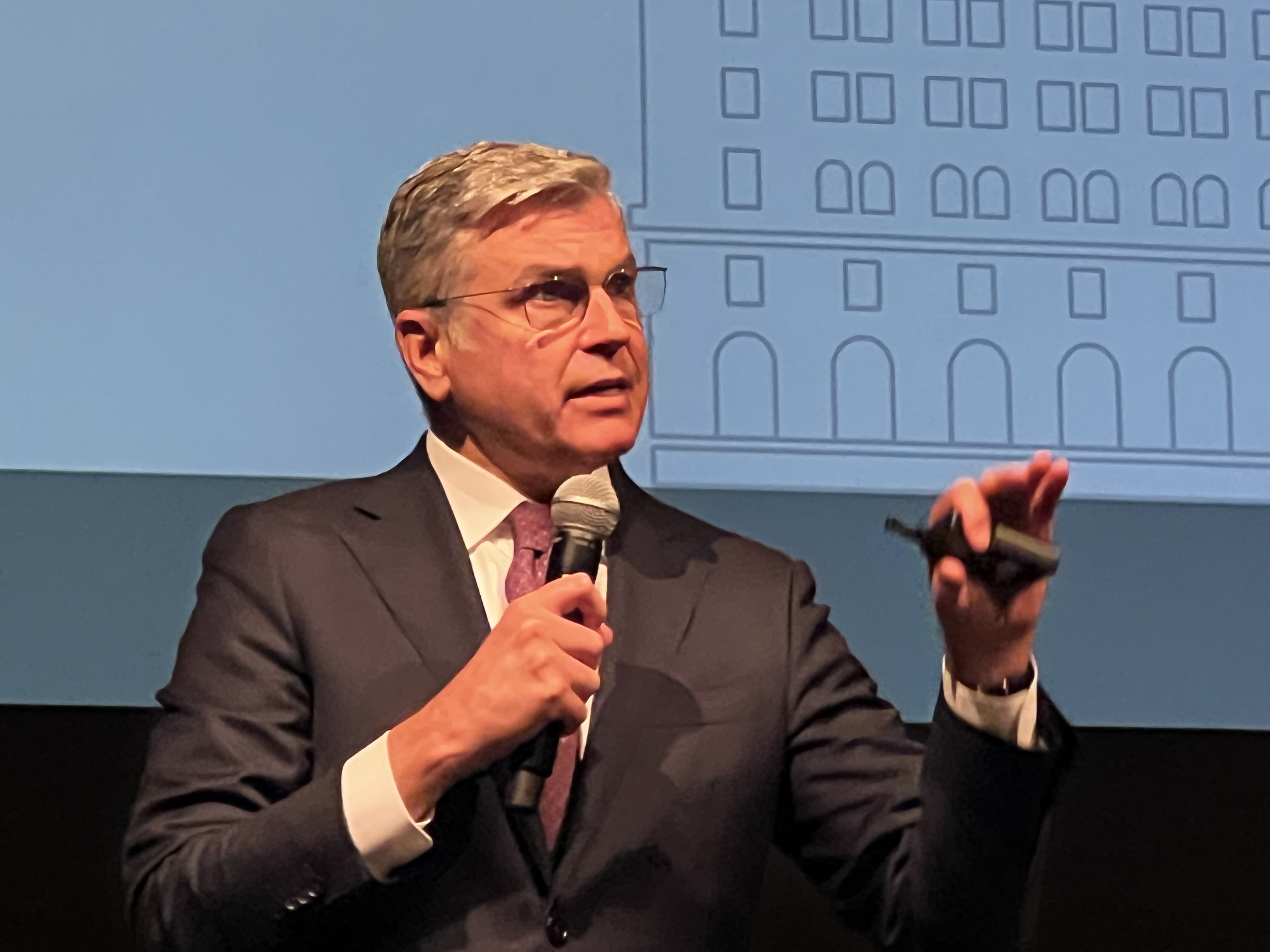
In his eloquent keynote, Stevenson, author of “Just Mercy” and subject of the film of the same name, urged impact investors to get closer to communities facing disinvestment, federal budget cuts, continued injustice and AI-driven job dislocation.
“If you get proximate, you will hear a melody that will teach us what it really means to change the world,” he said.
“We have to be resolute in this moment. It’s not easy, but it is important. And I think with the help of a community of investors, a community of philanthropists, a community of people who care about using resources to increase the justice quotient, increase the health quotient, increase the hope quotient, in communities all across this country, we can do things that will get us closer to the kind of community, the kind of nation we want.
“I don’t talk about slavery and lynching and segregation because I want to punish America. I talk about these things because I really want to liberate us,” he continued. “There’s something better waiting for us in this country. I believe that something that feels more like freedom, more like hope, more like equality, and it’s waiting for us.
“But we have to get proximate. We have to change narratives. We have to stay hopeful, we have to do the uncomfortable things.”