
Thousands of investors, founders, government and business leaders will descend on New York today for Climate Week NYC, the decentralized hubbub of private events that takes place alongside the UN General Assembly.
This year’s gathering takes place at an uncertain but pivotal moment for the energy transition. Last year, Donald Trump had not yet been reelected, and not even the biggest cynics could have imagined the extent to which he would wage war on clean energy and climate action. The rollback affects not just in the US, where he has gutted ambitious climate policies and funding, but around the world, as he strongarms nations into buying US gas, weakening climate policies and upends global trade with mercurial tariffs.
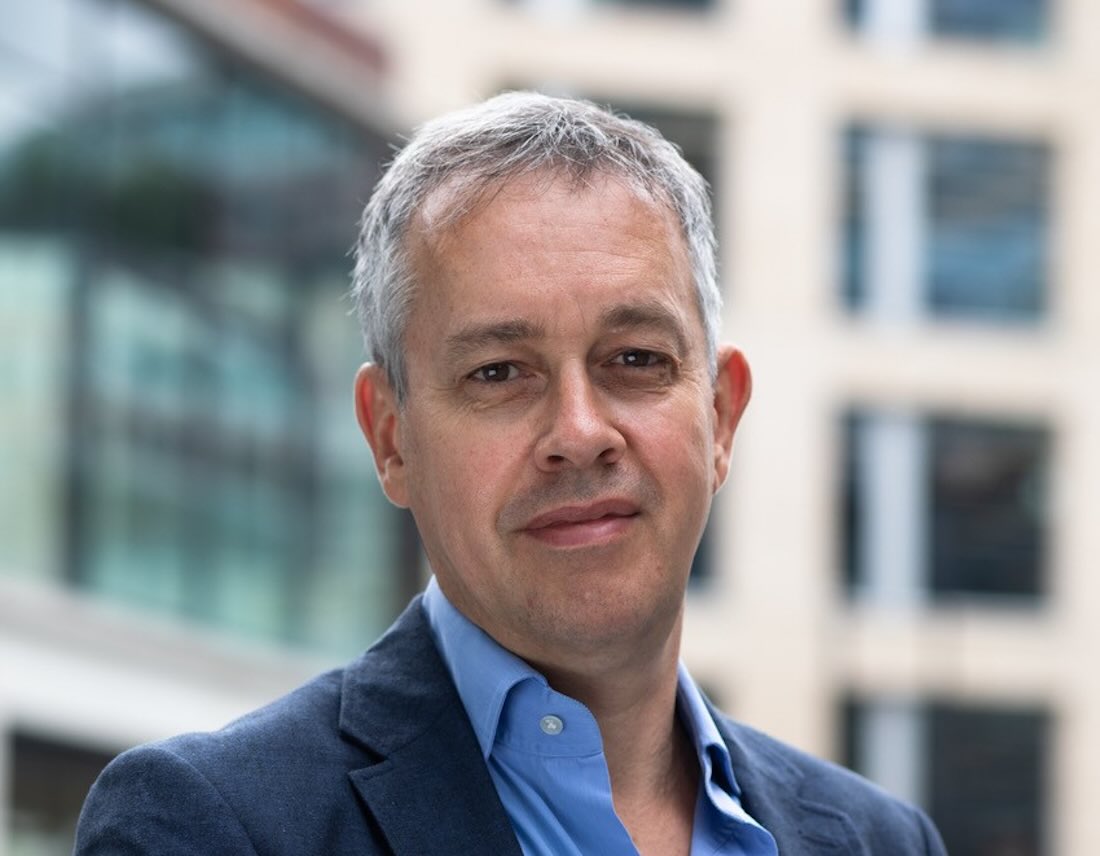
“The Europeans are not buying it,” Mark Campanale of Carbon Tracker told ImpactAlpha on a podcast recorded ahead of Climate Week. Nor, he says, are Asian countries.
“The ones today who are taking sustainability more seriously than anyone else are the Chinese, the Koreans, the Singaporeans and groups in Indonesia, Malaysia,” he said. “It’s Asia, led by groups like Temasek, who are taking sustainability very, very seriously.”
Get the podcast in your feed by subscribing on Apple, Spotify, or YouTube.
The situation has set up a kind of split screen, in which the US retreats at the same time cheap and abundant wind and solar energy is being adopted around the world, fueled by low-cost Chinese imports (for details see, “Ten slides that chart the bumpy road to the sustainable future”). The shifting center of gravity for the low-carbon transition has broad geopolitical implications that could reshape the global order for decades to come.
Campanale points to a coalescing alliance of China, India, Russia, Brazil and other nations. “They’re trying to reorganize the geopolitics of trade back in the favor of the Global South and through Chinese dominance,” says Campanale. “This drive to electrify the world and create electrostates versus petrostates is probably a more important shift than the relatively inconsequential politics of what’s going to happen in Brazil” at COP30, the global climate talks kicking off in November.
As climate action shifts east and south, some would-be Climate Week attendees are staying away due to visa hassles, fears of invasive immigration procedures and risk of detention.
“There’s been a big pushback in the last 18 months, and that is affecting the sense of, ‘We can do this,’ when it comes to dealing with the climate crisis,” Campanale says. “I’m coming with an open mind and I hope to lift some otherwise gloomy spirits.”