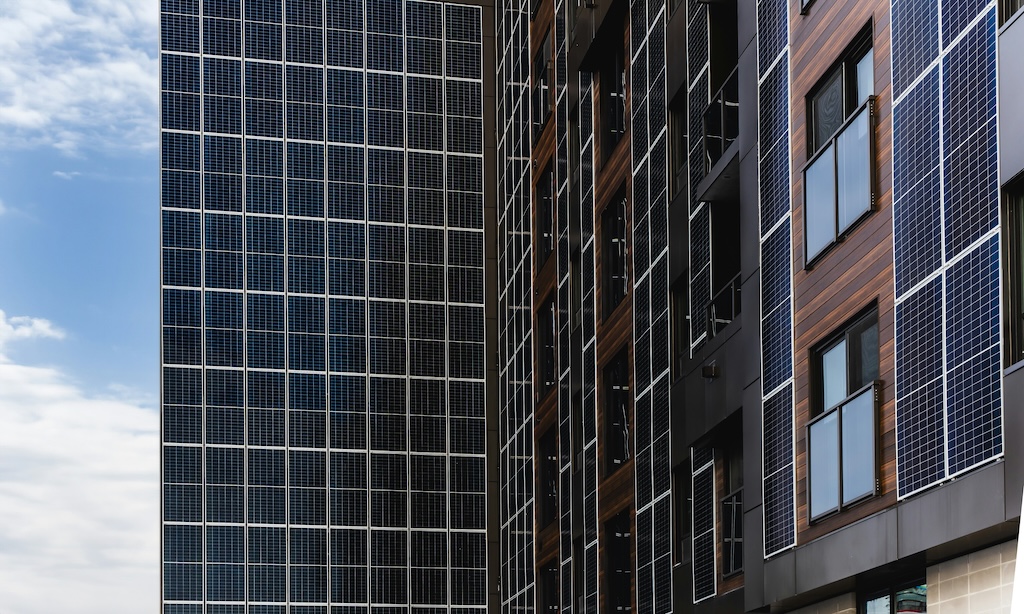

The holiday season could be a busy one for contractors and other installers of solar panels, battery storage and heat pumps.
Home and business owners are racing a December 31 deadline to complete such projects in order to be eligible for generous federal tax credits.
“We’ve actually had to recently hire on a new crew just to take the influx and demand,” Christian DeLuca of OHM Solar Solutions in Chico, Calif., told a local television station.
Many of the incentives for renewable energy and home upgrades were phased out under the Republicans’ “One Big Beautiful Bill” legislation that President Trump signed in July. Sorry, the deadlines for electric vehicle tax credits have already passed.
Clean energy advocates are not throwing in the towel.
“We could cry. Or we could electrify,” the nonprofit Rewiring America says on its website, which includes a handy list of the expiring subsidies, as well as a tool to calculate potential savings.
The falling cost of photovoltaic panels, for example, can make residential solar systems a financial win for homeowners even without the federal subsidies (many states continue to offer their own incentives). In the US, the median installation cost per watt of residential solar panels, before incentives, fell from $3.80 per watt in 2014 to $2.53 last year, according to EnergySage.
And the “soft” costs for solar systems could be cut further through streamlined permitting processes and direct-to-consumer loan products that eliminate the “dealer fees” that were often hidden in residential solar loan agreements. The silver lining in the loss of the federal tax credits could be increased scrutiny of such costs as the solar industry struggles to maintain momentum.
“The downside of the investment tax credit is there’s been extra fat available, and so that’s how these dealer fees have been able to survive so long, in such magnitudes,” said Bill Paulen, CEO of Seattle-based LoanTERRA, which launched last month to help credit unions and other lenders originate renewable energy loans, without dealer fees. “You’ve got that 30% tax credit that’s essentially eaten up by a dealer fee that can be 20%, 30% or more.”
“it’s hitting the taxpayer, and it’s hitting the borrowers and the consumers,” Paulen told ImpactAlpha.
Dealer fees
Dealer fees, sometimes called program fees, lending fees, finance fees, platform fees or original issue discounts, have for years been the dirty secret of the solar lending industry. Solar installers often have agreements with fintech lenders to offer point-of-sale financing to customers that want to avoid high upfront costs for solar systems and other upgrades.
The fees generally get added to the cash price of the system and rolled into the principal of the loan. That can make deceptive a seemingly low interest rate because the principal amount has been inflated by the hidden fee.
The Consumer Financial Protection Bureau, before it was itself gutted under the Trump administration, spotlighted harms to consumers from the fees. “Some lenders include substantial markups and fees that can increase the loan principal by 30% or more above the cash price,” the CFPB found. A $30,000 system with a $9,000 dealer fee, for example, would require a $39,000 loan.
Minnesota Attorney General Keith Ellison last year filed suit against four solar-lending companies for deceptive trade and lending practices and illegally high rates of interest. The lenders pocketed the fees, canceling out incentives for solar-panel purchases, Ellison said. “The lenders I sued today seriously misled consumers by promising cheap credit for solar installation, only to charge huge upfront fees that consumers didn’t know about.”
One of the companies, Solar Mosaic, filed for bankruptcy in June. Another of the companies, GoodLeap, told NPR that the fees are common in other areas, such as auto financing, and that the company complies with the Truth in Lending Act.
“It’s been a little lonely, being the voice standing on the mountain saying, ‘We’ve got this big problem in the industry of the dealer fees,’ and trying to get others to pay attention,” said LoanTERRA’s Paulen.
Customer demand
Paulen spent a decade developing solar loan products for credit unions, first as CEO of Generations Credit Union and then at Community 1st Credit Union. LoanTERRA is a platform to let any credit union, or other community lenders, make their own direct-to-consumer solar loans, cutting out the fintech middlemen and eliminating the dealer fees.
“This is too big of an opportunity, and there’s too much opportunity to clean up the financing in this industry,” Paulen told ImpactAlpha. LoanTERRA gets a small fee, paid by the lender, for bringing them the loan business, a standard practice in the industry.
“We’re bringing the borrower, we’re underwriting the application, we’re signing the loan, we’re servicing the loan,” he said. “We are able to contrast our products favorably to products that are already in the industry.”
That opens a new line of business for credit unions and community banks. Delinquency rates on residential solar loans average less than 1.5%, compared with 22% for credit cards. LoanTERRA’s first group of lenders is going through the due diligence process.
Paulen thinks that saving customers money by cutting out dealer fees could save the solar industry.
“Everyone’s expecting an anvil to fall on their head,” with the loss of the tax credits next year, he said. “If the public believes that solar has become 30% more expensive, it’s going to be harder for sales people to overcome that.”
The winners may be companies that can keep reducing solar prices, even without subsidies.
“No one really knows what’s going to happen in 2026,” Paulen said. “But even as the pie shrinks, we’re going to get a bigger slice of the pie because we’re the solution that makes it easier for people.”