
It’s hard to escape the images of militarized Immigration and Customs Enforcement officials being deployed to violently detain foreign residents who are then often transferred by ICE to far away detention facilities. Many US citizens and immigrants with legal status have been swept up in the stings.
More than 70% of the nearly 60,000 people held in ICE detention have no criminal conviction, according to data current as of September 21, 2025. And many of the remainder have committed only minor offenses, including traffic violations.
This is not the United States we believe in.
As long-term investors committed to sustainable growth, we see immigration as a powerful driver of economic innovation and long-term value creation. In today’s political climate, however, escalating anti-immigrant sentiment and intensifying deportation and worksite raid activity threaten not only the well-being of immigrant communities as well as the economic and social systems on which our portfolio companies—and our economy—depend.
At its core, the United States is a country built and sustained by immigrants. Immigration is not a threat to prosperity as the current political sentiment implies, it is one of its engines.
Immigrants—documented and undocumented alike—make substantial contributions to the U.S. tax base, labor force, consumer demand, and entrepreneurship. Immigrants paid $652 billion in federal, state, and local taxes in 2023—equivalent to 2.3% of US GDP and greater than the entire economies of countries like Belgium or Argentina. Put another way, those tax receipts would buy almost 1.6 million median-priced homes in the United States. This is capital that builds public infrastructure, funds schools, and supports healthcare and retirement systems. Furthermore, undocumented immigrants pay a higher average effective tax rate than the top 1% of households, according to Americans for Tax Fairness.
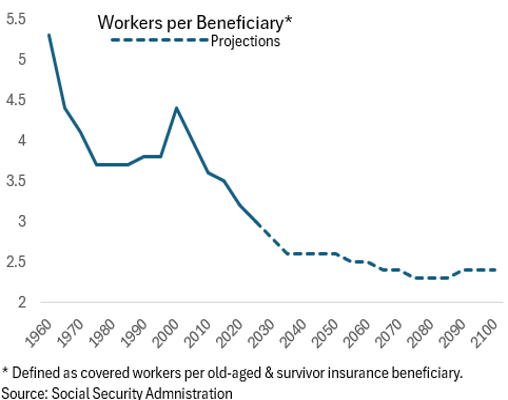
The fiscal case becomes even stronger when we factor in Social Security. Due to an aging population (leading to more beneficiaries) and declining fertility rates (leading to less workers to contribute to the fund) the Bipartisan Policy Center estimates that social security benefits will need to be reduced starting in 2033.
Immigration is one of the most effective tools available to offset the demographic imbalance caused by an aging native-born population and declining birth rates. The US Census Bureau projects that if the US were to have lower-than-expected immigration levels, the population would begin to decline in 20 years. If there were suddenly zero immigration, the population would begin to decline next year, deeply harming economic growth.
That outcome would shrink the labor force, erode economic output, and increase fiscal strain on public programs. We simply have too few workers contributing to social security to provide benefits to the retired population (Chart 1). Immigration is therefore critical to keeping the system solvent and protecting the benefits we all have paid into.
Sectoral exposure
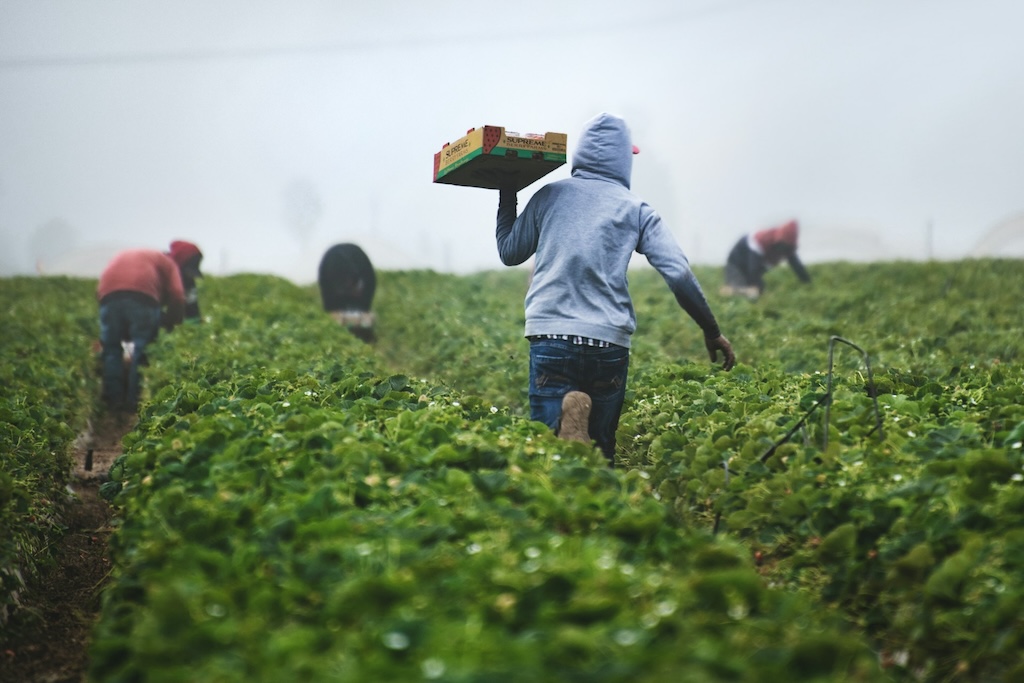
For investors, anti-immigration policies also present material risks to key sectors. Immigrants make up just 14% of the population, yet they comprise 25.7% of construction workers and 26.1% of agricultural workers. These sectors are foundational to the broader economy: construction underpins housing supply and infrastructure development, while agriculture anchors the US food system.
Disruptions in either sector—through deportations, raids, or fear-driven labor shortages—can slow economic activity and fuel inflationary pressures. Already ICE activity has led to significant short-term labor shortages in food processing and construction, causing operational delays and increased costs. These effects cascade through supply chains and affect all industries to varying degrees. For example, interruptions in food services, transportation, hospitality and cleaning services, and childcare and elder care result in labor shortages.
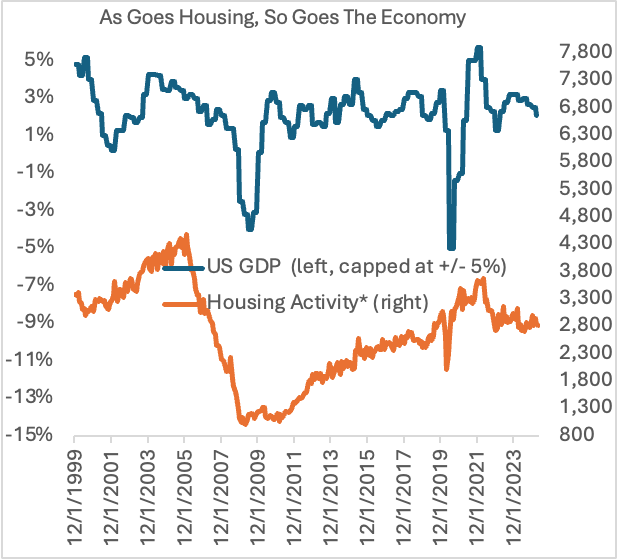
Housing development, in particular, is already constrained by a shortage of skilled labor. But labor shocks from worksite raids and deportations only exacerbate this structural bottleneck, jncreasing both business and systemic risk.
Another ripple effect stems from consumption. One estimate finds that undocumented immigrants have a spending power of approximately $300 billion. Mass deportation of all undocumented immigrants would lead to a 1.5% reduction in consumption. But this is only a calculation of the direct impact. Losing laborers will have secondary and tertiary effects as companies struggle to operate and close, leading to job losses, constraining spending even further.
Moral and material
Anti-immigration sentiment in the US is fueled by a mix of economic inequality and systemic racism. As wealth has become increasingly concentrated among the top 1%, many economically marginalized Americans—frustrated by their stagnating prospects—are vulnerable to misleading narratives.
Some groups exploit this discontent by promoting the false idea that immigrants take away opportunities from US-born citizens. But the myth that immigrants “take jobs” or “reduce wages” has been repeatedly debunked by economists, including those at the Brookings Institution and the National Academy of Sciences.
Instead, immigrants often complement native-born workers, fill labor shortages, and increase demand in local economies.
Contrary to perceptions, immigrants have a positive effect on wages for their American-born peers who are less educated. We have seen how countries like Spain benefit from being open to immigrants and have boosted domestic demand and rejuvenated the workforce as a result. In 2024, nearly 90% of new jobs were filled by workers of foreign origin or dual nationality, and unemployment is at its lowest level since 2007.
Yet, persistent narratives rooted in systemic racism, fear, ignorance, and economic insecurity continue to fuel opposition to immigration, leading to policy choices that harm immigrant families—and undermine long-term value creation for everyone. With immigration enforcement as a top priority, the government is spending fourteen times more on enforcement than on the agencies that protect and enforce labor standards.
As a result, employers may take advantage of the current climate of fear to prevent workers from reporting workplace harassment, wage suppression or theft, and health and safety concerns.
In addition, the budget reconciliation bill, signed into law by the current administration, is transforming the country’s immigration system through significantly increased funding for both border security and immigration enforcement, including dramatically expanded detention and deportation operations.
Attacks on due process, limited oversight, gutting asylum and refugee systems, raising costs for work permits, and slashing visa periods of authorized stay, all multiply the hardship for immigrants and employers. Unprecedented amounts of money are being deployed on top of data troves that will enable private companies to track, monitor and detain immigrants.
Not only will company operations and their supply chains experience impacts, our communities and families are also affected.
Call to action
As fiduciaries managing assets on behalf of clients, we have a duty to address the long-term social and economic risks and impacts of immigration policies on the labor force employed by the companies we invest in. Encouraging inclusive policies and attitudes that enable immigrant communities to fully participate in the economy unleashes productivity, expands the tax base, and stabilizes key programs like Social Security.
As we engage our portfolio companies exposed to risks and harms from immigration enforcement activities, we seek measures to mitigate operational and reputational risks related to shifts in immigration enforcement. With a human rights lens on companies’ AI-based products and services we are questioning due diligence processes related to advanced surveillance systems, predictive policing, and the contribution of the militarization of AI to human rights harms.
We can learn so much from friends, allies and even foes from around our world. What a boring and completely uninteresting existence it would be if we all had the same backgrounds, traditions, tastes and experiences. At Zevin Asset Management, we know as much. Ten of our fifteen staff, and eight of nine Investment Committee members are immigrants or first-generation Americans.
As Bruce Springsteen poignantly sings in his tribute to immigrant labor in American Land:
“They died building the railroads, worked to bones and skin.
Died in the fields and factories, names scattered in the wind.
Died to get here a hundred years ago, they’re dying now.
The hands that built the country we’re always trying to keep down.”
We owe it to those hands—and to the future of our economy—to ensure that our policies and investments reflect both our values and our understanding of what drives prosperity.
Marcela Pinilla is director sustainable investing, and Philip Hergel is senior quantitative analyst at Zevin Asset Management.
Guest posts on ImpactAlpha represent the opinions of their authors and do not necessarily reflect the views of ImpactAlpha.