Europe is often cast as a laggard in the global race for AI dominance, behind the US and China.
But the continent is coming up fast, driven by its strengths in corporate governance and social responsibility.
The Norrsken Foundation, which manages one of the world’s largest impact tech ecosystems, is seeking to leverage those strengths into a portfolio of high-impact European tech unicorns. The foundation predicts the first trillion-euro companies to be built by founders leveraging AI to solve critical global challenges.
Last year, Norrsken Foundation pledged to invest €300 million ($353 million) in mostly European startups using AI to find solutions to major challenges in climate, health, food, education, and society across its ecosystem of social impact entrepreneurs and five funds. Since then, it has made at least a half-dozen investments in startups with AI-based solutions.
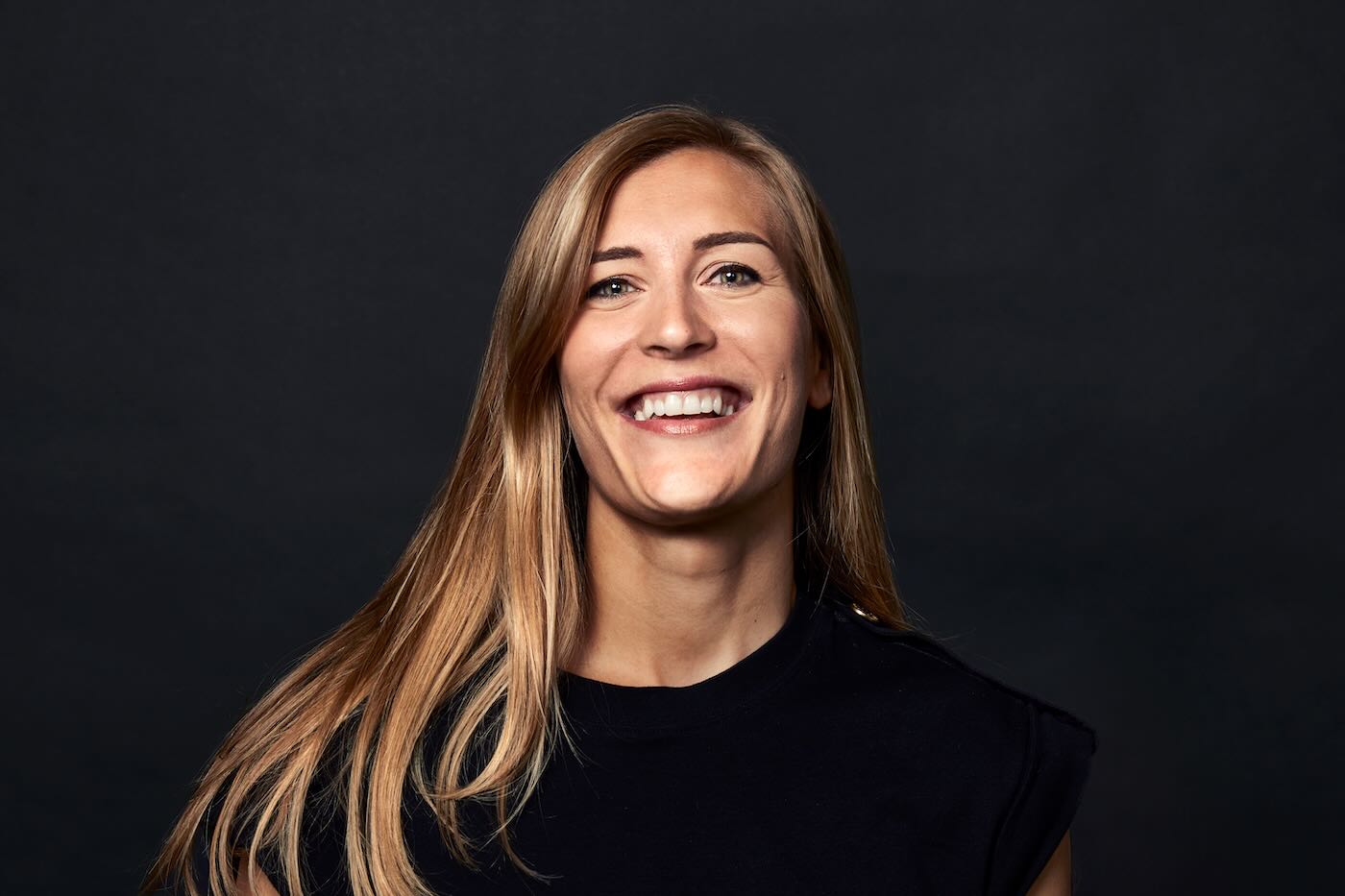
“Our overarching messaging to the market has been that the biggest problems often also equal the biggest opportunities,” Agate Freimane, general partner of Norrsken VC, the foundation’s impact venture capital arm, told ImpactAlpha.
“We really want to encourage the young talented entrepreneurs to go and build companies that are actually solving real world problems. Don’t create the next Instagram account or gaming app, go and solve real problems. That has always been our messaging from day one.”
Norrsken ecosystem
The foundation started by Niklas Adalberth, a Swedish entrepreneur and co-founder of buy-now, pay-later fintech company Klarna, issued its call to action in an open letter last June. The Industrial Revolution generated huge growth – and laid the groundwork for the environmental crises the world faces today.
“We can’t afford to make the same mistake twice,” the foundation declared. “Let’s not move fast and break things this time. Let’s move fast and fix things.”
Freimane, a former Citigroup and Morgan Stanley banker who co-founded Norrsken VC with Adalberth in 2017, said she had been disappointed to see the first wave of AI applications mostly being used for incremental productivity gains such as faster emails.
“AI is the gold rush of our era, but somehow the impact on climate has disappeared from that thinking process,” Freimane said. The second wave of AI applications is starting to tackle “much more complex and structural issues,” ranging from rolling out life-saving treatments faster, to scaling accessibility of healthcare and education, Freimane said.
Europe, with its emphasis on governance and regulation, could play a leading role when it comes to developing responsible AI. AI safety and governance is “a really big topic” for Norrsken, says Freimane.
The foundation was launched with a €140 million ($165 million) investment by Adalberth, who left Klarna in 2015; the company went public in September 2025 at a $20 billion valuation. Norrsken has grown to around €1 billion ($1.2 billion) in assets under management, with investments in 190 companies. Half of that is generated by Norrsken VC, its independent VC arm that backs impact-focused startups.
Investors in the fund include the European Investment Fund; AP1, one of Sweden’s main national pension funds; KfW Capital, the investment arm of the German state-owned development bank; Swedish government-funded investment company Saminvest and the Ireland Strategic Investment Fund. Corporate backers include BMW Group, Nordic banks SEB and Nordea, Credit Suisse, Swedish insurer Folksam and German retailer Otto Group.
Norrsken VC is looking to raise between €350 million ($412 million) and €400 million ($471 million) for a third flagship fund, starting at the end of this year.
“There is no one else out there like us, where we have our own fund, and at the same the support of the entire ecosystem,” said Freimane. “We’ll keep doubling down on technologies that have a positive impact on people and planet, but with a huge focus on AI.
That ecosystem has produced two unicorns to date. Electric truck group Einride, which started at Norrsken House in Stockholm, last week raised $113 million from investors ahead of a public listing via a SPAC, or special purpose acquisition company. Germany-based 1KOMMA5°, Europe’s largest player in home decarbonization, pulled in nearly €400 million in equity from investors including Californian pension fund CalSTRS, Eurazeo, 2150 and eCAPITAL. It also has ambitions to go public. Barcelona-based Biorce, which uses AI to speed up clinical trials, is one of the firm’s fastest-growing companies in the healthcare space.
Norrsken was also an investor in Northvolt, the Swedish battery maker and one-time investor darling that filed for bankruptcy in March. “Without taking a lot of risk, we also don’t make breakthroughs,” explained Freimane.
In addition to the venture fund, Norrsken runs an incubator program (Norrsken Launcher), an accelerator program (Norrsken Evolve), an Africa seed fund, and Norrsken 22, an Africa-focused tech growth fund. In recent years, it has launched five local hubs in Stockholm, Barcelona, Brussels, Kigali and Amsterdam, housing some 6,000 budding impact entrepreneurs.
And once a year, around 1,500 impact founders, investors and industry leaders across its entire ecosystem gather at one of its Norrsken Houses for Impact Week.
Norrsken’s local hubs and funds all work together towards one common goal: connecting founders with capital, seasoned impact pros and community support to tackle pressing global problems such as climate change, poverty and social inequality.
Climate-smart AI
Norrsken VC looks for tech companies that are slashing emissions from the energy-sapping infrastructure powering the AI boom. These include Barcelona-based data center cooling startup Submer and Stockholm-based Evroc, which is building Europe’s first secure, sovereign and sustainable hyperscale cloud. The company bills itself as “technologically competitive with global leaders, but grounded in European values.”
Another rising star, in industrials and manufacturing, is Juna AI, which has developed an AI automation system that can slash the energy costs of production lines by 30%. The German cleantech startup has “real bottom-line impact, but also real carbon footprint impact,” Freimane said. .
The AI revolution is only reinforcing the demand for renewable energy, according to Freimane.” Whoever has the cleanest energy will also have the most competitive AI product,” she said.
Norrksen also is keeping an eye on the development of AI governance and guardrails, Freimane said. “If our future infrastructure relies on these AI systems, how do we make sure that all the checks and balances are in place?
“How do we make sure that the power doesn’t end up getting concentrated in [the hands of] very few powerful companies, and what are the tools or ways that we can democratize that power? How do we build this infrastructure in a way that it doesn’t break down five years, 10 years down the line? And how do we make sure that AI doesn’t kill all the jobs and leave the world in chaos?” said Freimane.
Freimane acknowledged she “doesn’t have all the answers, I don’t think anyone has, on how this will play out 10, 20, and even 50 years from now.” Norrsken VC has developed its own AI Trust & Safety framework, with “mission-critical checks and balances that a company should have in place at every stage” to make sure founders build and scale sustainably. That includes ensuring startups understand the risks of their AI systems, and that they are built on data and infrastructure that is ethical, legally compliant, secure and technically robust.
“When we look to invest in the company, we work through those questions, and we bake that into our agreements with the company,” Freimane said. “The really good founders understand the risks themselves, and they are just grateful to have an investor like us asking those questions”.
Bridging the skills gap
Along with the AI investment opportunity come dystopian warnings from industry insiders highlighting the risks of a new technology developing at a rapid pace. A 5,000 word essay by Matt Shumer, co-founder of OthersideAI, in which he warned AI is coming for our jobs, starting with programmers, went viral in February.
The flip side is a skills gap, with many jobs going unfilled. Healthcare systems, for example, face mounting pressure as the world’s population continues to grow and age. The World Health Organization forecasts a shortage of 10 to 18 million healthcare workers by 2030.
“How can we invest towards that skills gap?,” Freimane said. “Impact investors should use that lens of where the skills gaps are; those are actually the best areas where we can maximize the impact of AI.”
In 2024, Norrsken VC made a pre-seed investment in Quadrivia, a UK startup that has built an AI assistant that helps doctors with administrative and clinical tasks.
And then there is the Trump effect.
When Freimane co-founded Norrsken VC in 2017, targeting both impact and top-tier financial returns, it felt like “riding a wave that was getting bigger and bigger,” she said.
With US President Trump taking a wrecking ball to green and sustainable policies since his inauguration a year ago, European impact investors have braced for the worst. There has been a “mismatch” between the political sentiment coming from the US and the market forces driving renewable investment on the ground, according to Freimane.
Global energy transition investment jumped 8% to a record $2.3 trillion in 2025, according to BloombergNEF’s annual sector report. Renewable energy is on track to overtake coal as the world’s biggest source of electricity this year, according to the International Energy Agency.
With the cost of clean energy dropping by 90% in the past decade, clean energy has become “the most cost-competitive technology in the world”, she said.
Three out of four European founders and investors plan to invest more in impact over the next five years, with tech-driven advances in energy, industrials and healthcare topping the list, according to a survey conducted last year by Norrsken VC. In a forward to the survey, Fremaine declared:
“Impact optimism is back.”