In the tech-driven future of food, production gets the glory, but it’s distribution that will tackle the challenge.
The world needs to produce 50% to 70% more food by 2050 to feed the more than nine billion people that will live on the planet then. Right now, much of that hope is being placed in promising food and agriculture tech, like vertical farms and lab-grown and “alternative” meat.
While improving yields for sustainably grown and produced food will be essential with a growing population and limited water and land resources, there’s another big part to our global food problem that needs dollars and solutions, too: distribution. “The problem of undernourishment and hidden hunger around the globe is a distribution problem rather than a production one,” notes a study from Germany’s Postdam Institute.
High-tech solutions to the future of food grab headlines and big-ticket investments, but there’s an undercurrent of startup and investment activity exposing the opportunity in distribution too.
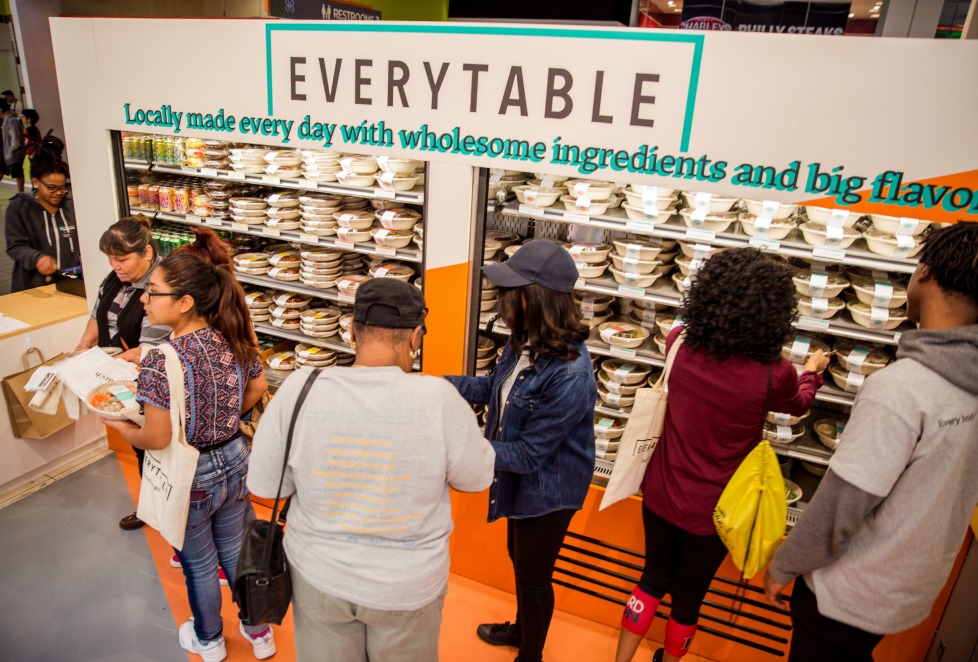
- Different places, different prices… Healthy fast-casual chain Everytable just raised $5.3 million dollars from Kimbal Musk (Elon Musk’s brother), Acumen and TOMS Social Enterprise for its approach to making healthy food more affordable: it uses a sliding-scale pricing model where restaurants in low-income neighborhoods charge less than the ones in high-income neighborhoods.
- Local flavor…Entrepreneurs like Baltimore’s Land of Kush owners Gregory Brown and Naijha Wright-Brown and Grind House Juice Bar’s Ayoluwa Nzinga are flying under most investors’ radar, but they’re pouring sweat equity into making their communities healthier—and they’re doing it in a distinctly local way. Land of Kush specializes in vegan soul food. Grind House sells smoothies, juice and food with a “Heal the Hood” philosophy, Nzinga says. “We are 100% vegan, but we really cater our vegan options to people who wouldn’t necessarily pick up something healthy.”
- Extending shelf life… Plenty of startups and investors are trying to reduce food waste, but a few are tackling both waste and redistribution. For example, Australia’s Yume is finding buyers for “surplus food”, while Inspirafarms is building cold-storage systems to help off-grid small farmers get more of their produce to market.