
As foreign aid shrinks and children face escalating risks from conflict, extreme weather events and increasing economic insecurity, humanitarian organizations confront a stark choice — reinvent or become obsolete.
At this crossroads, Save the Children acted decisively by doubling down on our “second engine” to drive greater outcomes for kids: impact investing through Save the Children Global Ventures.
While philanthropic support remains critical — especially in humanitarian contexts — we must do more to mobilize private impact capital into solutions that protect children and communities at scale.
Ripe for change
Official Development Assistance fell 9% in 2024, and the downturn in 2025 is expected to have been even steeper. The Organization for Economic Co-operation and Development projects an additional 9% to 17% decline in 2026.
Evidence suggests that foreign aid cuts could result in more than 14 million additional preventable deaths by 2030 — including over 4.5 million children under five years old — as health, nutrition, education and WASH programs are scaled back.
Meanwhile, the Global Impact Investing Network, or GIIN, estimates that global impact investing assets under management have reached $1.6 trillion, compounding at about 21% annually since 2019.
For humanitarian organizations, these trends represent both an existential challenge and an enormous opportunity.
Traditional project-based grants can no longer be the sole tool in our toolbox when Official Development Assistance is shrinking and humanitarian needs are rising. Save the Children responded in 2023 by creating Save the Children Global Ventures and building impact investing and social finance capabilities while staying anchored in our mission to support children and families around the world.
Our operational pivot
Save the Children Global Ventures is reinventing how humanitarian organizations originate, structure and support development and humanitarian solutions.
Rather than designing short-term projects around available grants, we identify investable business models that deliver essential services in low-income communities, such as primary health care, nutrition and early childhood development. This effort is powered by a team of investment, humanitarian and technical experts using the concept of “child-lens investing” to standardize commercial and impact due diligence and building local partnerships that sustain initiatives long after grants end.
This pivot also redefines success. Instead of counting outputs within a grant cycle, we assess whether an approach can reach breakeven, attract follow-on capital and continue serving households at scale. This shift requires different data systems, risk appetites and governance, but it is key to ensure that life-saving programs remain sustainable, even amid funding cuts.
Our financial pivot
Financially, Save the Children Global Ventures moves our organization beyond grant implementation to become a catalytic investor and market influencer.
This approach aligns with broader impact investing trends. Both institutional investors and family offices are increasing allocations to private equity and impact debt strategies. Recent GIIN data suggests nearly half of global impact investors are considering expanding into emerging markets to achieve outsized impact and competitive returns.
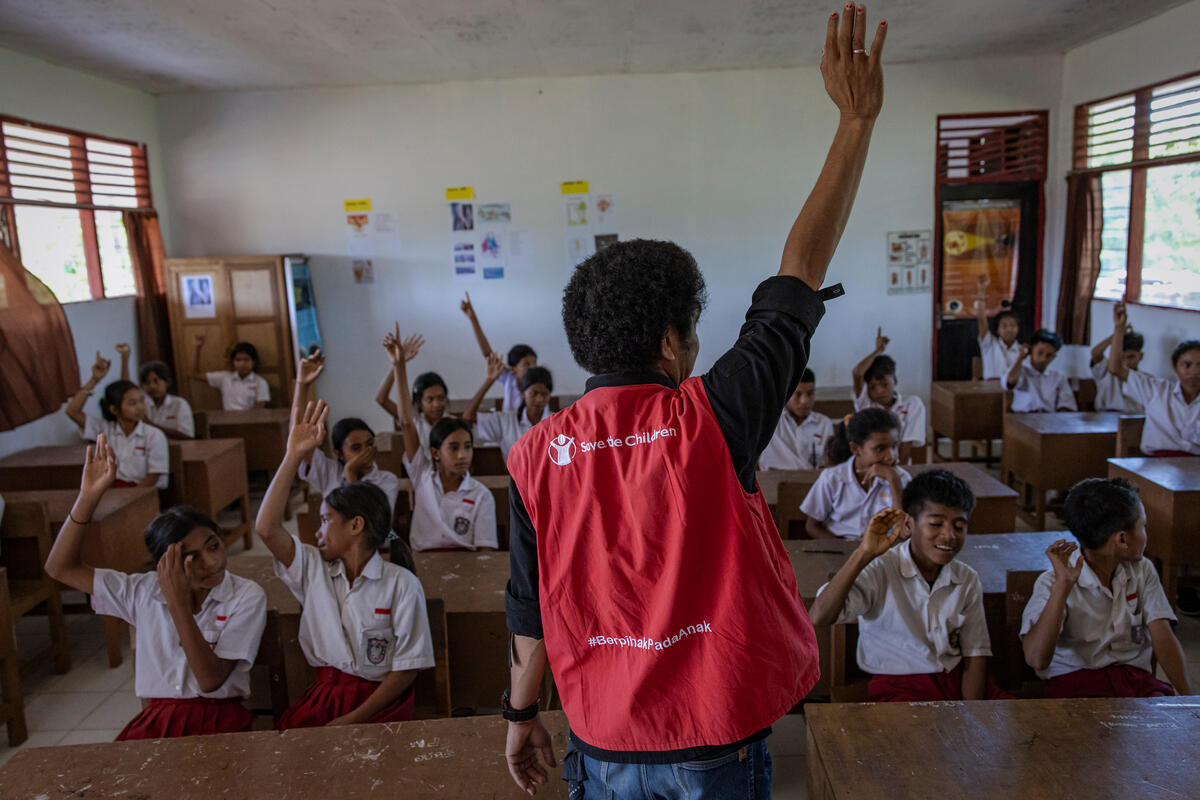
For example, in Asia we’ve backed digital health platforms. Our equity investment in PrimaKu in Indonesia provides capital to increase the number of parents and children accessing nutrition advice and vaccines, while our debt investment in Reach52 expands access to essential medicines and preventive care in low- and middle-income countries.
By bringing deep local insight, pipeline and technical support, a fund manager like Save the Children Global Ventures can provide a pathway for sophisticated investors in the US and global impact investors to invest into emerging-market health deals, which are otherwise often perceived as too risky or complex.
Bridging the foreign assistance gap
Encouragingly, a new ecosystem is emerging to bridge the gaps left by retreating Official Development Assistance. Early signals suggest that what remains of US foreign assistance and development finance is shifting toward scalable, tech-enabled solutions rather than standalone projects.
For instance, The US Development Finance Corporation is seeking to significantly expand its balance sheet to mobilize more private capital into sectors like healthcare, food security and climate resilience in low- and middle-income countries. Similarly, the US Government recently announced an investment of up to $150 million based on a pay-for-performance model for Zipline’s drone delivery platform, which enables the delivery of blood, vaccines and medicines across Africa.
Specialized impact managers, foundations and family offices are increasingly using catalytic capital to bridge humanitarian and commercial priorities. GIIN data shows that a substantial share of impact investors have engaged in blended finance transactions to channel funding to underserved markets, often with healthcare among the top targeted sectors.
What remains scarce isn’t private capital, but well-structured opportunities that connect that capital to solutions designed around the lived realities of underserved and crisis-affected communities. Organizations like Save the Children are uniquely positioned to step up and help close this gap.
A call to action
This pivotal moment calls for bolder investment strategies.
Impact investors, including donor-advised funds, are increasingly partnering with humanitarian fund managers like Save the Children Global Ventures to co-design investable solutions that meet their goals while expanding portfolios to catalytic positions. This approach often means accepting slightly lower or more flexible terms in exchange for crowding in purely commercial or institutional capital and reaching tougher markets, reflecting the growing but underused role of blended finance.
The opportunity is ripe. In the US alone, donor-advised funds hold more than $250 billion in assets.
With this kind of capital comes the power to shape the future, so the story of shrinking aid doesn’t end with preventable deaths and stalled progress. By committing capital to enterprises that extend affordable quality healthcare, nutrition and education to underserved families, global impact investors can help ensure that the gains of the past two decades are not reversed but rather accelerated.
The humanitarian sector is already pivoting. What is needed now is a community of investors willing to see emerging markets as places where their capital can finance a different ending.
Paul Ronalds is the CEO of Save the Children Global Ventures.
Guest posts on ImpactAlpha represent the opinions of their authors and do not necessarily reflect the views of ImpactAlpha.