After a three-year slide in capital for companies seeking to reduce the staggering amount of wasted food, private investment levels appear to be rising, despite – or perhaps because of – a drop in federal funding for such solutions.
Private investors deployed about $640 million in food waste infrastructure and solutions last year, down from a peak of nearly $2 billion in 2021. Deals so far this year are closing in on 2024’s total funding, according to the nonprofit ReFED.
The latest: Generate Capital secured $43 million in long-term debt to support its organic waste recycling business Generate Upcycle. The company’s portfolio of anaerobic digestion plants convert food, farm, yard and other organic waste into renewable natural gas, or RNG. The company also upcycles organic waste into fertilizer and clean water via composting and mechanical vapor recompression.
Fiera Infrastructure Private Debt, a Canadian private infrastructure debt investor, provided financing to enable Generate Upcycle to invest in its growing portfolio of waste-to-gas plants in Canada and the US. It is the first outside capital Generate has sought for the three-year-old company. At full capacity, Upcycle’s plants can process 400,000 tons of waste annually.
“Food-waste RNG is scaling, and this transaction shows how creative capital can unlock solutions with real-world environmental and economic impact,” said Generate Upcycle’s Bill Caesar.
Generate Capital launched Upcycle in 2022 with its acquisition of StormFisher Environmental Services, then Canada’s largest private organic waste-to-energy plant operator. Upcycle now runs a total of a dozen anaerobic digestion facilities in the US, Canada, and the UK. Generate wants its Upcycle group to produce enough renewable natural gas by the end of next year to be able to power a city the size of Albany, NY.
Other startups tackling food waste have taken different approaches. Metafoodx, in San Jose, Calif., uses AI to help commercial kitchens pinpoint future production needs based on actual consumption. It raised $9.4 million from Trustbridge Partners and other investors in May. Topanga, another AI-based startup cutting waste in commercial kitchens, secured $8 million in March.
In Europe, Finnish startup Volare in May snagged €26 million ($30 million) from Maki.vc, Firstminute Capital, Springvest, Finnish Climate Fund and others to turn food waste into aqua-feed, pet food and poultry feed. Dutch startup OneThird in February raised $3.6 million from impact investors including SHIFT Invest and the Netherlands’ Invest International for its AI-based scanning technology that predicts the shelf life of fresh produce.
Fund landscape
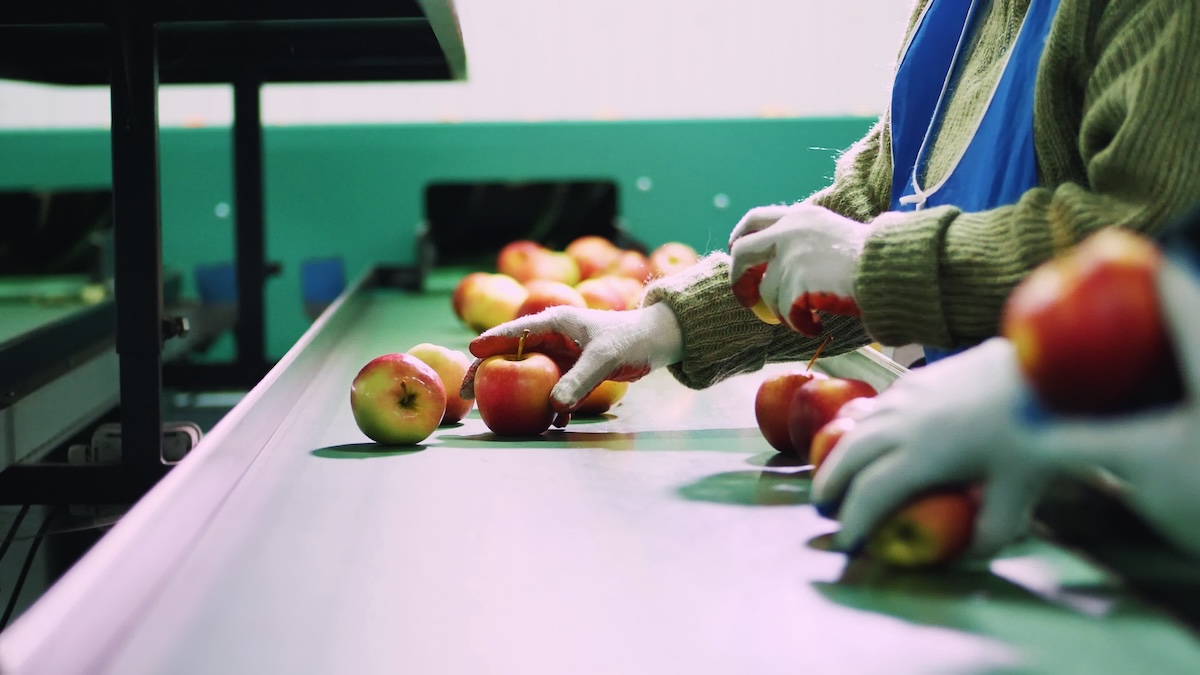
The scope of the problem is shocking: at least one-third of all food produced ends up in the trash. The biggest share is fresh produce. Households are the biggest contributors to food waste; a quarter is lost before leaving the farm, according to ReFED’s 2025 US Food Waste Report. In contrast, retailers, like grocery stores, have relatively low levels of wasted food.
Food waste represents about $108 billion in lost value for food producers and businesses in the US alone. Such waste also squanders other valuable resources – nearly 40% of all water for irrigation is used on unconsumed food. The land used for growing food that ends up being thrown away represents the equivalent of a California and a New York.
In addition, food that rots in landfills emits potent greenhouse gases that further destabilize food and other essential systems because of their contribution to climate change.
Active investors include New York-based Closed Loop Partners, which makes both private equity and private debt investments in recycling technologies and businesses. The firm has backing from a number of strategic corporate investors, including Dow, Keurig Dr. Pepper and Nestle, as well as catalytic and mission-aligned investors like Hull Family Foundation.
Acre Venture Partners in Santa Monica, Calif., has since 2016 been investing in food and agriculture tech and infrastructure companies with backing from Campbell’s Soup, Stepstone, Merck Family Foundation, the Grantham Foundation and others.
Denver-based Trailhead Ventures is investing in early-stage technologies to support regenerative food systems. Its $50 million first fund is supported by WovenEarth Ventures, Cisco Systems Foundation, Rockefeller Foundation’s Zero Gap Fund, and organic farming research nonprofit The Rodale Institute.
Other active fund managers in the food waste space include S2G, Waterpoint Lane, FTW Ventures, Gratitude Railroad, Vita Vera Ventures and Redstick Ventures.
Going local
In recent years, private investment in food waste reduction has been catalyzed and derisked by federal funding, namely grants and project financing for infrastructure, like the anaerobic digesters Generate Upcycle is building. Last year, federal funding played an outsized role in the food waste ecosystem because of the sharp drop in private investment.
Now, the Trump administration has taken an ax to jobs and grant programs, including at the Environmental Protection Agency, a key federal funding partner for waste reduction and recycling initiatives.
“Historically, we have seen federal grants support research, food purchasing for food rescue, and recycling and supply chain infrastructure,” ReFED’s Alejandro Enamorado told ImpactAlpha, particularly by legislation like the Inflation Reduction Act.
“In the near term, we are seeing federal investments across a range of issues tightening up,” he adds. “We see state and local support playing a more outsized role in supporting food waste infrastructure than federal funding.”
Private investors that are coming back into the mix are doing so with smaller tickets and in earlier-stage food waste solutions.
“Later-stage food waste companies are encountering a more challenging funding environment,” Enamorado explained.
That makes Generate Capital’s deal a rare growth-stage financing datapoint. “This financing underscores both the maturity and the momentum of Upcycle’s renewable natural gas platform,” said Caesar.
Policy tailwinds
More private early-stage capital will be critical to the advancement of food waste technologies and first-time infrastructure developments. At the 2025 ReFED Food Waste Solutions Summit in Seattle this summer, ReFED zeroed in on catalytic financing tools, like recoverable grants, loan guarantees, and non-dilutive instruments like revenue shares.
“All of these approaches help bridge the gap between traditional philanthropy, impact investing, and market-rate capital – providing a more diverse financial toolkit for both funders and solution providers,” Enamorado said.
One emerging instrument: carbon credits pegged to reductions in food loss. Andy Levitt of Sweden-based Brightly Ventures noted that credits could help organizations like food banks that are affected by public funding cuts.
While private investors may not have the same cushion from federal funding, the policy environment for food waste initiatives remains favorable. The federal Food Date Labeling Act, originally proposed in 2023 to standardize food date labels to prevent retailers and consumers from tossing good food, was reintroduced with bipartisan support in both the House and Senate. And the Trump EPA announced its Feed it Onward initiative to cut food waste and boost food security.
States are even more active. As of mid-2025, 32 states had introduced 94 bills related to food waste and 19 have been passed. California, for example, passed its own version of the Food Date Labeling Act, with new label standards taking effect next July. California’s governor Gavin Newsom this month signed a law expanding composting capacity for farmers and local composters.
Companies now facing state waste reduction mandates are looking to solutions like Generate Upcycle that upcycle waste into a fuel product that helps them reach other decarbonization goals.
“While many sustainability initiatives are facing headwinds in today’s political climate, we see some tailwinds behind food waste reduction,” said Enamorado. “Addressing food waste solves many challenges at once, whether that’s improving the bottom line for food businesses, extending the life of landfills, or helping stretch food dollars, particularly during these times of rising food costs.”
He added: “Preventing perfectly good food from going to waste is something that everyone can get behind, regardless of your political ideology.”