
With the W.K. Kellogg Foundation, ImpactAlpha is lifting up investment strategies that are expanding opportunity in today’s complex environment.
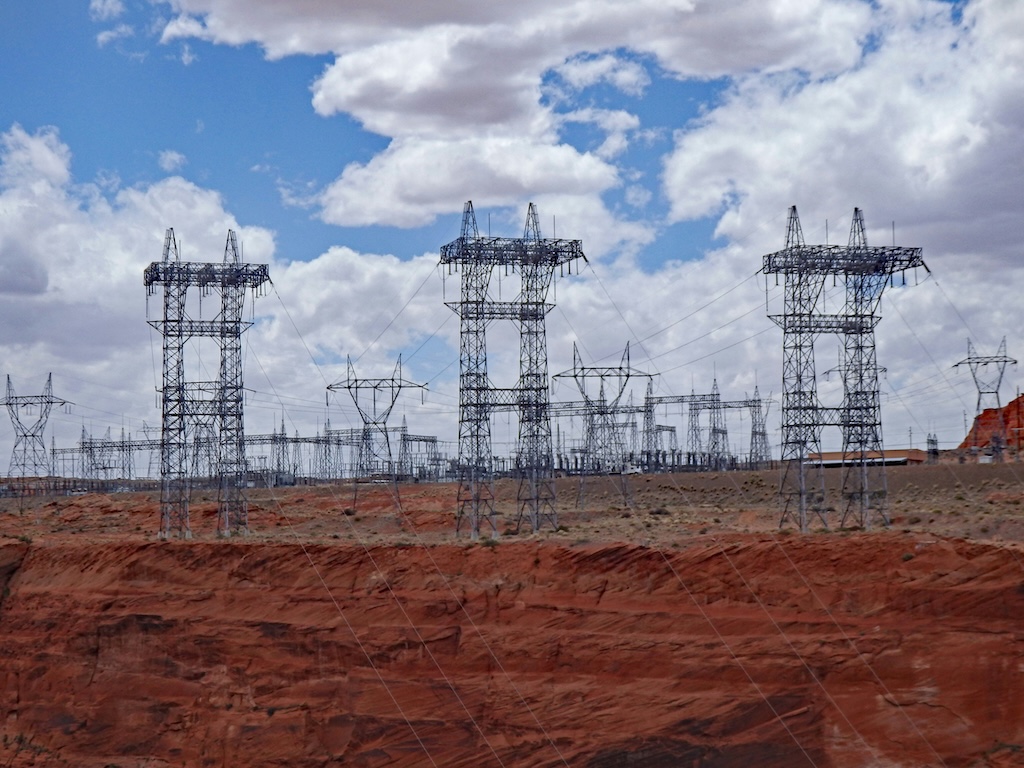
A 750-megawatt solar project on the Painted Desert in the US is a model for the just climate transition. The project, led by Indigenous-owned and -led renewable energy Navajo Power, is based near the site of the Navajo Generating Station coal-fired power plant, which for 45 years generated and channeled power across the Southwest.
“The Navajo Nation was the battery for the Southwest. For decades, the natural resources mined and processed on the Navajo Nation created the electrons that built the city of Phoenix, the city of Las Vegas, the city of Los Angeles – subsidized electrons helped these municipalities build into these economic powerhouses,” says Navajo Power’s founder and CEO Brett Isaac.
Isaac’s COO, Michael Cox, had no idea as a kid growing up in southern California, that every time he turned the lights on he was “benefitting from cheap coal power produced on the Navajo Nation,” he says, “while 15,000 households there live without reliable electricity.”
The plant’s closure in 2019 killed one of the biggest job providers on the Navajo Nation. It also opened an opportunity for an economic reset – one that leverages Indigenous communities’ abundant land resources for green growth in the US while ensuring those communities make the call on how those resources are used, who benefits and how.
The Painted Desert project is Navajo Power’s starting point for amending and rectifying Indigenous communities’ relationships with industries, like power, by “utilizing the economic opportunities, investment and ownership to address social issues [associated with] high unemployment and access to infrastructure,” says Isaac, who joined ImpactAlpha’s David Bank, with Cox, on the latest Agents of Impact podcast.
Such work is not fast, and portends what is required to ensure the climate transition doesn’t replicate and deepen the extractive practices that built economic powerhouses like LA at the expense of many others.
Much of the work Navajo Power has been doing for the past six years is laying the foundation for the Painted Desert solar farm. Isaac spent two years alone negotiating with 30 livestock grazing permit holders on the site, each of whom had to sign off on the project.
“You have a different way of getting permission for projects,” says Isaac. “You have to build a really strong basis of support from community members. It allows us to really focus on what actual benefits come from these projects.”
Navajo Power has four other projects in the works with different tribal nations and a total pipeline of renewable energy generating capacity of two gigawatts. The company estimates the potential economic investment for those communities would be $4 billion.
“This has never been done before by a private company,” says Cox. “We’re carving the path.”
Navajo Power has raised grants, program-related investments and low-cost debt from the Sandler Family, WK Kellogg, Schmidt Family, Sierra Club, Grove and Catena foundations, as well as Wallace Global Fund, Align Impact and other mission-aligned investors. It has also worked with Candide Group to design a funding mechanism to build community equity into the financing structure of its projects.
“No other investment group besides the philanthropic and impact community that we’ve had behind us would take on that level of risk and uncertainty for so many years to pursue something like this.”
Cracking the model will be necessary for large-scale renewable projects, says Isaac. The Painted Desert solar farm will be built across 4,500 acres of land.
“There are not a lot of places in the country that can host [developments] like that and also have the auxiliary infrastructure—transmission lines and interconnection points—that would make them feasible,” he explains. “Indigenous communities have the resource potential to site projects of the size and scale that we need.”