At the Blue Economy and Finance Forum in Monaco last June, €8.7 billion in new commitments poured in from private, public and philanthropic sources to invest in the sustainable ocean economy. Financial institutions representing $3 trillion in assets pledged to integrate ocean considerations into investment decisions, while 80 companies from 25 countries committed €600 billion in revenue to ocean-positive solutions and ocean-dependent coastal communities.
Yet despite this wave of capital, a critical gulf remains: the international community’s ocean finance commitments often struggle to reach coastal communities, which are being hit the hardest by the dual challenges of climate change and degraded coastal ecosystems.
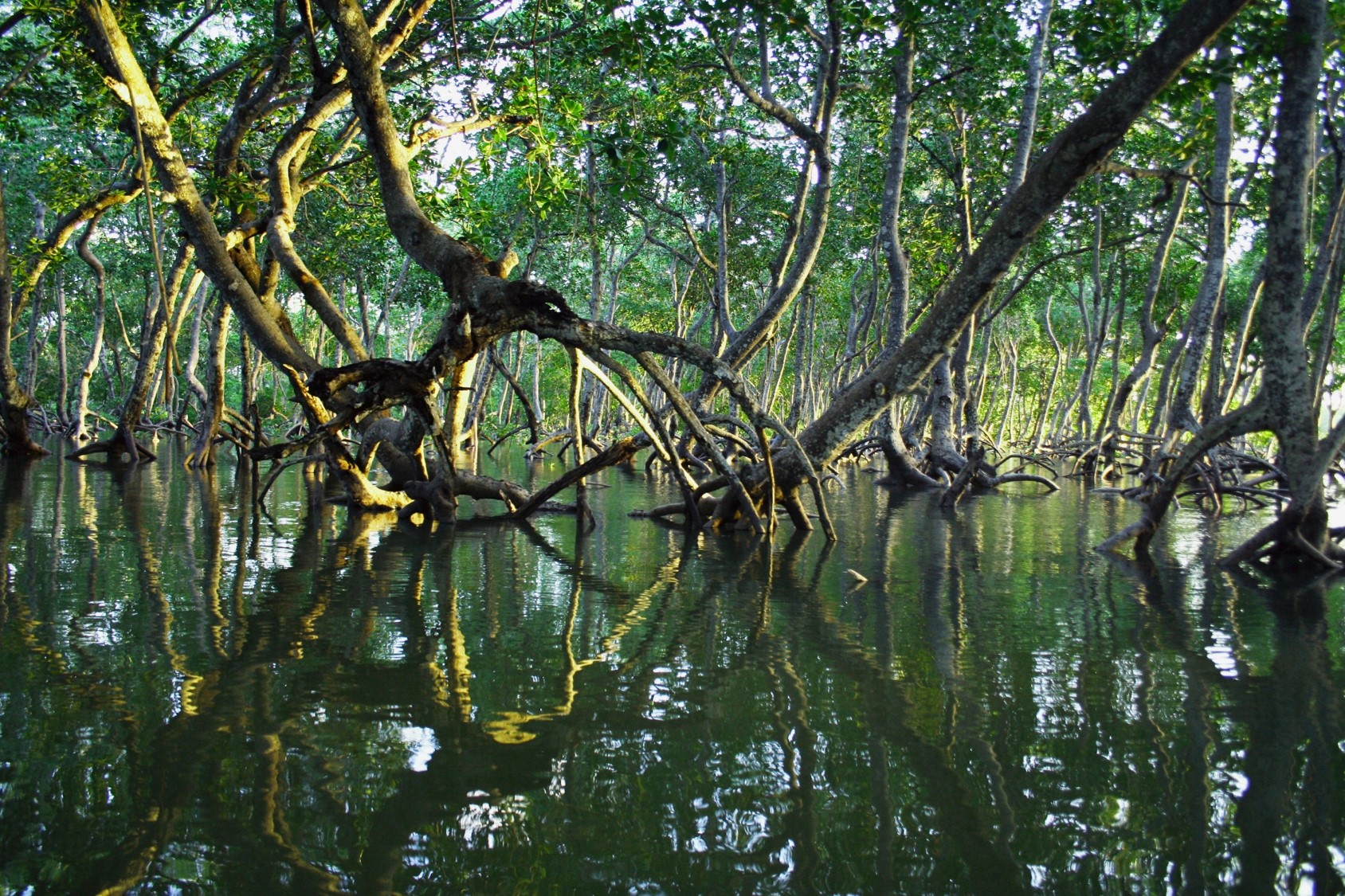
Mangroves stand out as one of nature’s most important coastal guardians and impactful ocean investments. These complex forests shelter marine life that forms the base of global fisheries, protect infrastructure from storm surges, and provide livelihoods, food, and fuel for local people. Yet more than half of the world’s mangroves are at risk of collapse, according to recent IUCN findings.
Unlocking the potential of mangrove-positive microfinance
The Mangrove Breakthrough estimates that approximately $4 billion is needed by 2030 to preserve and restore global mangrove ecosystems. However, the communities that depend on them face barriers that can include land tenure insecurity, poor financial literacy, and low collateral that prevent them from accessing traditional financing.
Microfinance, the provision of small loans, savings, and insurance products to individuals and micro businesses, can help finance reach the community level. By supporting community enterprises that conserve, restore, and make sustainable use of mangroves – such as sustainable fisheries, ecotourism, or mangrove honey production – microfinance providers can help incubate business models that improve livelihoods while protecting nature. As these enterprises grow and demonstrate success, they can attract additional investment, helping mainstream mangrove-positive activities as part of broader coastal economic development.
Despite its potential, mangrove-positive microfinance remains little understood due to several key challenges. First, the term “mangrove-positive” lacks a universally accepted definition, making it difficult for financial institutions to identify and evaluate relevant investments. Existing sustainability frameworks rarely address mangroves specifically, and those that do are often too abstract for frontline microfinance providers.
Second, many microfinance providers lack the tools and training needed to screen for mangrove-positive opportunities. The unique regulatory and ecological complexities of coastal areas, including definitional ambiguity over what is considered a mangrove, overlapping jurisdictional rules, and environmental regulations that are well intentioned yet can restrict sustainable economic opportunities, complicate lending decisions.
To address these barriers, the Mangrove Breakthrough is evaluating mangrove-dependent communities’ interest in microfinance options, and developing practical guidance and tools to equip microfinance providers with the tools necessary to confidently expand lending to mangrove-positive activities. This represents a critical opportunity for the financial sector to align capital with ecosystem health.
Taking action before the tide turns
The urgency to act has never been greater as climate change accelerates and threats to coastal communities and ecosystems increase. Meanwhile, interest in blue carbon, sustainable aquaculture, and climate-smart coastal development is growing, alongside recognition that local communities aren’t just victims of climate change – they’re indispensable partners in solving it.
For impact investors, donors, and development banks, being part of the solution means providing technical assistance, blended capital, and risk-sharing mechanisms that can help facilitate mangrove-positive microfinance. For microfinance providers, it means integrating environmental goals into lending practices and seeking partnerships that align finance with ecosystem health.
If the international community is serious about scaling sustainable ocean investment, financial service providers need support to address the on-the-ground realities of capital access in coastal landscapes. Sustainability-linked financing for coastal communities could transform them into mangroves’ greatest allies while reducing the community-level threats that contribute to ecosystem degradation.
The finance committed in Monaco represents unprecedented momentum. Now we must ensure these resources reach the communities that can turn conservation commitments into lasting environmental and economic impact.
To learn more, check out the full report from the Mangrove Breakthrough and Magnitude Global Finance, “Strengthening Financial Pathways in Mangrove Conservation: Building the Case for Mangrove-Positive Microfinance,” which lays out a clear rationale for how microfinance providers can play a transformative role in filling the financing gap for mangrove conservation. The report is publicly available here.
Maxwell McGrath-Horn and Spencer Parsons are principal and associate principal at Magnitude Global Finance.