
Agricultural SMEs are the invisible infrastructure of local food economies, linking farmers to inputs, markets, transport, and processing.
Our team at 60 Decibels spent four years tracking 656 of these enterprises across Aceli Africa’s portfolio in Kenya, Rwanda, Tanzania and Uganda.
The data reveals a clear pattern: When appropriately structured capital finally reaches agricultural SMEs, change happens in months, not years — and loan processing speed matters more than interest rates.
In addition to the 656 SME leaders, we spoke with 6,154 farmers and 229 workers who these businesses serve. What they told us reveals not just where agricultural finance works, but also practical lessons that lenders, investors and SME founders can apply immediately.
The infrastructure no one sees
Agricultural SMEs occupy a critical position in food systems. They aggregate produce from smallholders. They distribute quality inputs. They provide transport and storage. They connect rural producers to urban markets. When they function well, farmers get better prices, more reliable service and access to tools that improve yields. When they struggle, entire communities lose essential economic links.
Despite this essential role, formal lenders have largely overlooked them. The economics haven’t made sense: The SMEs are perceived as too risky and too costly to underwrite, operating in sectors with thin margins and high volatility. The result is a financing gap that constrains not only individual enterprises but also the broader food system infrastructure they comprise.
Aceli Africa’s model addresses this through incentives that make it financially viable for lenders to serve agricultural SMEs, paired with technical assistance to strengthen these businesses’ financial management capacity. These incentives are designed to motivate lenders to serve high-impact businesses, and they include portfolio first-loss cover, origination incentives and impact bonuses. For 61% of borrowers, the loans they received were their first time accessing capital above $25,000. More than a third had never borrowed from a formal institution at all. Younger firms, which are often the most overlooked, were particularly likely to be first-time borrowers at this scale.
Growth moves through the system
What happens when this infrastructure gets an infusion of capital?
Nearly 90% of SMEs reported improvements in at least one core area: operations, revenue or confidence in future growth. They purchased equipment they’d deferred for years. They expanded transport capacity. They increased inventory. Two-thirds hired new employees — in modest numbers per firm, but enough to be significant in contexts where formal rural employment is scarce.
What surprised us during our survey was signs that these changes were already reaching farmers. Within months of receiving financing, more than three-quarters of SMEs were serving additional farmers. Many introduced new services, like storage facilities, quality inputs they couldn’t previously stock and more reliable market connections.
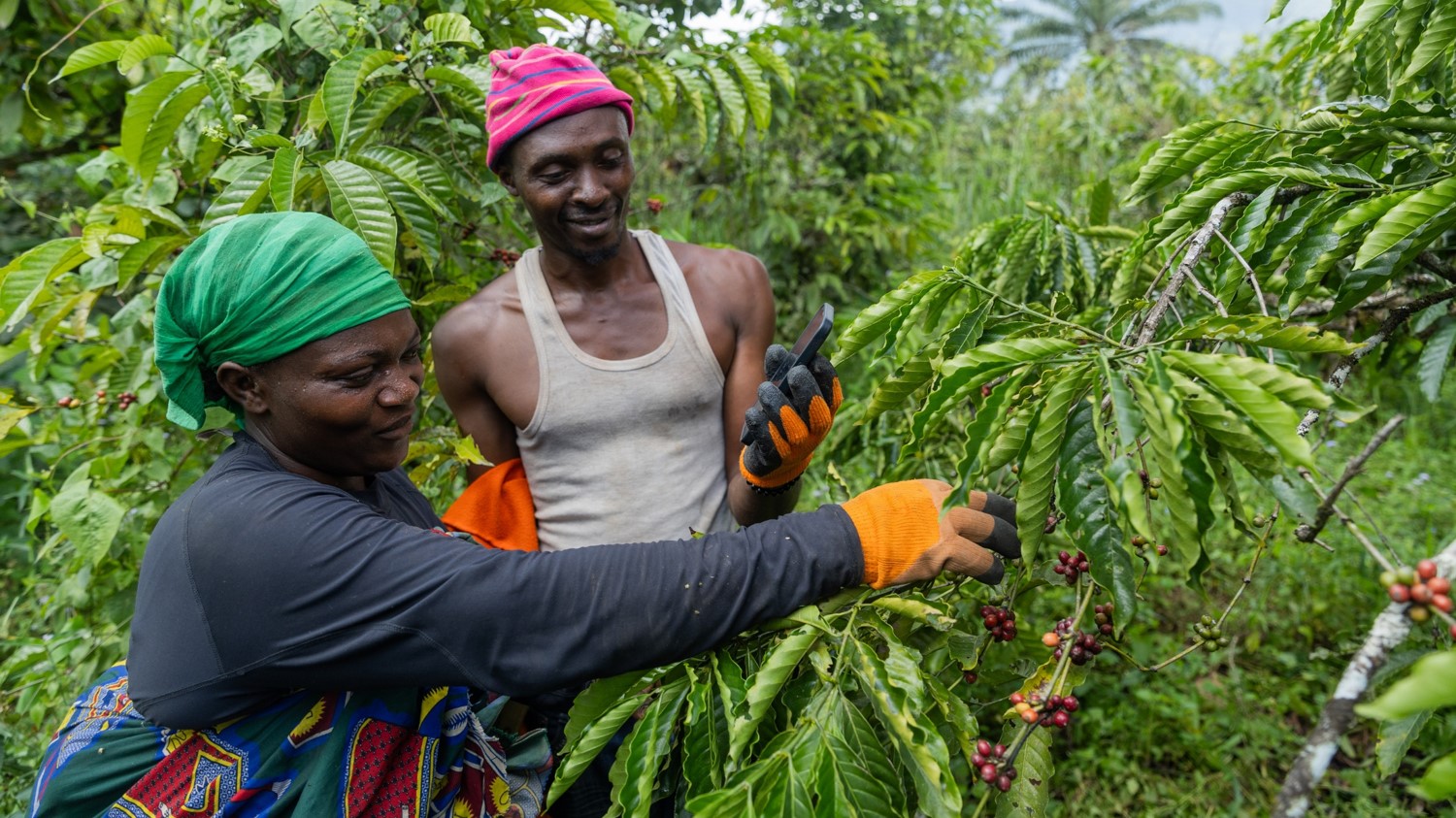
Farmers confirmed gaining unique access through their SMEs and the impact of this engagement on their livelihood. Roughly 75% accessed at least one agricultural service for the first time through their SME — most commonly a market connection that hadn’t existed before. Nine in ten reported improvements in their farming practices.
This pattern illustrates an important point about infrastructure: When you strengthen the connective tissue of food systems, benefits transmit through to people who depend on these services for their livelihoods.
Speed matters more than pricing
SMEs were candid about their borrowing experiences. Satisfaction varied widely, with net promoter scores – the customer loyalty metric based on the question “How likely are you to recommend this company to a friend or colleague – ranging from -12 to +65 across lenders, a spread that illustrates how uneven agricultural lending remains.
One factor dominated all others: processing time. Loans disbursed within a month generated a net promoter score of around 57. Those taking three or more months dropped to 20.
For agricultural enterprises, this isn’t about impatience. It’s about alignment with operational realities. Planting cycles don’t wait. Input purchases happen on tight schedules. Harvest aggregation requires working capital exactly when produce arrives. A loan that processes slowly doesn’t just frustrate borrowers; it can miss the window where capital actually drives growth.
The magnitude of this difference should concern any lender building an agricultural portfolio. A 37-point net promoter score gap suggests that operational efficiency — how quickly you can underwrite and disburse — matters more for borrower satisfaction and repeat business than rate optimization. Lenders spending months perfecting risk models while applications sit in processing queues are optimizing the wrong variable.
Advisory support isn’t optional
A subset of SMEs received post-investment advisory support from their lenders, which included basic business guidance on financial planning, cash flow management and growth strategy. The contrast with those who received capital alone was stark.
SMEs with advisory support reported higher satisfaction (net promoter score 75 versus 52) and stronger revenue improvements, and they were significantly more likely to have expanded their workforce. They also described feeling more confident in their ability to manage future financing and plan for growth.
A 23-point net promoter score difference is substantial. It suggests that advisory isn’t just development practice or impact window-dressing. It correlates with better commercial outcomes. For investors and lenders, this means budgeting for post-investment support shouldn’t be treated as a nice-to-have. It is part of the core infrastructure for portfolio performance.
What finance can and cannot do
Four years of listening also clarified boundaries. Loans don’t eliminate climate shocks that devastate harvests. They don’t resolve poor rural roads or inadequate storage facilities that entire regions lack. They don’t change power dynamics in value chains where SMEs operate with thin margins and limited negotiating leverage against larger buyers.
Where finance succeeds, it does so alongside other enabling conditions: regulatory environments that allow efficient operations, infrastructure that supports agricultural commerce, and market structures that reward the investments SMEs make with capital.
Remove these conditions, and even well-structured loans struggle to generate sustained impact. Finance is a necessary part of food system infrastructure, but it’s not sufficient on its own.
Recommendations for capital providers
The evidence from 656 enterprises points to several changes practitioners can make now:
For agricultural lenders: If your loan processing takes longer than a month, you’re losing both borrower satisfaction and portfolio quality. The 37-point net promoter score difference between fast and slow processing is the difference between clients who become advocates and clients who warn others away. Consider what’s actually slowing you down — risk assessment requiring months of analysis, or internal approvals and documentation that could be streamlined? For agricultural clients, speed of deployment is your competitive advantage.
For impact investors and DFIs: The 23-point net promoter score difference between advisory-supported and capital-only borrowers shows that post-investment support correlates with better outcomes. Budget a part of your investment for basic financial management support and growth planning. It’s a portfolio strategy, not overhead.
Aceli’s incentive model demonstrates that restructuring economics — not just offering concessional rates — can unlock commercial lending to segments previously deemed unbankable. The question isn’t whether agricultural SMEs are creditworthy; it’s whether the incentive structure makes serving them viable for commercial lenders. Aceli’s approach of sharing risk and reducing lenders’ cost of capital proves that when the economics work, commercial lenders will serve this segment. That model offers a more replicable path than direct lending programs.
For SME founders: Push back on slow processing timelines. Three months from application to disbursement isn’t a neutral delay. It’s the difference between capital that aligns with your operating cycle and capital that arrives too late to matter. Consider processing speed as seriously as interest rates when choosing a lender. If offered post-investment advisory support, take it. The data shows that businesses that engage with this support perform better.
For donors and technical assistance providers: The relatively rapid transmission of benefits from SME to farmer level (within months, not years) suggests that financing agricultural SMEs is one of the more efficient ways to reach smallholders at scale. Rather than working directly with thousands of dispersed farmers, supporting the businesses that serve them catalyzes change across networks quickly.
The way forward
The data from 656 enterprises, 6,154 farmers, and 229 workers points to a clear pattern: Agricultural SMEs aren’t a risky borrower segment to avoid — they’re essential infrastructure worth investing in properly. When lenders structure financing around the realities these businesses describe rather than generic risk models, capital flows more effectively. When that capital reaches enterprises that connect farmers to opportunity, benefits are transmitted rapidly through rural economies. And when finance is paired with basic support and delivered on timelines that match agricultural cycles, outcomes improve measurably.
This isn’t transformation overnight. But it is meaningful progress toward more resilient food systems and rural economies. The infrastructure is there. It has been operating in constrained conditions for years. The question is whether formal finance can adapt quickly enough to support it properly.
Aceli’s incentive model has begun shifting how lenders engage with agricultural SMEs, proving that these businesses can be served profitably when the economics are restructured. What’s clear from four years of listening is this: The practitioners who figure out fast processing, pair capital with support and treat agricultural SMEs as infrastructure rather than charity cases will build the most sustainable portfolios. The evidence is there. The question is who will move first.
Note: This article draws on impact data collected by 60 Decibels across Aceli Africa’s portfolio from 2020-2024, including surveys with 656 SME leaders, 6,154 farmers, and 229 workers in Kenya, Rwanda, Tanzania and Uganda. Download the full report here.
Venu Aggarwal is a director at 60 Decibels.
Guest posts on ImpactAlpha represent the opinions of their authors and do not necessarily reflect the views of ImpactAlpha.