
Ambitious impact deals combining public, private and philanthropic capital sometimes collapse under their own complexity. Now a network of impact lawyers is trying to simplify them, creating standardized templates, flexible contracts and strong governance structures. And it’s working.
In Mexico’s Jalisco state, a social impact bond designed to help 1,500 women earn a living wage collapsed before it could deliver results. The deal brought together a nonprofit, two investment funds, a development bank and the state government. But the stated goal of “boosting economic resilience” proved too vague to measure, and the legal structure too tangled, to manage.
“It didn’t make a lot of sense,” said Federico de Noriega Olea of the law firm Hogan Lovells, who served as counsel on the project, called “El Futuro en Mis Manos.” His team had to rewrite the deal midstream to comply with tax and procurement laws. “That issue, in the end, made the project fail.”
The project faced multiple structural challenges. The nonprofit implementing the program couldn’t receive performance-based payments under Mexican tax law — nonprofits can only receive donations, not service fees tied to outcomes. De Noriega’s team tried to restructure the payments as “conditional donations,” a rarely used mechanism that added complexity. The state government struggled to commit funds across multiple budget years, a requirement for the five-year social impact bond.
The Jalisco deal is part of a broader pattern. Blended finance transactions, like many nuanced impact investments, tend to be bespoke and are growing larger and more complex. Some are failing because they combine too many types of investors, too many financial instruments and too many competing incentives.
According to the Organisation for Economic Co-operation and Development’s Blended Finance Guidance 2025, these deals have become “complex and bespoke,” mixing different forms of capital in ways that make it difficult to align incentives or standardize terms. The result: deals that stall, fail or don’t deliver the promised impact.
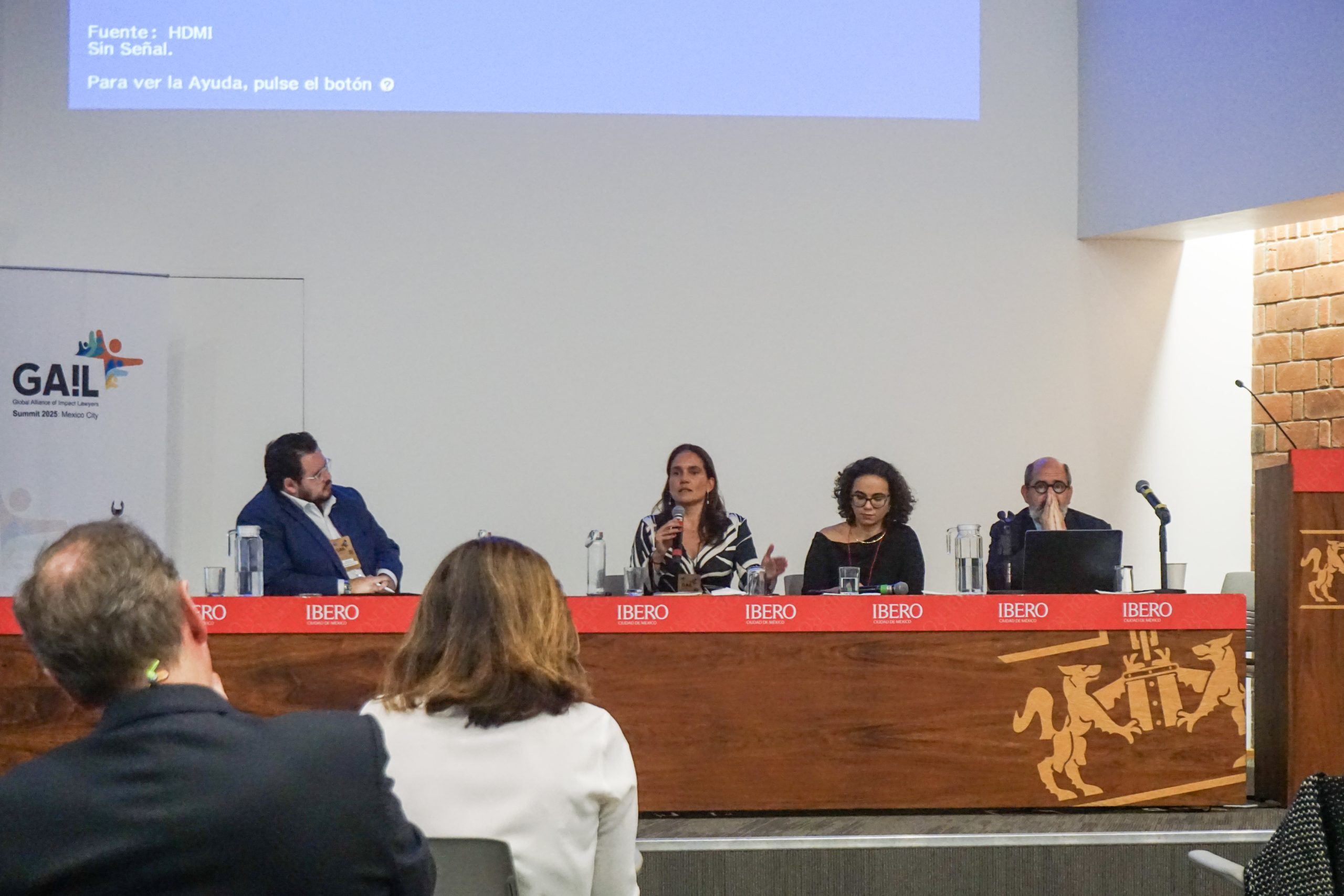
Impact lawyers say they have a solution. At a Global Alliance of Impact Lawyers convening in Mexico City last week, lawyers discussed standardized templates and frameworks to simplify deal structures, embed impact requirements into contracts and make social outcomes both measurable and enforceable.
“Governance is going to be a big issue when structuring these kinds of [complex] deals. Having good governance and clear decision-making will be really important,” Constanza Connolly of impact law firm Keidos told ImpactAlpha. “We need to think about governance not just as a control mechanism, but as a way to collaborate around the impact we want to achieve. Maybe we, as impact practitioners, already have that mindset, but not everyone in the legal or financial world does. That has to change.”
Missing the mark
Beyond structural complexity, impact deals face another fundamental challenge: measuring the right things.
Investors often track outputs such as the number of people reached, rather than outcomes like whether interventions actually improved lives. In Cambodia, for example, what looked like a microfinance success story turned out to be worsening food insecurity.
Cambodia’s microfinance institutions had issued roughly three million loans among just 3.5 million households. But when 60 Decibels, a global impact measurement firm, surveyed borrowers, they found families selling property or skipping meals to make loan payments.
“All the Cambodia MFIs we worked with were increasing food insecurity through their microloans,” said Carla Grados of 60 Decibels. “That was an outcome that was not expected from the output.”
For early-stage impact investors, the legal challenges start even earlier: finding lawyers who understand these structures at all.
Armando Laborde of New Ventures recalled launching Viwala, a flexible lender now providing impact-linked loans to hundreds of small enterprises in Latin America.
“The first loan was a revenue-based loan. I ended up with a lawyer that didn’t have experience, so it was really challenging,” Laborde recalled. “He struggled to understand the concept, but then we both struggled a lot trying to put that on paper.”
Such complexity itself has become a liability — especially when combined with inexperienced legal teams and a lack of standardized templates.
Flexible contracts
The most innovative lawyers in the field say the solution isn’t drafting longer contracts. It’s designing smarter systems.
“We tend to overcomplicate things, and in dynamic projects that’s a mistake,” said James Ritch of the law firm Ritch Mueller. “Creating rigid structures that are difficult to manage or adapt can easily bring a deal down. This field demands creativity and cooperation.”
Ritch is advising impact investor CO_Capital on a regenerative agriculture fund that shares profits with farmers across its supply chain. The work requires drafting language that embeds impact into the fund’s financial mechanisms — how profits are shared, how returns are distributed, and how employees are compensated — while protecting the organization’s core purpose.
The goal is to make innovation replicable. Each new contract becomes a prototype for the next, building a library of mechanisms that make impact commitments durable over time.
“One of the things I think impact lawyers can really help with is making things simpler,” said Michael Ryland of the Global Alliance of Impact Lawyers, or GAIL. “We need to go through a process to make sure we demonstrate returns, but how do we do that in a way that makes the fund manager’s life easy?”
At the conference, lawyers called for creating a shared database of contract language that has actually worked in impact deals. The problem: because contract law and procurement rules differ country by country, each transaction reinvents provisions from scratch. With no central repository of successful contracts tested across different jurisdictions, lawyers often default to inappropriate language from traditional finance—like force majeure clauses (which excuse performance when extraordinary events occur) that failed during Covid-19.
Paying for results
Lawyers at the conference emphasized that new laws alone won’t unlock the capital needed for climate adaptation and social infrastructure.
One promising approach reshaping the field: outcomes-based contracting, where payments are tied to verified results rather than completed activities.
Under this model, an independent verifier confirms whether agreed outcomes are achieved before any money moves. The shift puts pressure on lawyers to draft contracts where success isn’t measured by job training workshops delivered, for example, but by people actually getting and keeping jobs.
In Mexico’s Nuevo León, the state government piloted a social impact bond that flipped the traditional public contract model. Investors funded a young women’s employment program and were repaid only if participants hit specific milestones: not just completing job training, but securing and keeping jobs for at least three and six months.
“At the end, what we want is for these young people to get a job, to get a better life,” said Irina Alberro of Alberro & Asociados who helped structure the deal.
Getting the deal done required creative lawyering. Mexican procurement law doesn’t allow payments based on results, only for goods and services delivered. The legal team, led by Edgar Romo at DLA Piper, worked around the restriction. Rather than creating a new trust structure, which would have been expensive and bureaucratic, they had the government certify that existing approved budget lines could be used for the program. The approach required political will from state officials willing to interpret regulations flexibly, but avoided creating costly new legal entities.
Impact investors are experimenting with similar models. ALIVE Ventures, the Latin American arm of impact investor Acumen, restructured its compensation so that its share of profits depended not just on financial returns but on verified social outcomes. Portfolio companies had to prove — through independent measurement — that they were improving the lives of patients, students or borrowers.
These innovations, however, require rethinking standard legal frameworks. Traditional government contracts pay for services rendered — hours logged, meals served, workshops delivered. Outcomes-based contracts pay for results. That means outcomes must be legally binding, measurable and verifiable.
“Many deals failed because lawyers reused language from project finance,” said Deborah Burand of New York University. “They didn’t understand what was really going on.”
Standard contract provisions often don’t work. Burand found that many early social impact bonds included clauses copied from project finance agreements. When Covid-19 hit, parties looked at these clauses and realized they designed for construction delays, not for social programs serving vulnerable populations during a pandemic.
The contracts that survived were different. Argentina’s first social impact bond, “Vínculo de Impacto Social Bond,” financed training and job placement for 1,000 young people in Buenos Aires. The program was built around a biweekly steering committee where investors, service providers and government officials tracked progress together. When the pandemic hit, rather than invoking force majeure and walking away, partners used these regular check-ins to extend timelines and revise metrics. The program kept running because the governance structure created ongoing dialogue rather than waiting for problems to emerge.
Similar mechanisms worked elsewhere. In the Nuevo León example, performance managers met weekly with providers and every two weeks with the broader learning team.
“We keep adapting, and we keep in mind that at the end, what we want is for these young people to get a job, to get a better life,” said Alberro.
The flexibility to adjust—raising age limits from 18-24 to include 25-27 year olds, for example — came from governance structures that encouraged conversation rather than rigid enforcement.
Burand’s research found that three elements made such contracts resilient. First, the lengthy process of defining outcomes forced all parties to align on concrete goals before any money moved. Second, regular governance meetings — often biweekly steering committees — kept everyone synchronized as circumstances changed. Third, anchoring success to beneficiary outcomes rather than service delivery gave partners room to adjust how they achieved results without abandoning the mission.
The track record supports this approach. In a study of outcome-based contracts worldwide, Stanford University found very few failed during the pandemic.
At the conference, Keidos released a report examining these learnings and the legal frameworks enabling pay-for-results contracts across Latin America.
Legal infrastructure
Latin America is now assembling the building blocks of an impact economy — creating legal and reporting frameworks that make social and environmental outcomes measurable, enforceable and investable.
The region now has more than 1,000 pay-for-results mechanisms across social and environmental sectors. Colombia has institutionalized pay-for-results as national policy through its economic council. Peru launched IMPULSA, a program promoting digital employment with gender focus, backed by the Inter-American Development Bank and Swiss cooperation. Chile created a foundation-backed fund for education outcomes. Costa Rica’s Ministry of Work and Social Security began formal reforms in 2024 to institutionalize results-based financing in social programs.
Mexico is moving on multiple fronts. By 2026, all publicly listed companies will be required to publish sustainability reports alongside financial statements. The rules extend down supply chains, pulling in private contractors and suppliers under national information standards.
On October 16th, members of the alliance presented Mexico’s Senate with a proposal for BIC legislation — Sociedades de Beneficio e Interés Común, or Benefit and Common Interest Companies. The designation would allow companies to embed social and environmental purpose directly into their corporate charters, similar to social benefit corporations such as Patagonia and Ben & Jerry’s in the United States. Directors would be legally bound to uphold that mission and issue annual impact reports.
“We’ve been working for more than six years. We reviewed the law from Colombia, from Peru, from Uruguay, Chile’s new proposal, and also Spain’s” said Lila Alejandra Gasca Enríquez of Hogan Lovells Mexico, who helped work on the proposal.
“We researched everything. As good lawyers, let’s not confuse things—this is social sustainability, this is responsibility, this is impact, this is social enterprise. We started defining the terms. Mexico cannot be one of the largest economies in Latin America without legal recognition of this type of business”
The model already has traction. Colombia counts more than 4,000 registered BIC companies. Uruguay was the first country to enact such a law.
Unlike the more costly and rigorous B Corp certification, BIC status offers a legally recognized path for small and midsize enterprises to signal commitment and attract values-aligned capital. Sistema B, B Lab’s Latin American affiliate, has revamped its B Corp certification across seven categories.