In Baltimore’s ‘Black Butterfly’ neighborhoods, local developers are rehabilitating rows of abandoned and blighted houses. One sign of the revitalization: social enterprises are moving into commercial properties as well, providing services and jobs for the new homeowners.
An innovative loan fund is helping such local entrepreneurs buy their commercial spaces and build sustainable businesses in their communities.
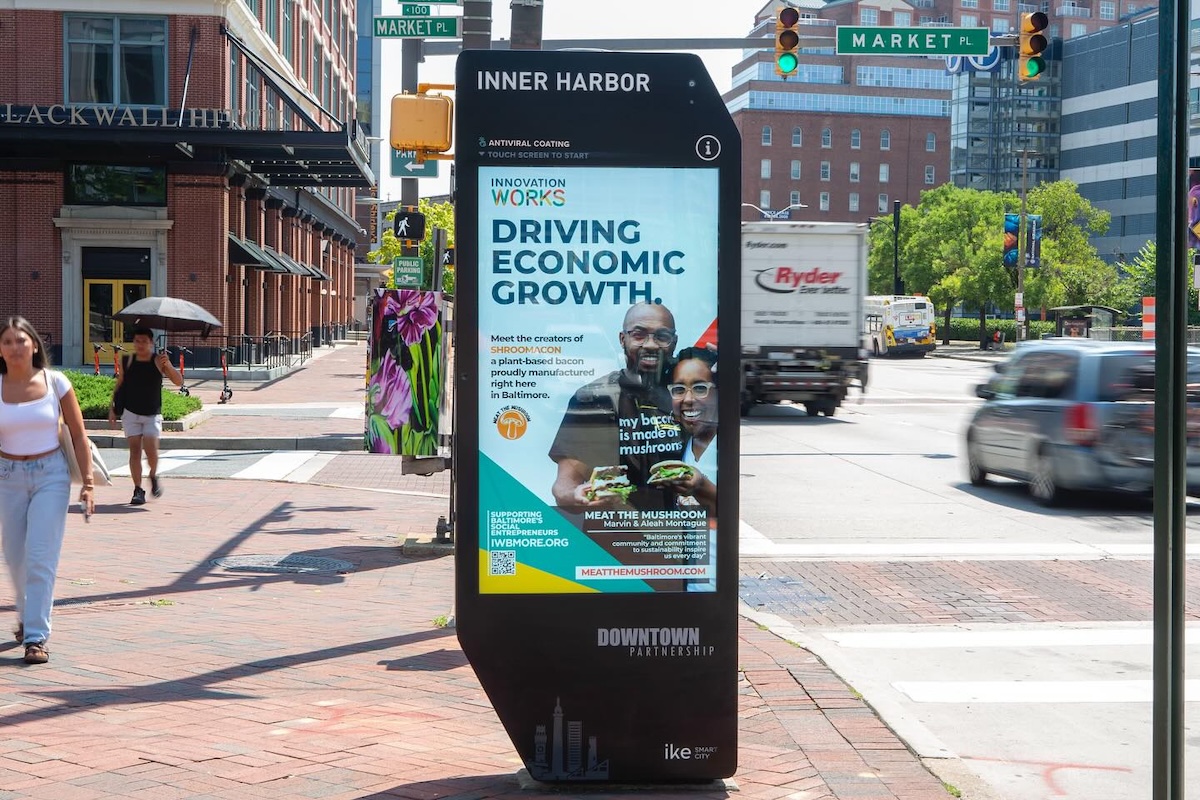
The nonprofit Innovation Works is seeking to prove out a model for place-based, bottom-up economic development by providing patient, flexible capital for Baltimore’s social entrepreneurs. Its inaugural fund, Ignite Capital, has deployed $3 million in low-interest loans to 42 enterprises in the city, helping them build close to home and provide products and services for residents. The fund’s borrowers have created more than 600 local jobs.
With its new Ascend Fund, Innovation Works is seeking to raise $15 million, through a mix of low-interest investment notes and grants, to accelerate social enterprises and close the majority-Black city’s persistent racial wealth divide. Maryland Gov. Wes Moore and Baltimore Mayor Brandon Scott have cast the racial wealth gap as a historic legacy and an urgent challenge, even amid pushback from the Trump administration.
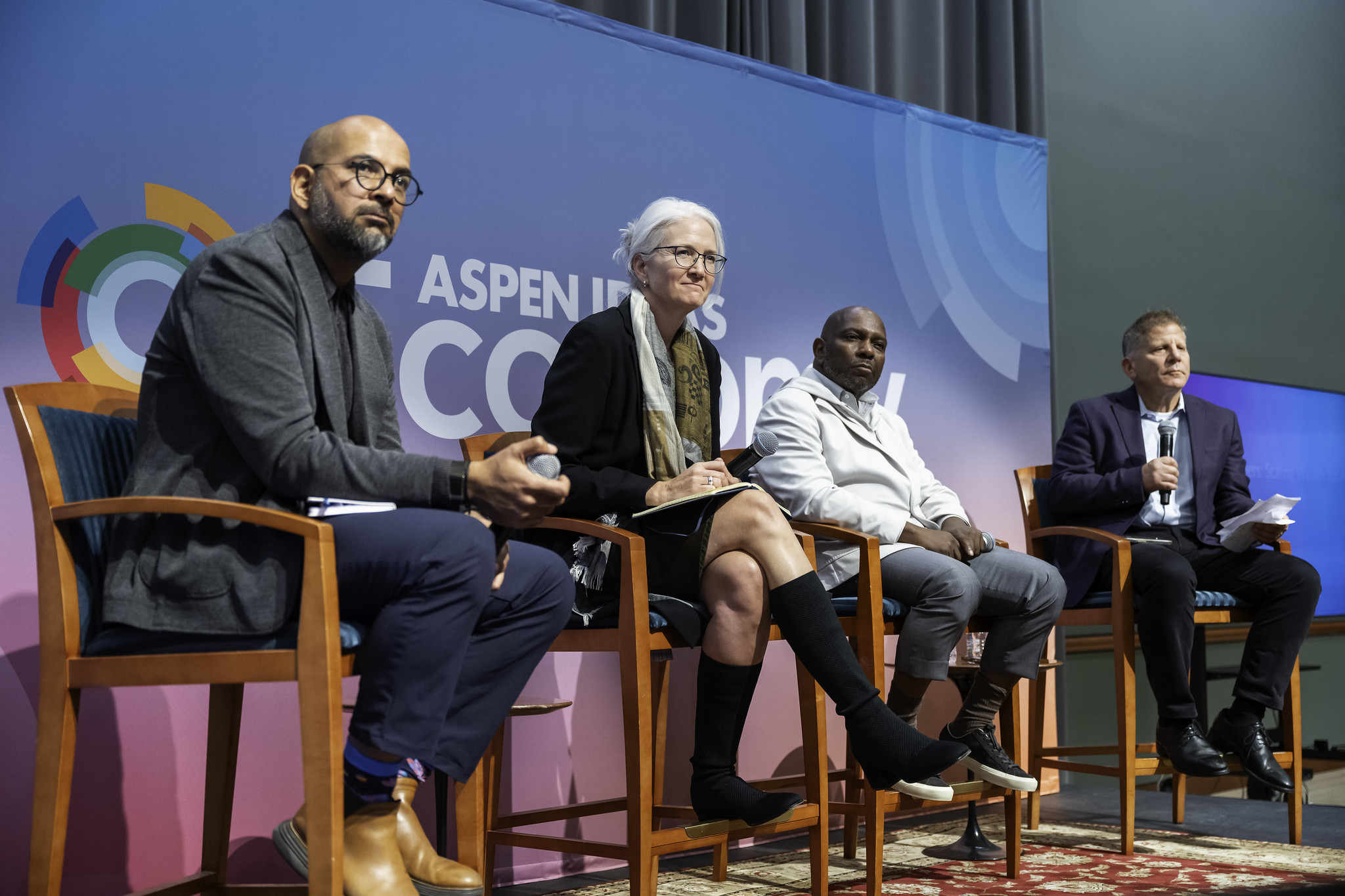
Last week, Innovation Works convened local institutions including the Annie E. Casey, T. Rowe Price and France-Merrick foundations, Johns Hopkins University and Brown Advisory In West Baltimore to explore ways to move more capital in their backyards. The investor meeting was followed by Innovation Works’ annual social enterprise showcase.
“There are a lot of local actors that have stepped up, from our entrepreneurship support organizations to our public sector, with a mayor and governor that are aligned when it comes to closing the racial wealth gap,” says Innovation Works’ Jay Nwachu. “There’s a lot of energy happening in Baltimore right now, but we need outside capital to flow to support it.”
Entrepreneur support
Demand for commercial activity is starting to grow in neighborhoods, such as Southwest Baltimore and Cherry Hill. The systematically disinvested neighborhoods, in what is known as the “Black Butterfly,” are marked by tens of thousands of vacant homes.
Local developers like Parity’s Bree Jones are looking to attract buyers for whole blocks of newly-renovated homes. Parity is buying and fixing up blocks of row houses to sell to “legacy residents,” people who once lived in the area, or whose parents and grandparents lived there, and want to return.
“The same way Bree is doing whole blocks, whole neighborhoods, we need something similar for businesses, where you can get five to 10 businesses to co-locate on a block,” Nwachu told ImpactAlpha. The two approaches are complementary, he said, with commercial activity helping Jones “to actually convince people to buy homes here, and not leave five years from now because they had a baby and there was no daycare in the neighborhood.”
Innovation Works’ Ignite Capital fund wrote one of the first checks to Parity, giving Jones a $50,000 loan to bid for properties at a Baltimore’s tax sale. Jones, who has since repaid back the loan, is now a member of Innovation Works’ investment committee.
Innovation Works launched the social impact fund in 2020 after establishing its presence in Baltimore for two years. The nonprofit started out in 2018 as a “domestic test bed” for Santa Clara University’s Miller Center for Social Entrepreneurship, a pioneer of the global social entrepreneurship movement. Santa Clara University seed-funded the organization, bringing in sister Jesuit institutions in Baltimore, like Loyola University and Cristo Rey Jesuit High School, as early backers.
“The Jesuits established us as a way of extending their mission in Baltimore beyond schools,” Nwachu says. “And the charge was to go identify entrepreneurs and figure out how we can help them build mission-driven, sustainable organizations that serve Baltimore city well.”
Using the Miller Center accelerator model, Innovation Works has provided mentorship and entrepreneurship support to a network of around 200 social entrepreneurs. Ignite Capital, with $4.4 million in debt and grant capital raised, has backed 42 of those enterprises to date. The fund’s investors include the Abell and Baltimore Community foundations, USA East Jesuits, Baltimore wealth management firm Berman McAleer and other local individual and corporate funders.
Ignite Capital’s loans range from $10,000 to $150,000 and are capped at 6% interest. Innovation doesn’t ask for collateral and often gives borrowers a one-year buffer before the loan begins accruing interest. Ignite Capital’s 42 borrowers have paid back $900,000 of the $3 million deployed. Innovation Works plans to recycle the returned capital into new loans.
“Our entrepreneurs are people who don’t have somebody at their Thanksgiving dinner table who can give them $50,000 when they need it,” says Innovation Works’ Mark Sieffert.
The majority of Ignite Capital’s borrowers are Black and more than half are women. Among them is TCF Lodgings, which is acquiring properties close to universities and corporate offices to create affordable rental for students and workers; The Empanada Lady, a catering company that makes authentic Puerto Rican empanadas and other culturally-inspired dishes; and Home Helpers, which provides in-home care to West Baltimore’s elderly individuals and people with disabilities.
Shared prosperity
Ignite Capital has performed beyond expectations thus far, according to Nwachu. “When we built the fund, we estimated that we’d lose about 20% of all capital,” he said. Abell Foundation provided a credit guarantee to cover up to 80% of that 20% potential loss for the fund’s investment note holders.
Five years in, Nwachu says the fund will call its first loan default pool of $45,000 at the end of this year.
The new Ascend Fund has raised $2.5 million towards its $15 million goal. Innovation Works is looking to raise at least $10 million in notes and $5 million in grant capital. The blended capital fund, similar to its predecessor, also has a 20% default limit that is covered by loan guarantees from the state of Maryland and Abell Foundation.
The next challenge is attracting national investors to partner with Baltimore’s institutions and leaders in building an equitable economy and shared prosperity.
“We know there are national players in this market,” says Nwachu. “But Baltimore is just not on top of their list.”
Nwachu’s appeal to them is to take a closer look at the creativity that is taking place in Baltimore. Most of the city’s entrepreneurs are social entrepreneurs by default, he says, because they’re often building responses to the historic legacy of redlining, blockbusting and disinvestment that have plagued Baltimore’s Black neighborhoods.
In West Baltimore, just a block away from Innovation Works’ headquarters, Black woman-led Women’s Home Preservation is redeveloping a commercial building to build affordable housing with clean energy for working single mothers and widows (see, “Women’s Home Preservation adds clean energy and affordable housing to the community revitalization toolkit”).
Also in West Baltimore, worker-owned cooperative WaterBottle, is buying rowhomes for affordable housing that offer tenants equity access (see, “Worker co-op turns distressed homes in West Baltimore into affordable housing and shared equity”).
“In an environment where our public safety nets are being dismantled, the one thing I would say is that Black folks have always cherished agency,” says Nwachu. “And one of the areas where Black folks have expressed a lot of agency has been entrepreneurship and ownership.”
When it starts deploying capital from the fund next year, Innovation Works plans to underwrite loans ranging from $25,000 to $250,000 to Baltimore social enterprises on the cusp of sustainability, providing last-mile catalytic capital that can get them in front of larger traditional lenders. “We need to get them bankable,” Nwachu said.
Corridor strategy
A chunk of the loans will go towards helping borrowers take ownership of their own commercial spaces, which they can put up as collateral to become more attractive to lenders. Nwachu says the Ascend Fund will take a creative capital approach to drill deeper into whole-community revitalization. Part of that strategy is going deeper into neighborhoods and forming partnerships with neighborhood associations and other local groups.
Innovation Works has already started lining up such partnerships, like on the West North Ave. and Pennsylvania Ave. corridor of Northwest Baltimore. The intersection connected two Black arts and culture corridors in the 1960s and 70s, Nwachu says. “It was the Harlem of Baltimore. All of our historical artists from across the country, that’s where they performed.”
Innovation Works is partnering with the city of Baltimore, JPMorgan Chase and the West North Ave. Development Authority to revitalize the once-vibrant corridors, now blighted with empty buildings following decades of disinvestment.
“We have capital from all three parties to help 10 businesses get into commercial spaces along the two corridors as a demonstration project,” Nwachu said. The Ascend Fund will also invest its own capital into the project.
Among the entrepreneurs in the demonstration project’s pipeline is a Black woman grocery store owner who already has an operation in Washington, DC, but wants to open one in her native city of Baltimore.
Another is a longtime farmer, who is passionate about healthy eating, and wants to open a juice shop.
A third is a national recording artist who wants to return to the neighborhood to open a recording studio.
“It’s easy to wake up every day to back those entrepreneurs,” says Nwachu. “They’re the ones that are building the tomorrow that we want to see in Baltimore.”