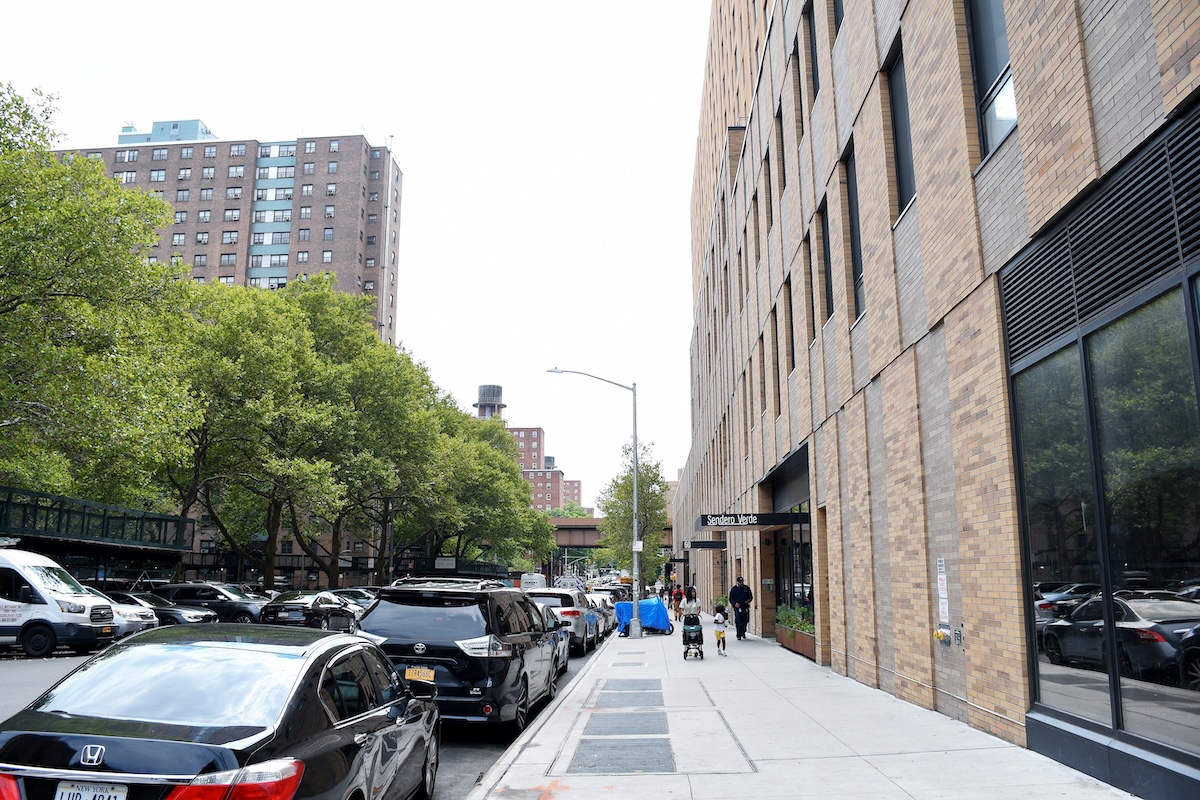
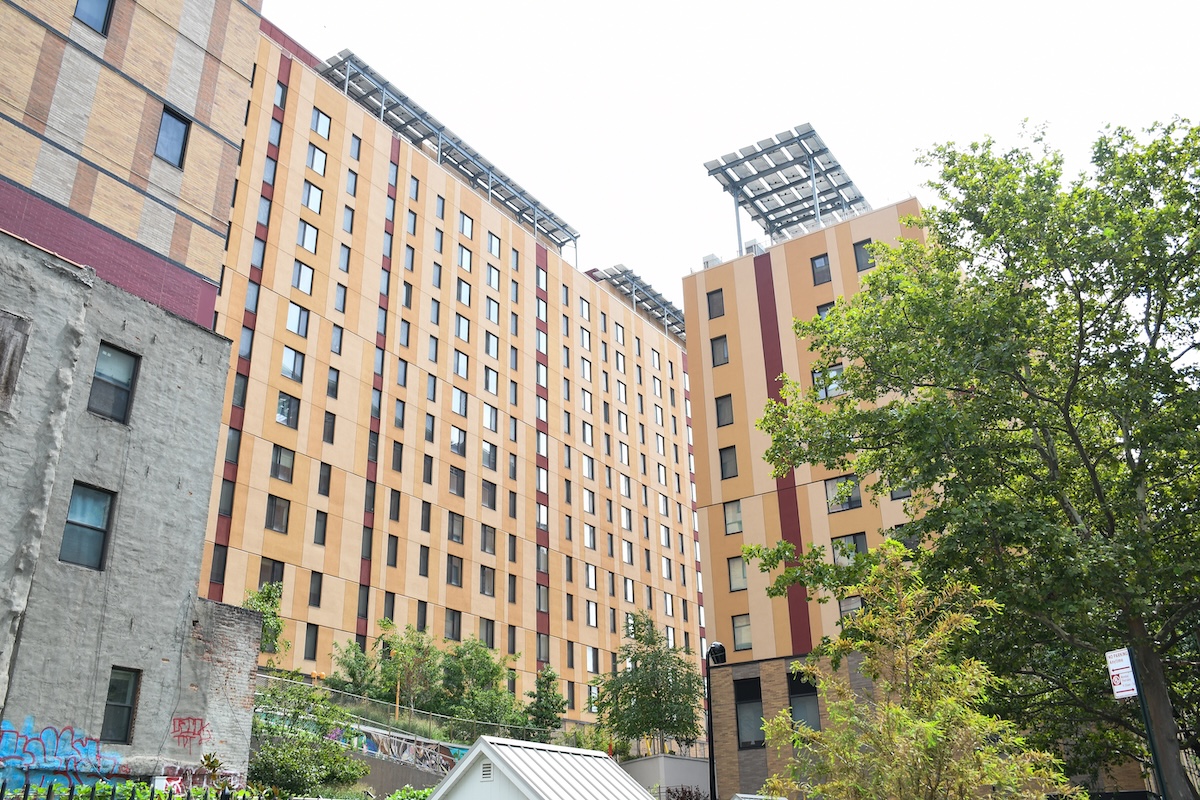
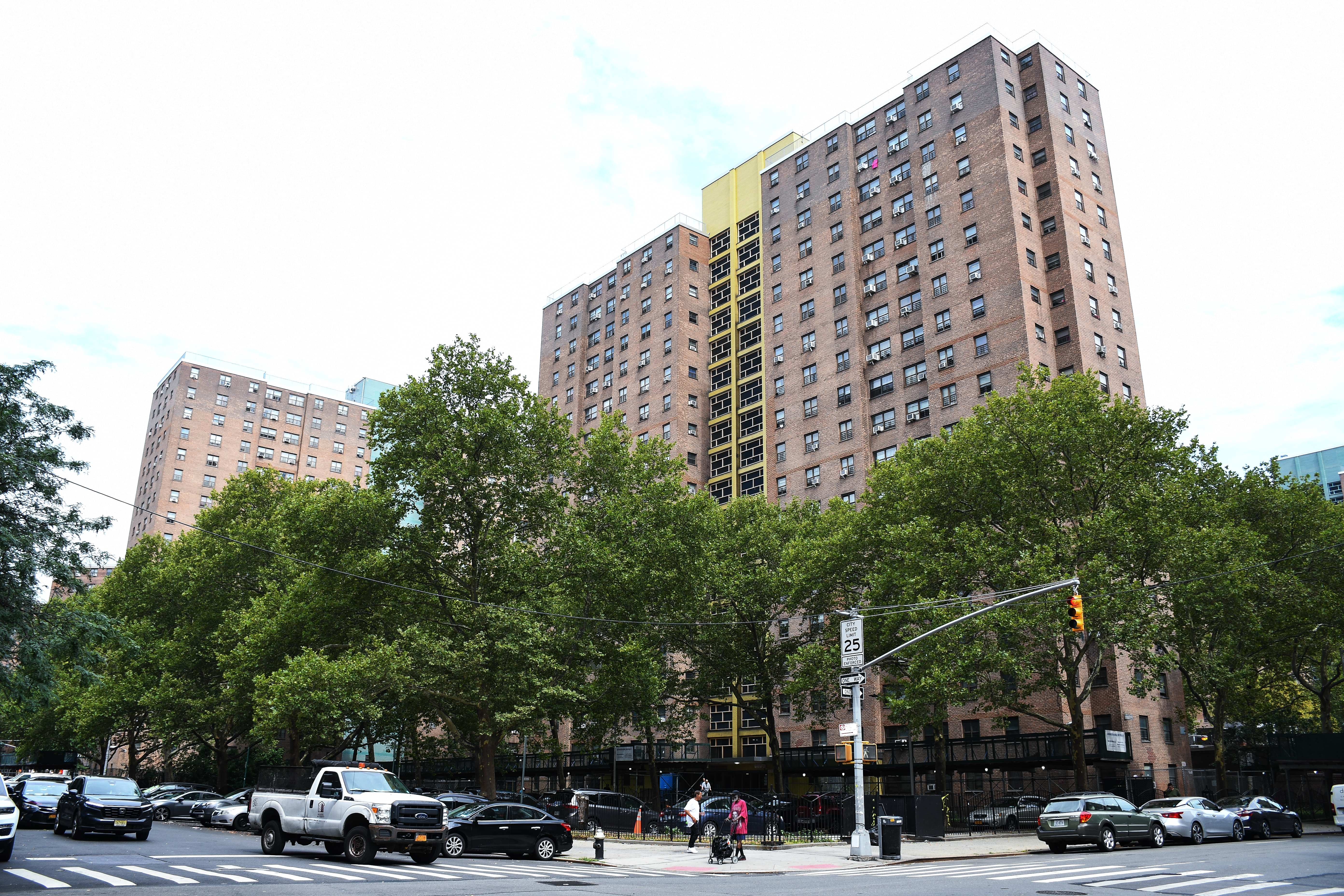
Surrounded by public housing projects on a block of East Harlem between 111th and 112th streets, sits a big new apartment complex with a facade that screams luxury.
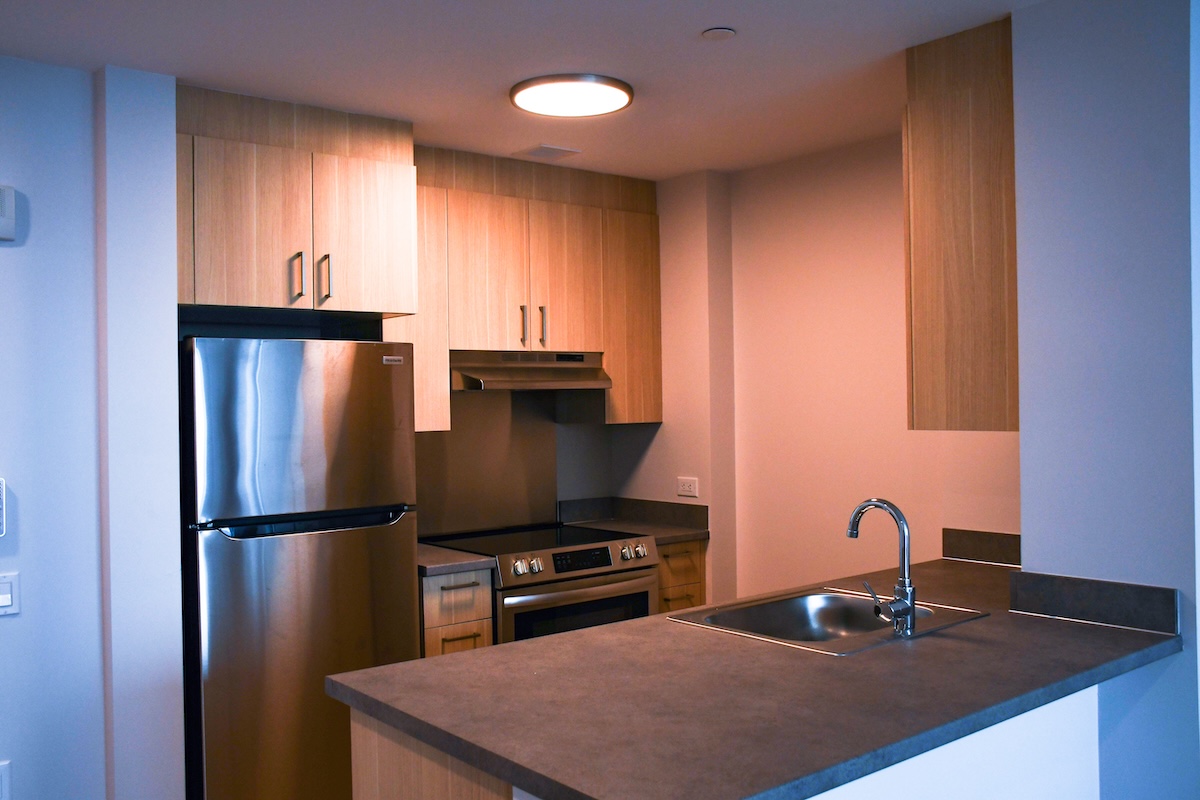
But behind its sleek exterior is a permanently affordable development that houses formerly homeless individuals and other low- to moderate-income residents — some paying as little as $498 a month for a studio apartment in upper Manhattan.
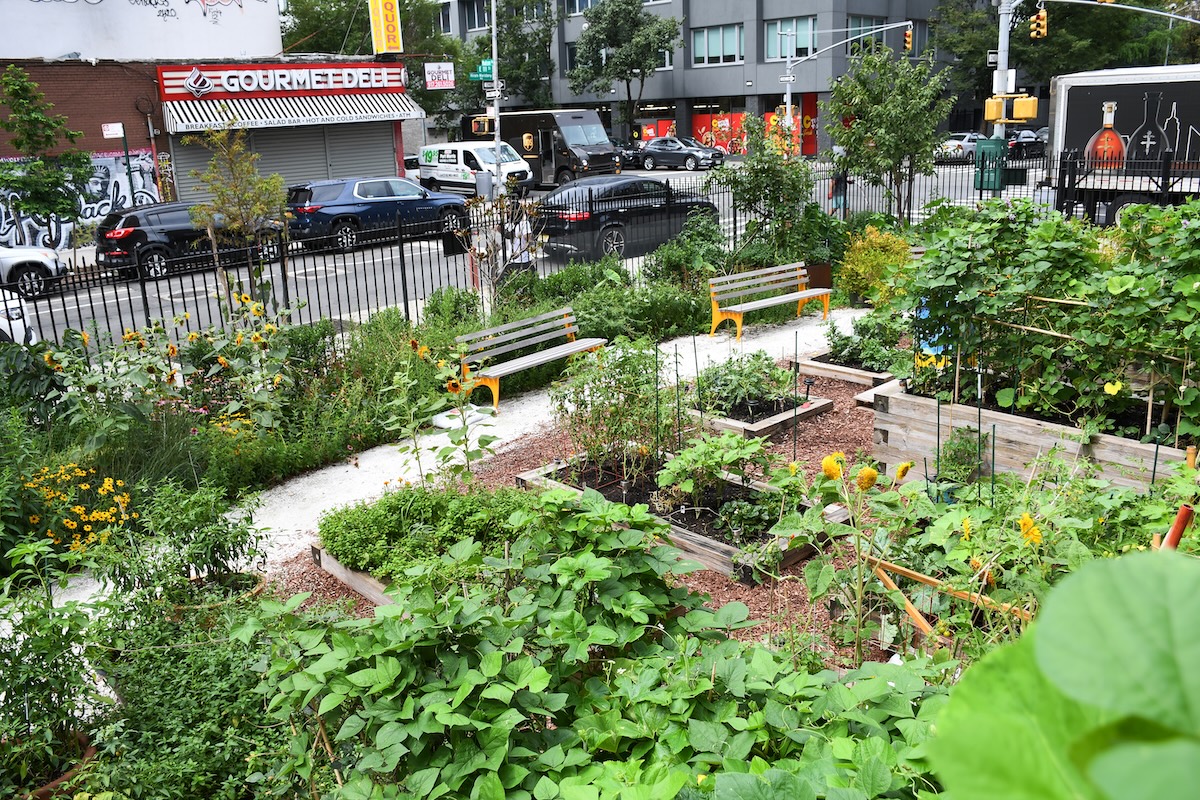
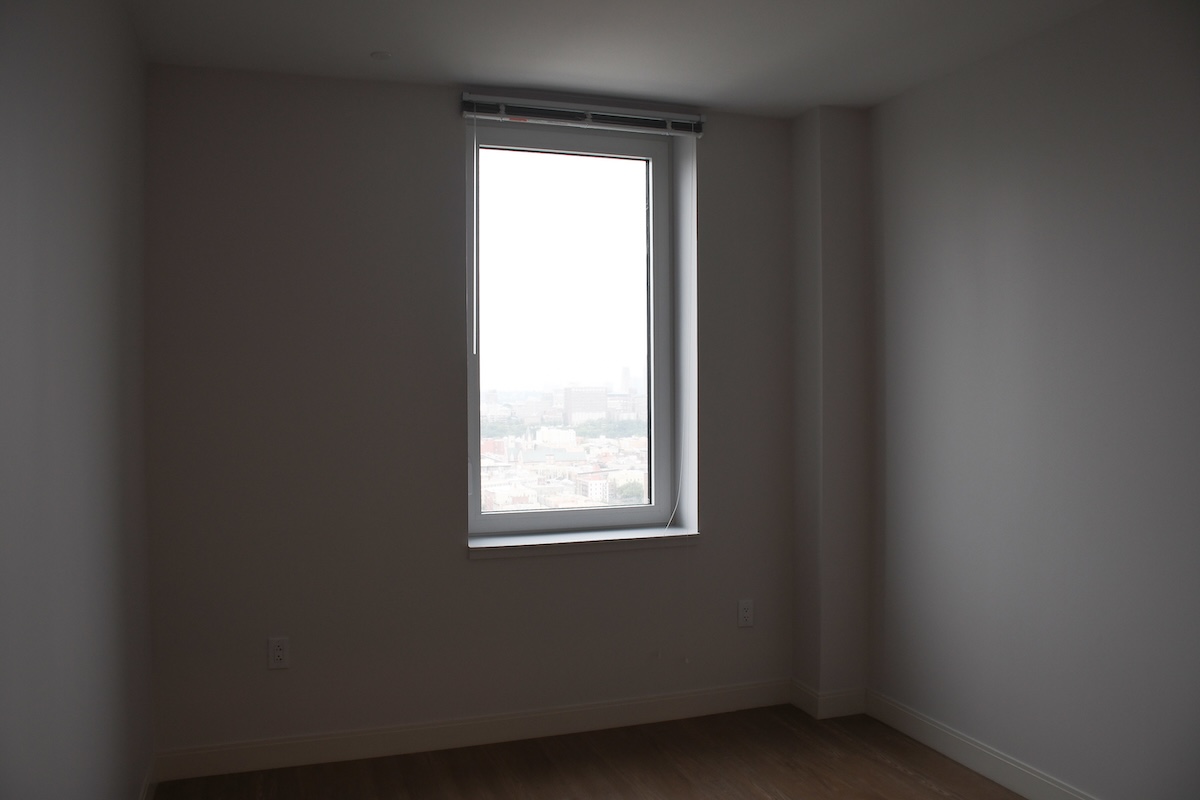
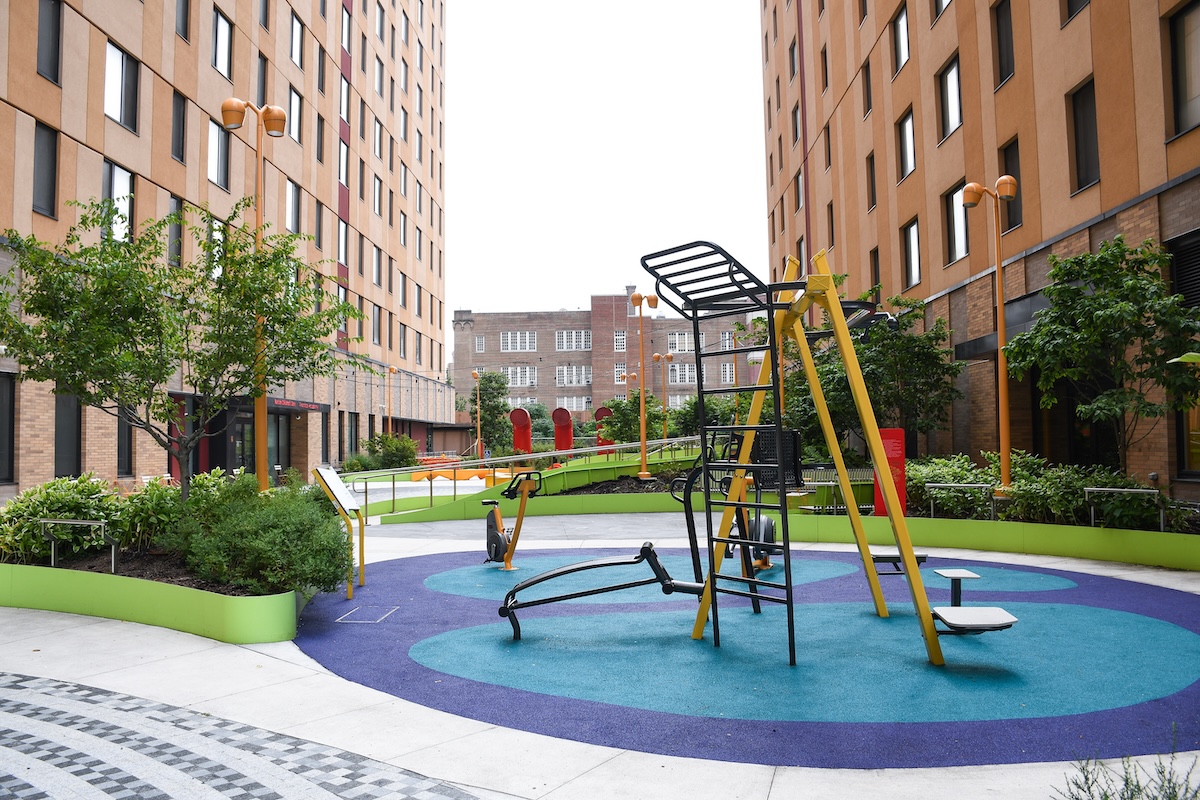
On a recent summer day at Sendero Verde (Spanish for “green path” or “green trail”), kids were playing in the courtyard, teens were using computers in a co-working space, women were planting in a shared vegetable garden and solar panels were visible on the rooftops of the two smaller buildings from the top of the project’s 34-story flagship building.
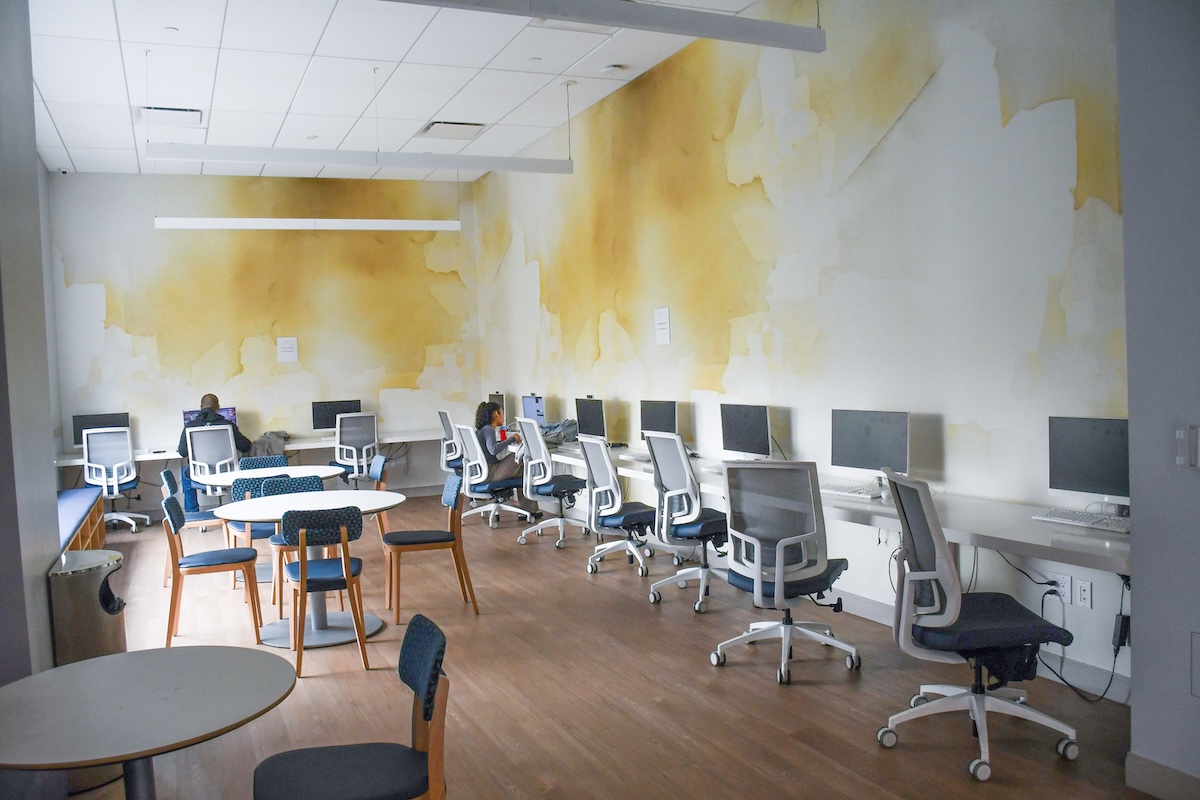
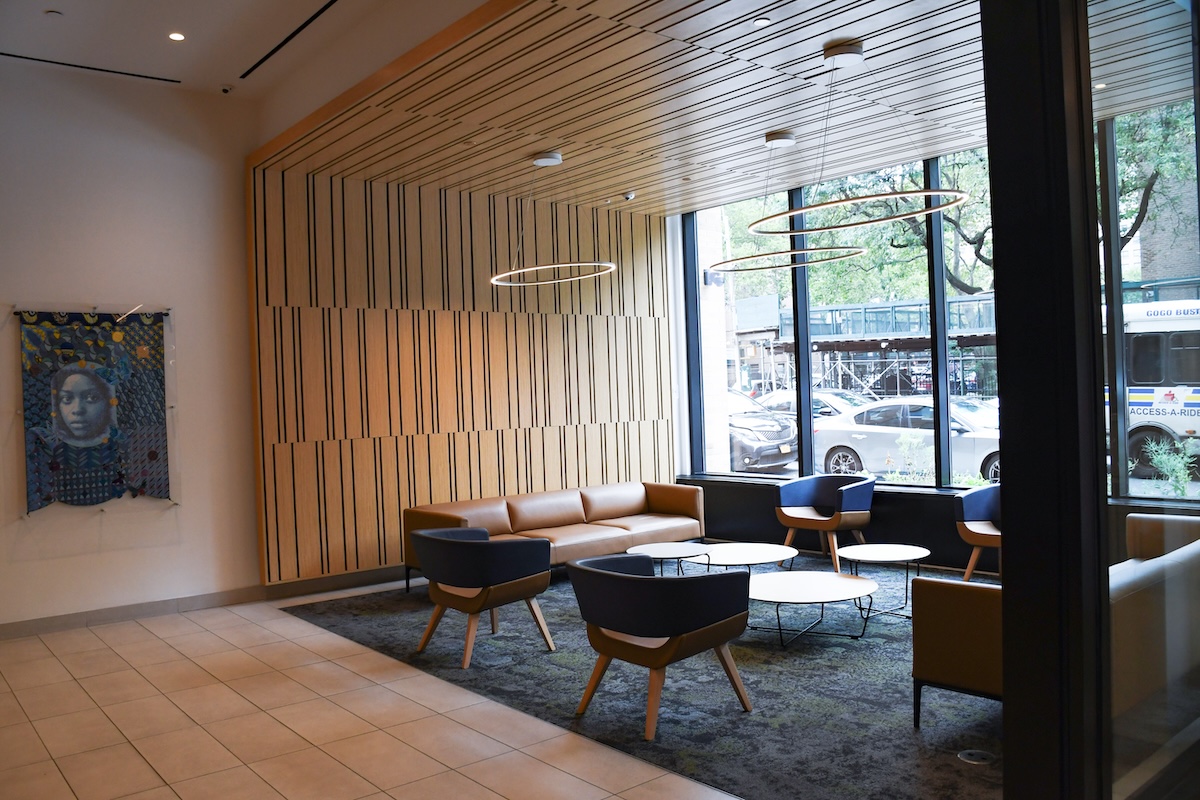
Sendero Verde includes 709 units in three buildings – fully leased – with a mix of studios, one-, two- and three-bedroom apartments of more than 927 square feet. Residents in the 750,000-square-foot complex also have access to a charter school on the premises, a family enrichment center, a computer lab, a medical screening room, a fitness center, a community kitchen and a supportive housing and social services center.
“We are using the building of physical places and our investment funds to bring social, health and education programs to our residents,” said Jonathan F.P. Rose, founder of Jonathan Rose Companies, which developed Sendero Verde alongside L&M Development Partners and Acacia Network.
“For me, the building of communities and the building of affordable housing, those are the vehicles to achieve the goals of racial justice, social equity and healing the environment.”
Neighborhood fabric
The $446 million development is also a demonstration of the emerging wisdom that affordable, mixed-income housing with social support and environmental sustainability creates not only attractive communities, but attractive risk-adjusted commercial returns for institutional and other investors.
The benefits include lower vacancy rates through both up and down economic cycles, higher retention of tenants, and more on-time rent payments. Energy and water efficiency investments and other design elements also reduce operating costs.
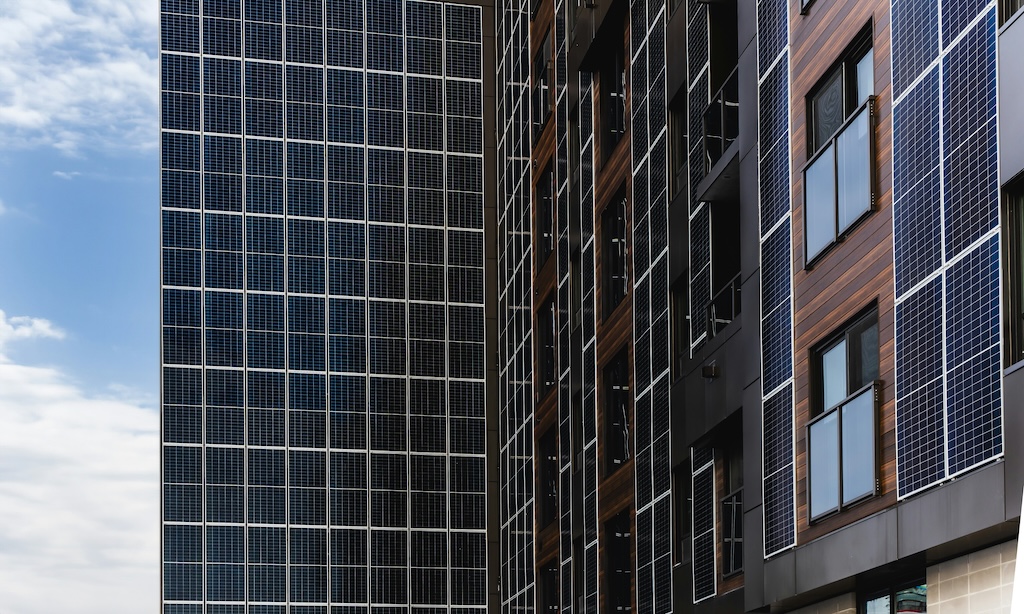
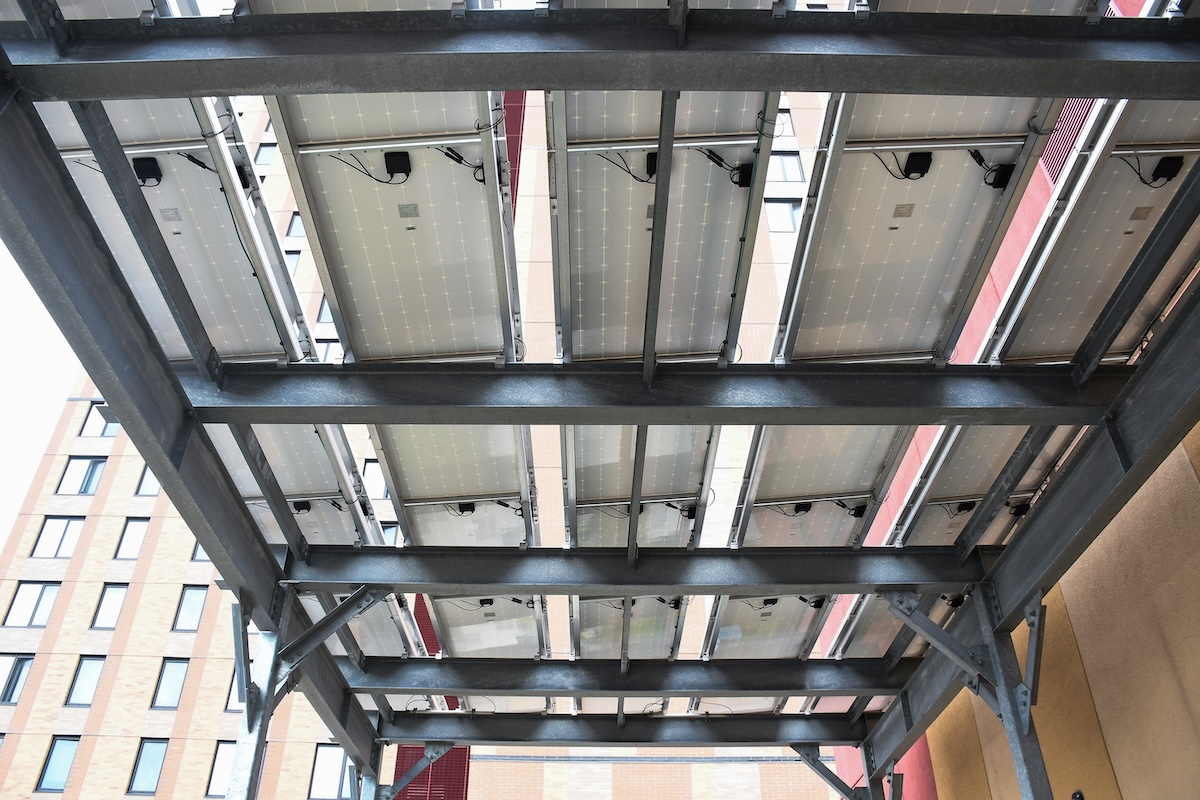
Sendero Verde runs mostly on electricity and solar energy, with triple-paned glass windows to reduce ambient air pollution and energy waste, and community gardens and other green spaces. The East Harlem complex is the largest residential housing project in the US built to “Passive House” standards. Germany’s Passive House Institute certificates only buildings that consume up to 90% less heating and cooling energy than conventional buildings.
The ‘Community of Opportunity’ concept, which Rose notes he didn’t coin, focuses on integrating the key resources a community needs, like health care, education and social services, into housing-centered developments that provide affordable homes.
“So you’re rebuilding the fabric of a neighborhood, but you’re really giving families that live there the resources to have wellbeing and to thrive and to move forward with their lives,” he told ImpactAlpha.
The whole-block apartment community is a finalist for next month’s Urban Land Institute’s 2025 Terwilliger Center Award for Innovation in Attainable Housing, awarded to innovative mixed-income and affordable housing developments that expand housing access in their communities. Sendero Verde in April won ULI’s New York award for Excellence in Affordable Housing Development.
“To us, Senedero Verde is a really good example of the kinds of neighborhoods and cities we could be building,” Rose says. “Just imagine if all community redevelopment started there and took it even further.”
Institutional grade
Incomes for residents at Sendero Verde range from about $19,600 to $192,600 a year. Rather than building only low-income housing or luxury high-rises for the wealthy, mixed-income communities that bring together residents across income levels can foster economic diversity, social mobility and long-term neighborhood stability.
“It’s about treating everybody with respect and creating a platform for families to thrive, and their communities to thrive, and their cities to thrive,” says Rose. “And at the same time, we’re all thriving within not only a social and economic system, but within an ecological system.”
Those attributes make the affordable rental housing asset class attractive to institutional investors – especially insurance companies.
“They think about it as more of a core real estate investment, something that is low risk, that doesn’t provide outsized returns, but matches up well against their assets and provides predictable income,” Jeff Brenner of Impact Community Capital said on ImpactAlpha’s Agents of Impact podcast last year.
Three-quarters of the nation’s lowest-income renters are severely cost-burdened, struggling to pay for basic shelter as the shortage of affordable rental housing grows. They also struggle to find cleaner, more modern apartments to move into. Nationwide, only 35 affordable homes exist for every 100 extremely low-income renter households. Hundreds of thousands of affordable units are converting to market-rate rentals as rent subsidies expire.
The housing crisis had appeared to produce a surprising bipartisan consensus around policy drivers to produce more units. In President Trump’s “One Big Beautiful Bill” Act, the Low-Income Housing Tax Credit was expanded and made permanent. The expansion could result in more than one million additional affordable rental homes between 2026-2035. The bill also made the New Markets Tax Credit permanent, with authority to allocate $5 billion each year.
(Breaking: The Trump administration is using the two-week-old government shutdown as a pretext to lay off thousands of federal workers and axe programs that do not enjoy the president’s favor. According to Opportunity Finance Network, the entire staff of the Treasury Department’s CDFI Fund have received layoff notices, effectively shuttering the office that awards New Markets Tax Credits as well as grants to community development financial institutions to make loans in low-income, tribal and other underserved communities. With bipartisan support, the CDFI Fund staved off an earlier shutdown threat in March.)
In a recent survey conducted by the Federal Reserve Bank of New York, a cohort of 22 private equity real estate fund managers are expecting to raise $5.2 billion per year between October 2024 and September next year for affordable, income-restricted housing developments.
Last week, MSquared’s Equitable Housing Solutions Fund secured a $139 million first close to finance mixed-income housing developments and redevelopments that are built sustainably with daycare centers, coworking spaces, healthy markets and artsy outdoor spaces. Among the backers of the fund, which is targeting a $250 million final close, is Capricorn Investment Group, Deutsche Bank and Bank of America.
Jonathan Rose Cos. raked in $660 million this summer for its sixth affordable housing preservation fund, which acquires and renovates mixed-income apartment buildings in New York, Boston, Chicago, San Francisco, Washington DC and other cities, with a focus on preserving affordability for residents and retrofitting them with water and energy-efficiency upgrades. The fund attracted pension funds, endowments, family offices, as well as banks and foundations including Capital One and Ford Foundation.
Catalyst Opportunity Funds in April raised $140 million from JPMorganChase, UnitedHealth Group, American Express, KeyBank and other institutional investors for its second fund, which is investing in ground-up affordable and workforce housing developments. The Salt Lake City-based private equity firm targets projects led by community-driven developers that incorporate community services, including workforce training, healthy and nutritious food access and healthcare.
Harlem Children’s Zone
The opportunity to build Sendero Verde came through a request for proposals issued by SustainNYC, a New York City Housing Preservation and Development program designed to support affordable housing that meet high design and sustainability standards. Jonathan Rose Cos.’s mission to build environmentally friendly and green buildings was a natural fit. “We’ve been doing this for 20 years, so we have a long track record,” Rose says.
The $446 million project secured financing from public sources, including the New York State Energy Research and Development Authority, or NYSERDA, the NYC Housing Preservation and Development and the New York City Housing Development Corporation. Jonathan Rose Cos. and its partners also leveraged more than $160 million in tax credit equity for the project.
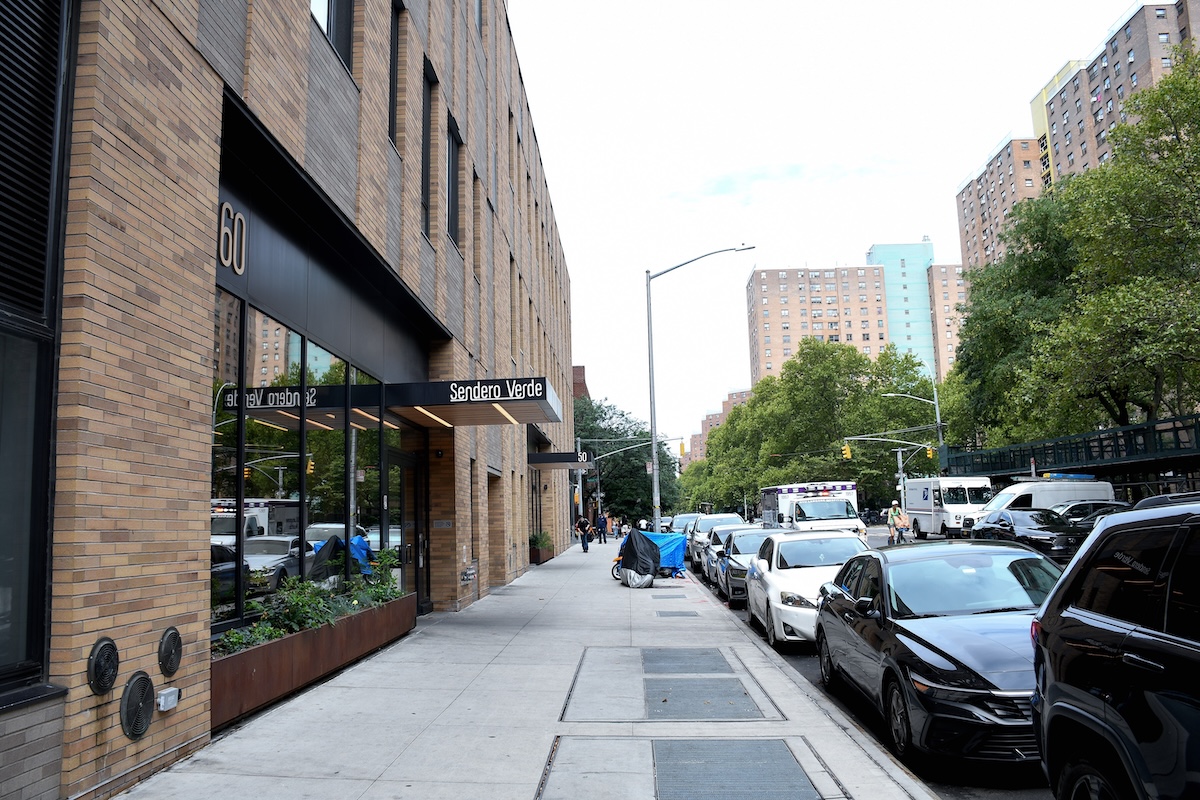
Sendero Verde sits on a previously vacant lot of community gardens and an open field in East Harlem. The complex has kept the community gardens and added a 20,000-square-foot central courtyard accessible to the public and 4,000 square feet of retail space. The walls along the property’s open courtyard include murals painted by local artists that pay homage to Harlem’s descendants of the Indigenous Lenape people, as well as its large Puerto Rican community and the Harlem Renaissance of the 1920s and 1930s.
On the visit to the mixed-use development, Jonathan Rose Cos.’ Nicole Zaccack told ImpactAlpha “We really worked closely with the community board to actually say, ‘What are the needs of the neighborhood? What are you looking for?” Zaccack, Sendero Verde’s lead development manager, says in her conversations with local East Harlem residents, she learned that the neighborhood was a food desert and that it needed access to healthy food.
Some of the children of Sendero Verde attends the Harlem Children’s Zone’s Promise Academy II Elementary School, the 51,000-square-foot charter school on the property’s ground floor. The school features a cafeteria and full-sized gym, music and art rooms and other classrooms.
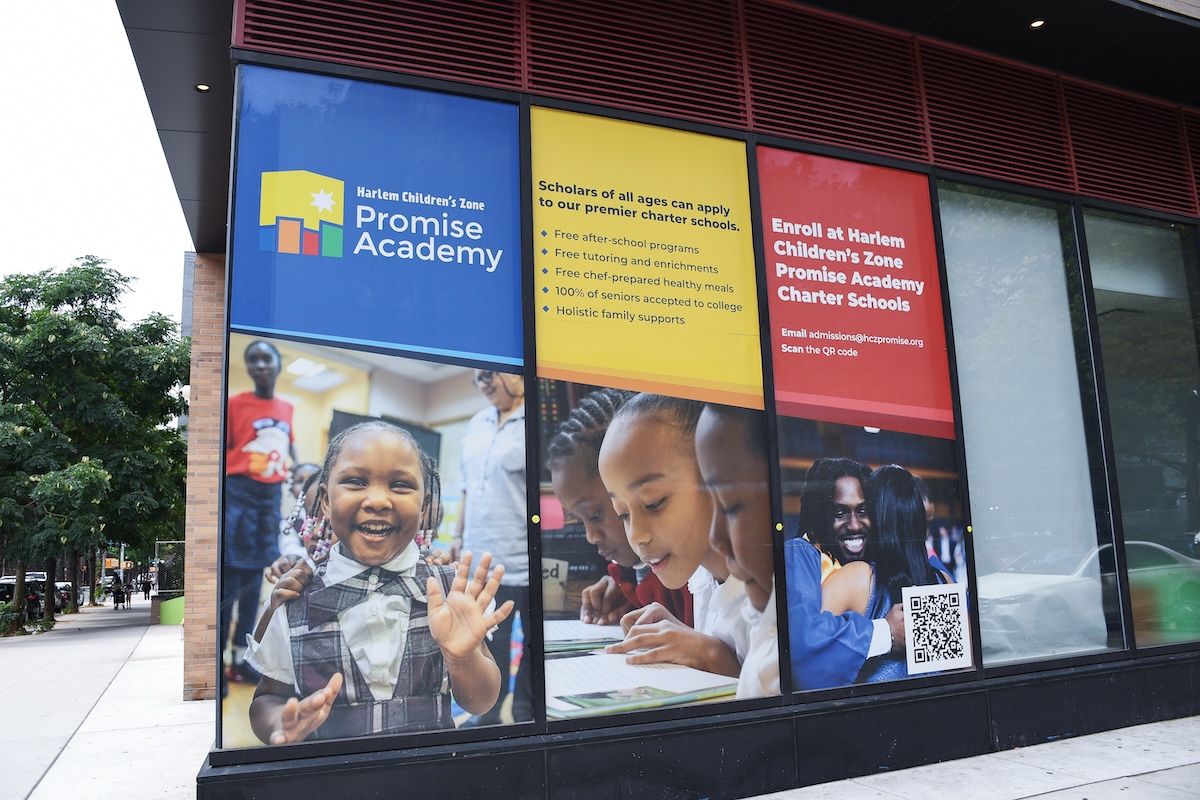
“There are residents in the Harlem neighborhood who have their children coming to the Harlem Children’s Zone,” Zaccack says. “Some of our residents have their children there, but it’s a lottery system for the larger community.”
Rose added that one of the amazing things with having children of Sendero’s residents attend the school is that they offer a wealth building college savings and investment account for each student. “They have gotten a generous donor who has contributed money so that every kid who goes to the school gets a savings account,” Rose said.
The accounts start with an initial $500 deposit from Harlem Children’s Zone, and families can each year add up to $300, which is matched and invested on behalf of the students. Families can withdraw from the account when students are admitted into college.
Other organizations at Sendero Verde include Union Settlement, which offers supportive programs including education, childcare and youth development, senior services and job training.
“The vision was to bring all of these elements together: the housing, the school, the open spaces, the social services,” says Rose. “This whole city block was a chance to put all of those ideas together.