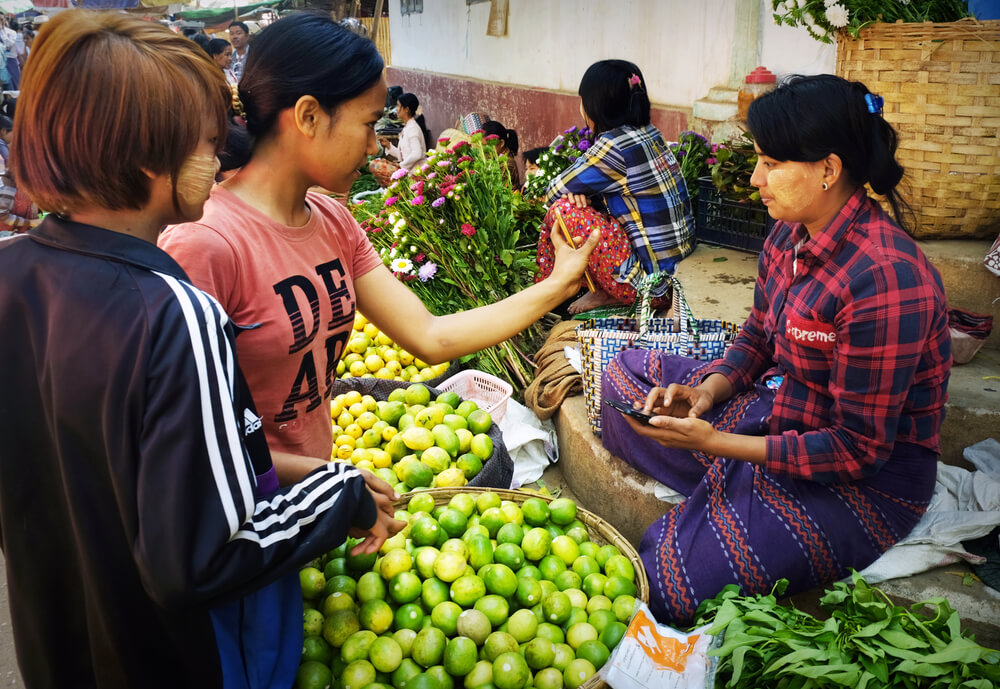

Many financial services providers in lower-income countries serve more women than men. Some serve women exclusively, providing access to credit, savings, insurance and other services that women have historically been unable to use. Choices, however, can be limited: women may choose a product because it is the best available, not because it is the best for her.
Creating the best products and ensuring their adoption is not easy. It requires a comprehensive gender-lens approach that includes not only financial product design, but also women’s voice and representation in the sector, and addressing barriers to financial inclusion that are unrelated to products.
Research indicates that financial institutions that successfully meet women’s needs end up with products that are better for both women and men, and therefore better for business.
Kenya Women Finance Trust, for example, sought to improve how it serves women by doing extensive research into the issues clients face. Among clients’ top challenges: providing collateral for microloans, low confidence in asking for business assistance due to low literacy levels, lack of knowledge regarding where to access loans, and cultural bias.
To address these barriers, Kenya Women Finance Trust worked to improve the digitalization of its services, including training women to use services online. One impact of this is a reduction in how far and how often women must travel to access financial services, minimizing their time away from home and livelihood responsibilities.
South Africa’s Small Enterprise Foundation helps women maximize the agency they have over their lives with monthly financial education sessions and a health and safety program called Image.
Bolivia’s Banco FIE is working to improve women’s representation and voices within the institution. Its Marca Magenta model includes an annual Gender Equality Action Plan to connect its HR goals with anti-harassment efforts and support female workers with mentorship and leadership development. Banco FIE’s work has led to a majority-female board of directors, a majority of new hires being women, and most promotions going to female workers.
Investor influence
BlueOrchard Finance and Women’s World Banking are two investors working with their portfolio companies to increase the impact of the financial services they provide to women.
BlueOrchard has developed a framework called B.Impact and a gender rating tool, which together enable BlueOrchard to track the progress that women make when they work with BlueOrchard investees. This pair of tools covers risk assessments, monitoring of performance indicators, and linkage to the UN Sustainable Development Goals.
Women’s World Banking Asset Management has developed a Gender Lens Investor toolbox to help it direct equity funding to institutions making the greatest positive impact on women’s lives. The toolbox focuses on criteria such as the financial services providers’ track record of job creation, collecting data that is disaggregated by sex, and clear goal setting. Specific metrics it targets include the proportion of women employed in supervisory roles and the proportion of larger loans that go to women. Women’s World Banking also considers potential new investors’ commitment to gender-based business strategies when considering investment exits.
Intersecting impact
Promisingly, interest among financial services providers and their investors in improving how to serve women is growing. In the 2024 edition of the European Microfinance Platform’s Financial Inclusion Compass, survey participants rank “women’s empowerment and gender equality” as the top area to dedicate more resources and attention to over the medium term. The respondents prioritize women’s financial inclusion over financing farmers, climate-smart lending, and serving small and medium-sized enterprises.
Rural, small business and climate lending are, of course, all interconnected to women’s economic inclusion and empowerment. An increasing number of financial services providers are focusing their work with women specifically on entrepreneurship to support financial resilience in the face of climate change. Among these are Annapurna of India, Jordan-based Microfund for Women, and Pride Microfinance of Uganda.
Investors and financial services providers are magnifying their impact by engaging at the intersection of gender, climate and financial inclusion. Sharing lessons and building partnerships are the on-ramps to meeting this challenge.
Gender-lens financial inclusion, as well as youth-lens financial inclusion, green and climate finance, and digital financial services are among the featured themes at European Microfinance Week 2024, happening Nov. 13-15 in Luxembourg and online. ImpactAlpha subscribers can attend at a discounted rate.
Bob Summers centers his work on reducing poverty worldwide by disseminating lessons from European Microfinance Week and as an elected member of the board of directors for fair trade cooperative Equal Exchange. He previously served as the executive director of MicroCapital Group, a microfinance news outlet.