
Editor’s note: This guest post is sponsored by Accelerating Impact.
Most first-time impact funds don’t die because the world lacks problems to solve, or even because the fundraising environment is so tight. They die because the managers run out of oxygen before the first close.
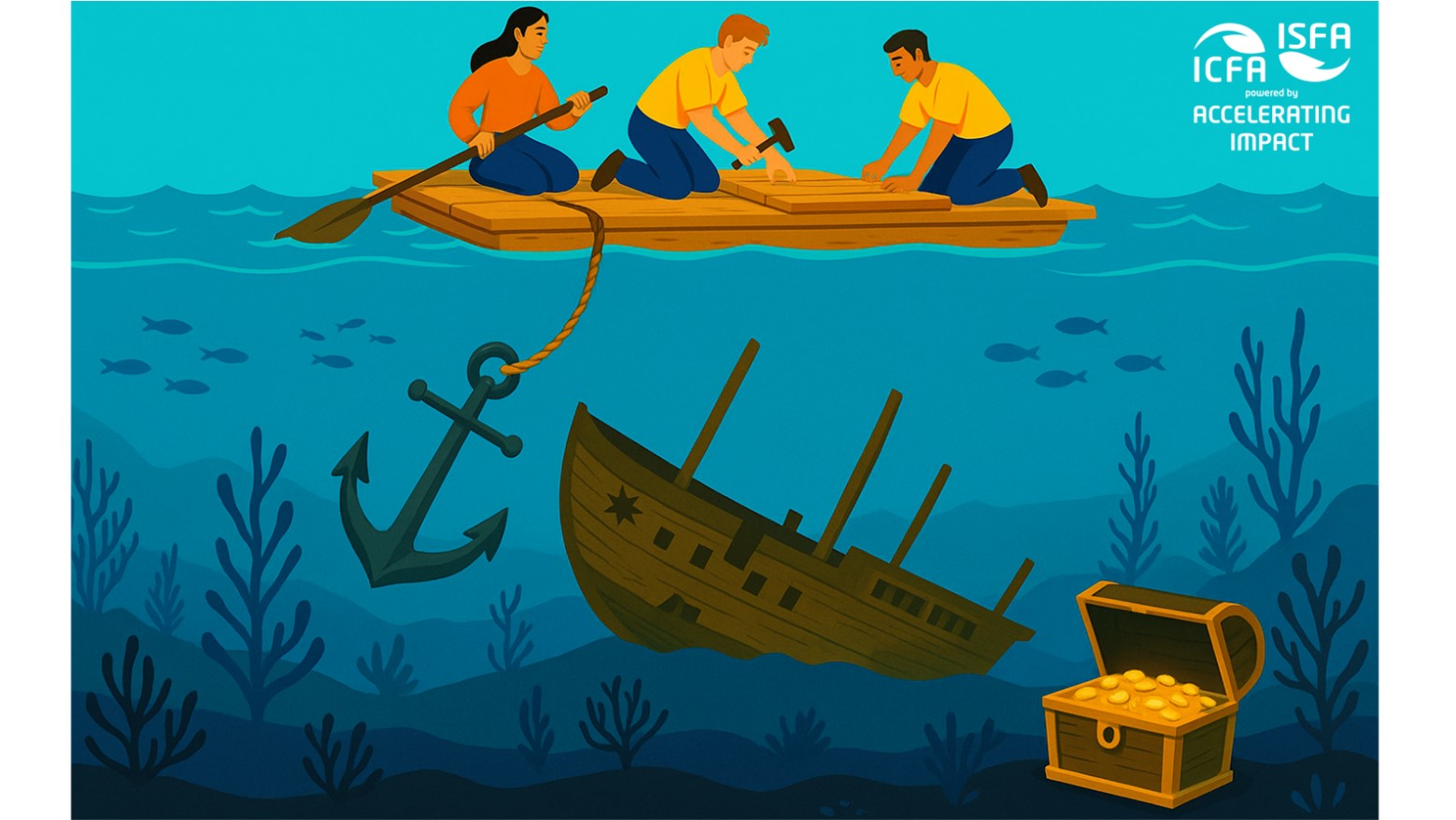
After seven years and ten cohorts of Accelerating Impact’s acceleration programs for emerging fund managers — the International Climate Finance Accelerator, or ICFA, and the International Social Finance Accelerator, or ISFA — we’ve watched nearly fifty teams navigate the deep, dark fundraising sea. Some now manage real capital and generate real returns and real impact. Others who were just as smart, just as mission-driven and just as motivated sank.
When we excavated these successes and failures and sifted through the data beneath, it pointed to a few clear truths. It’s not (only) about hard work and great storytelling or even the returns you promise. Survivors held to three working knots, and failures shared three predictable leaks.
If you’re raising your first fund in 2026, here’s what our cohorts of first-time fund managers wish they had known on day one.
How to swim
1) Small boats launch faster
Smaller marine craft are lighter, have simpler systems, need fewer crew and permits, and are cheaper to kit out, so they get into the water sooner. The trade-off of course is range, payload and blue-water comfort. This is the same for small first funds: quicker to launch and easier to prove, but not built for transoceanic voyages just yet.
The managers who get to yes almost never open with a $100 million pitch deck and a prayer. They launch a pilot vehicle, a small evergreen sleeve or a proof-of-concept portfolio that buys them the two things the market demands and emerging managers do not have: evidence and time.
Our managers who have closed under $10 million or implemented rolling closes were able to start investing and building their footprints across their sectors while most of their first-time peers were still revising their data room and running out of money. A first vehicle is not about scale but about establishing that your ship runs.
2) Their ship has an anchor before a deck
You’ve begun fundraising long before you even think of raising a fund. Our most successful closers didn’t “build a network” during the raise; they brought one with them. Your team’s network is one of the most important assets you have.
Early champions within DFIs or strong ties to coalitions of family offices create a center of gravity for successful fund managers that pull in other LPs. As frustrating as it is, LPs would much rather follow than lead and, more often, progress with interested LPs is completely stalled until an anchor is found. This is the unfortunate physics of fundraising: Mass attracts mass. So how do you find this lead? Networks compound like capital. Systematize coffee chats, conference panels and peer referrals to build a web with the greatest possible capture.
3) The crew has sailed together before
Fundraising is a three-year (and often longer) exercise in constant rejection. You need resilient co-founders who can disagree without detonating and divide work without duplicating it. In our portfolio, teams with pre-existing working relationships that have already been tested under pressure were more likely to reach first close. In a first fund, the team is the product you’re selling. LPs underwrite your partnership long before they model your pipeline.
Before you fundraise, build a business model for the GP itself. Codify roles and decision rights, document the operating cadence and set a commitment plan. If you don’t chart your passages in a navigational plan up front, you’re unlikely to have the chance to “sort it out later” when the seas get rocky.
How to sink
1) The crew has no provisions
There is no faster way to fail than to run out of money. As stated above, success stories codified their partnerships at the beginning, and a crucial element of a successful business model is a financing plan. Unless you ensure 24–36 months of financial runway, including salaries, you won’t last long enough to reach land.
Emerging managers almost always underestimate both the time and financial costs of reaching a first close. Then, when funds run out, teams fall apart or pivot. Management companies running on sweat equity that run out of capital inevitably turn to sporadic consulting revenue or other mandates. Too often, these competing commitments take over and the fund stalls.
2) The team fragments under strain
Talented founding teams splinter over vision, risk, economics and just plain exhaustion. We have seen partnerships break because of fundamental misalignment on the fund strategy, interpersonal conflict and simple changes to life plans, but lack of provisions is a leading cause for these breaks. Insufficient finances, coupled with a lack of formal business plan for the fund manager, pushes an already strained relationship to breaking point.
And this problem escalates quickly. Once the partnership looks unstable, LPs step back, and word travel fast. Those governance basics that successful teams implement at the beginning (clear roles, decision rights, separation plans) sound as unromantic as a prenup, but they’re also the cheapest de-risking tool you have.
3) Strategic drift sets in
When the course isn’t set at the start, drift is inevitable. If partners do not 100% align on the fund’s mission and objectives, it becomes nearly impossible to re-find their course.
Even then, when months stretch to years, it’s tempting to pivot to where you think the money is. And sometimes, that is valid. But often strategic drift is the inevitable effect of a team under pressure.
In our discontinued pool, nearly a third flagged a significant strategy change as a contributor — often triggered by the cash crunch or team dynamics, not by market insights. Pivot when facts demand it, but don’t chase rainbows. Geography shifts, asset-class detours, rebrands to pander to a new LP — each move signals uncertainty more than flexibility.
And your strategy may be less problematic than you think. We found no reliable pattern by sector, geography or IRR. Africa versus Latin America versus Asia; agriculture versus renewable energy versus nature-based solutions — none of these variables separated winners from non-finishers.
Beware the three-year trench
If a fund has not reached close within approximately three years of launching fundraising, its thematic and strategic relevance begins to decay and the probability of reaching close declines precipitously. When we plot the outcomes across cohorts, a stark line appears. Nearly every fund that was going to succeed reached first close within about three years of starting the raise.
If you’re thinking, “this sounds structural,” you’re right. Most emerging managers don’t fail because strategy is weak or the team lacks the skills. They fail because the pre-close corridor is riddled with underwater hazards. LPs want track record; track record requires funding to build; the GP can’t finance the gap; and the team disintegrates.
Setting sail
Programs like our accelerators are working to address some of these challenges, but fund managers can still position themselves to navigate the open water as much as possible.
As we open applications for our 2026 cohorts, we’re looking for feasible strategies, early traction, teams with demonstrated cohesion and structured business plans. We back ideas that can compound into systems change, but in first funds, durability is impact’s prerequisite. You must last long enough to get to work.
We wish you fair winds and following seas!
Applications for ICFA’s tenth cohort (2026) close November 30, 2025.
Applications for ISFA’s second cohort (2026) close January 10, 2026.
Click here for more information and to apply.
Morgana Bourggraff is a senior ICFA program manager at Accelerating Impact.
Guest posts on ImpactAlpha represent the opinions of their authors and do not necessarily reflect the views of ImpactAlpha.