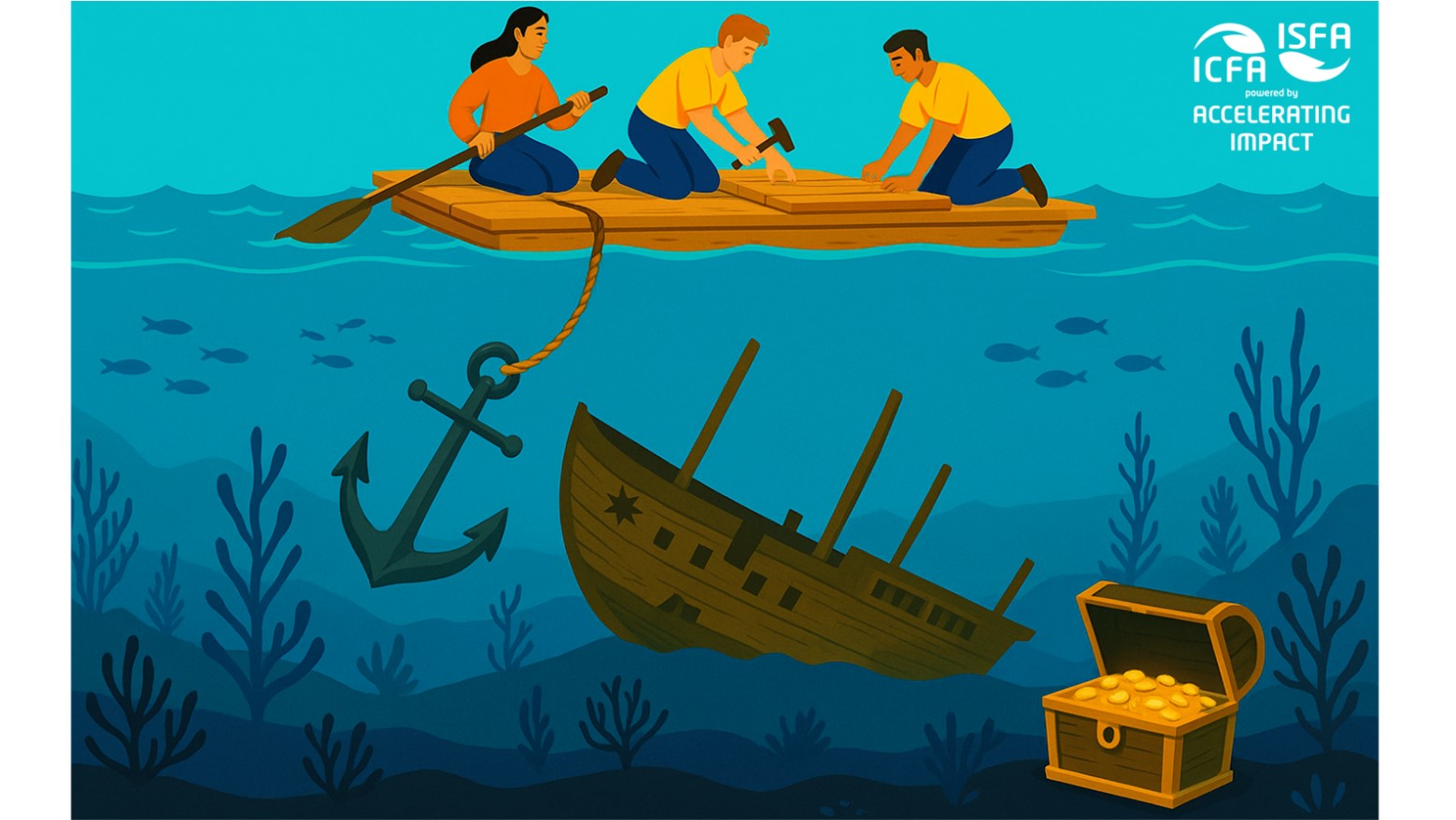


What does it take to turn promising small businesses into engines of opportunity for communities? For funders, investors and philanthropists, the answer lies in how we help entrepreneurs not just survive, but scale—unlocking jobs, wealth, and lasting impact.
Traditionally, much of the industry’s collective focus has been on supporting early-stage businesses and helping entrepreneurs reach the critical $1 million revenue threshold that JPMorganChase Institute research shows is essential for long-term survival and job creation, but which less than 10% of businesses reach.
When businesses surpass $1 million in revenue, their impact expands—moving from supporting individual entrepreneurs and their families to fueling broader job creation and economic growth. These businesses become anchors in their communities, driving wealth creation, fostering innovation, and contributing to local economic resilience.
However, we may be overlooking additional opportunities to drive impact. Businesses that reach $10 million+ in annual revenue typically employ dozens to hundreds of people and are even better positioned to make a sustained, long-term impact.
Yet, a major challenge persists: many businesses struggle to access the affordable, flexible and patient capital needed to grow and sustain their businesses. This difficulty may stem from a lack of credit history, collateral or the rapid growth trajectory that institutional lenders and venture capitalists typically seek. These barriers are most acute for entrepreneurs with limited personal wealth or access to wealthy networks, who may remain “stuck small” or risk overleveraging their business if early-stage capital options are limited.
As a result, even entrepreneurs with proven products and services can stall before reaching the next stage of growth.
Closing the gap
Impact credit is emerging as one solution to this challenge, specifically when it targets the financing gap for low-wealth business owners in the “missing middle”—those who have outgrown early-stage support but aren’t good candidates for traditional bank loans or venture capital. Impact credit offers flexible, patient capital tailored to the needs of these businesses.
Providing the right capital at the right time is essential: Whether it’s mezzanine debt, preferred equity or other structured solutions, these products should be available to and understood by businesses on their growth journey.
As America’s leading small business bank, JPMorganChase leverages its scale, resources and expertise to help business owners at every stage of their journey access the capital and advisory services they need to scale, create jobs and build generational wealth. Our impact investing and philanthropy work in tandem—and alongside our other efforts, like traditional banking—to expand access to the full capital continuum and bolster the impact credit marketplace.
While impact credit presents a promising approach to close existing market gaps, the broader private credit landscape is not without its challenges. For funds and their investors, a lack of standardized practices can increase uncertainty and risk. For businesses, the less formal structure can make accessing this capital seem daunting and opaque.
These dynamics underscore the importance of providing both philanthropic and investment capital to support the impact credit ecosystem, demystify information for participants, and ensure responsible growth.
The role of philanthropy
Philanthropic capital can help strengthen and de-risk the impact credit ecosystem by supporting education, technical assistance and opportunities to build shared infrastructure and working capital for fund managers—lowering costs, reducing risk, and increasing their chances of success and capacity to support small businesses. Investment capital can help drive responsible growth by ensuring impact credit funds are adequately capitalized to make meaningful investments in communities and scale while sustaining operational costs.
For example, in 2024, we provided philanthropic funding to Mission Driven Finance and Impact Charitable to pilot short-term lines of credit for emerging, impact credit fund managers. These lines of credit help fund managers bridge the gap between when they need capital to make investments and when their investors’ funds actually arrive, making it easier for smaller funds to act quickly and grow. Notably, while lines of credit are a common tool for larger, more established funds, they are typically out of reach for most impact credit funds due to their smaller size, shorter track records, and limited banking relationships.
Building on that success, we’re supporting the launch of a digital platform offering back-office services—legal, accounting and more—to fund managers, lowering operational barriers and enabling them to focus on sourcing deals and advising portfolio companies.
At the same time, our Impact Finance and Advisory team has invested more than $200 million to date in community lenders and Small Business Investment Companies, or SBICs, that specialize in serving the lower-middle-market. One of the fund managers in our SBIC portfolio, HCAP Partners, provides growth capital to underserved businesses and works with companies to improve job quality, particularly for low- to moderate-income individuals, to foster operational excellence and achieve business success. This is just one example of how investment capital and a holistic growth mindset can expand access and opportunity for businesses in the “missing middle.”
This critical support has the potential to be catalytic. Since 2019, our combined philanthropic and impact finance work has served nearly 250,000 small businesses and enabled these businesses to create or retain more than 300,000 jobs in communities across the country.
Looking forward
As the impact credit marketplace matures, we invite fellow investors, funders and partners to join us in enhancing and scaling these solutions—unlocking greater wealth-building opportunities for entrepreneurs and communities nationwide and maximizing our collective impact.
Diana Kolar Leach is an executive director and head of fund investing for impact finance and advisory at JPMorganChase. Annie Spencer is a vice president and program officer for business growth and entrepreneurship of US philanthropy at JPMorganChase.