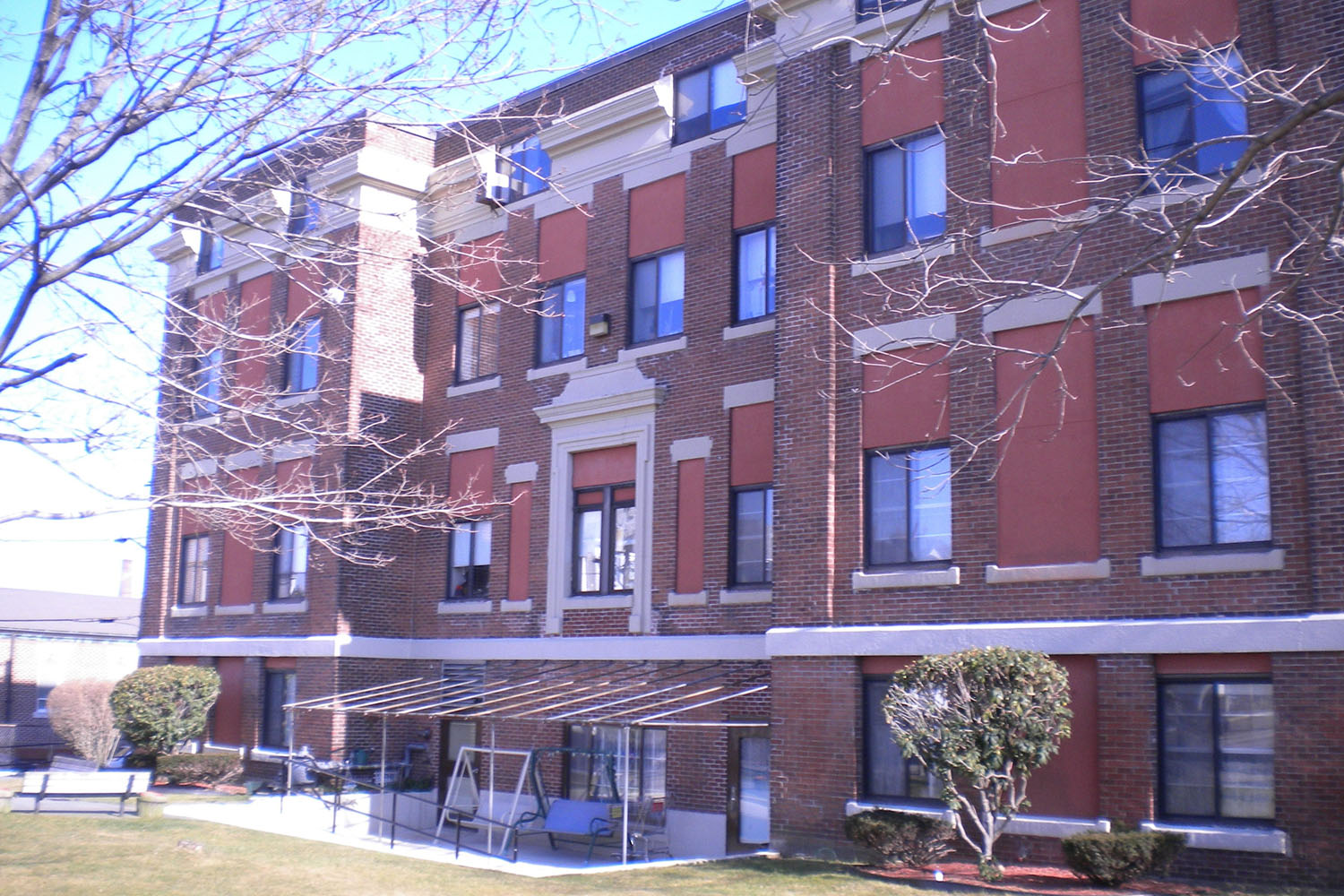

A trio of asset managers are teaming up to bet on some of the most overlooked corners of the US housing market.
Shift Capital, Aedera Companies and Lafayette Square are raising the LSA Affordable Fund, a $100 million vehicle aimed at preserving and improving federally subsidized housing in mid-sized cities and rural communities on the east coast, and in the rust belt and midwest.
“We’ve been doing this a long time and we’ve looked at a lot of affordable housing models, and I think this one is probably the most exciting for us,” Shift’s Brian Murray tells ImpactAlpha on the latest Agents of Impact podcast.
At Shift, Murray has spent 15 years building a mission-driven real estate platform focused on what he calls “just and equitable neighborhoods.” To promote community ownership and test anti-displacement strategies, the Shift Neighborhood Fund helped stand up the Kensington Corridor Trust in Philadelphia to acquire and redevelop mixed-use commercial properties, governed and controlled by members of the community.
Murray was joined on the podcast by Aedera’s Alison Carey, who joined the team at Shift three years ago with the explicit intention of launching a firm of her own. Together, Murray and Carey designed a fund focused specifically on the preservation and renovation of subsidized multifamily housing. Property owners receive government payments to keep rents affordable for low-income households.
The opportunity, Carey argues, lies in a combination of expiring affordability protections and aging physical infrastructure.
Preservation and renovation
Many subsidized properties built from the 1950s to the 70s face deferred maintenance, accessibility gaps and outdated operating models. At the same time,
The LSA Affordable Fund’s strategy is to extend affordability protections for decades, and invest in physical and operational upgrades that improve quality of life for residents.
“There are more subsidies available than many previous owners have been accessing,” Carey said. In some cases, surrounding market rents have risen faster than subsidized contract rents, creating untapped upside. In others, owners lack the expertise or appetite to navigate complex renewal and financing processes.
The US Department of Housing and Urban Development, or HUD, “and other housing agencies are truly looking for owners who will invest back into these properties,” said Carey.
“When you bring that impact lens and you really lean into it, HUD acknowledges that,” added Murray. “That ends up becoming almost dollar for dollar value to investors.”
The fund’s pitch to those investors rests on downside protection and value creation. Murray describes their vehicles “core-plus” real estate assets for institutional portfolios, with government-backed payments, low tenant delinquency and predictable cash flows, paired with value-add from underutilized subsidies, improved maintenance practices and increased resident services.
“This is really nailing what it means to have much lower risk, but yet still have a good return,” said Murray.
Division of labor
The fund’s partnership structure reflects the three firms’ ambition to combine capital, data and policy-enhanced investing.
Lafayette Square, the private credit firm led by Damien Dwin, brings institutional capital and a focus on investing in working-class communities to the mix. Lafayette also contributes data infrastructure and policy research through its affiliated institute. Shift provides the impact real estate platform and capital markets expertise, while Aedera leads execution and portfolio management.
Carey is developing a “Buildings of Opportunity” scorecard that measures housing quality, location, stability and resident services. She says that the fund will reinvest a portion of its profits into local nonprofits supporting economic mobility.
“We expect that doing the right thing for residents will improve investment performance,” Carey said.
The fund is targeting regions largely ignored by large institutional investors, including secondary cities and rural areas across Pennsylvania, New Jersey, Ohio, Minnesota and Massachusetts.
These markets offer stable assets, lower acquisition costs and stronger alignment with Lafayette Square’s mandate to invest “in working class people and places.” Over time, Murray says, the portfolio could form the basis for an evergreen vehicle or a diversified exit to a larger investor.
The fund launched last year and has already closed three deals, with a fourth under contract.
For Murray and Carey, the goal is not just to protect affordability, but to reimagine them as long-term platforms for economic opportunity, places where residents are not only housed but able to thrive.
“When people come back to these homes,” Murray says, “we want them to be proud of them.”
Disclosure: Shift Capital is an early customer of ImpactSpace, ImpactAlpha’s enhanced set of databases and investment tools for fund managers and other Agents of Impact.
Get ImpactAlpha’s podcasts in your feed by subscribing on Apple, Spotify, or YouTube