
São Paulo-based Grupo Gaia is adapting a traditional financing tool for Brazil’s industrial agriculture sector to support the country’s financially underserved smallholder farmers.
The impact investment firm is using Agribusiness Receivables Certificates, or CRAs, to raise funding for agribusinesses and farming cooperatives by securitizing their future payments and selling those securities to investors.
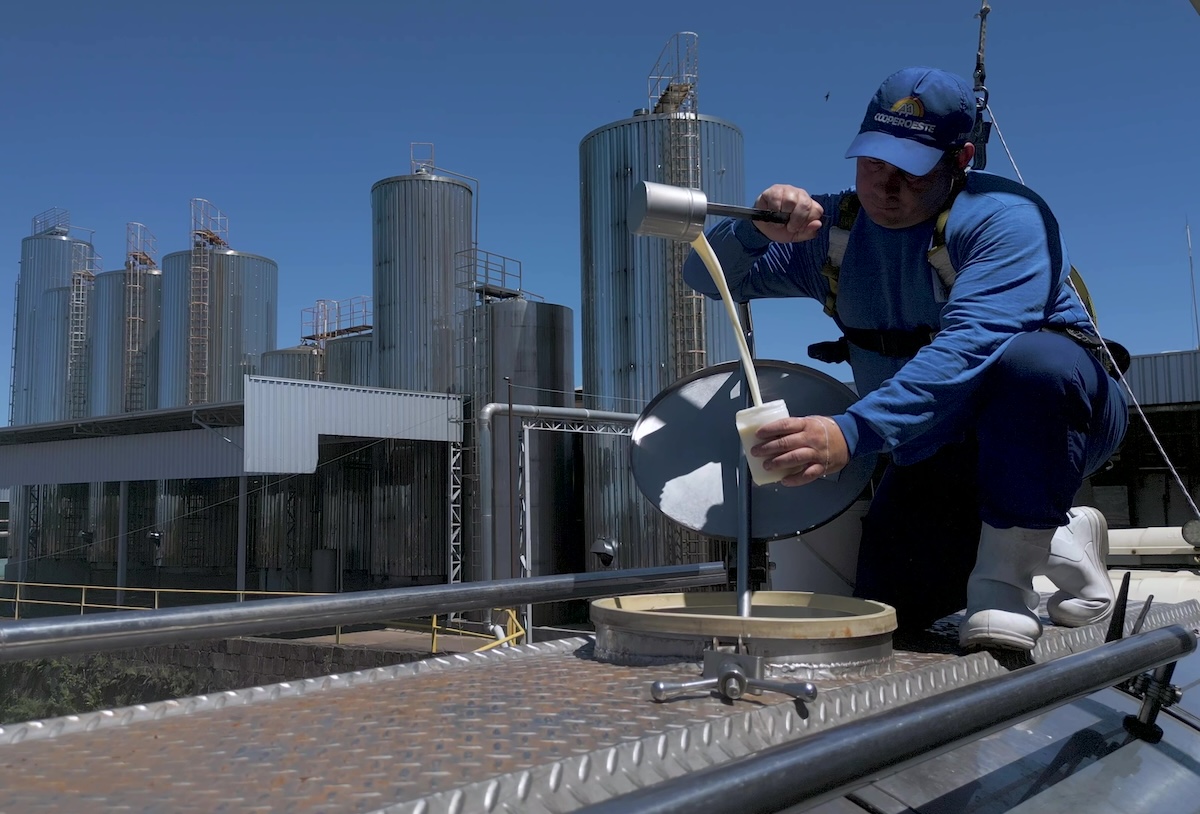
Last month, it used the instrument to raise 10.8 million reais ($2.1 million) in debt for a cooperative that is part of Brazil’s Landless Workers’ Movement, or MST, a 40-year-old social movement that champions rural livelihoods and land rights. The proceeds will finance the activities of Cooperoeste, a dairy cooperative of the MST located in the southern state of Santa Catarina. It was Gaia’s ninth such deal.
The CRAs are giving smaller producers access to sophisticated capital markets, previously reserved for larger businesses, while providing investors with a secure, asset-backed impact investment, says Grupo Gaia’s Rodrigo Ferreira. “We are able to reach more people and finance those who really have difficulty accessing capital.”
Impact-ifying mainstream finance
To be sure, there is plenty of capital flowing into Brazil’s advanced and highly industrialized agriculture sector. CRAs are a mainstream fundraising tool in Brazil – a type of asset-backed debt – used primarily by large agriculture corporations. There have been about 40 billion reais ($7.3 billion) in CRA issuances annually in Brazil for the past few years.
The way they work is an organization bundles the future payments it expects to receive – the “receivables” – and sells them to investors as a security in exchange for upfront cash.
This week, Sustainable Investment Management raised $60 million through its latest CRA issuance to help Brazil’s soy farmers finance adopt more sustainable production methods. More often CRAs are floated by industrial soy or cattle operations.
Gaia is using the tool to support smallholder farmers by securitizing the future-sales contracts of small organic cocoa farmers or small dairy cooperatives like Cooperoeste. It also has a CRA issuance in the works for the Coana Cooperative, a rice cooperative run MST in the southern state of Paraná.
Improving access to capital and moving mainstream finance into underserved communities is core to Gaia’s strategy. Gaia has been issuing CRAs and real estate-backed securities, or CRIs, for more than 15 years, raising more than 20 billion reais ($4 billion) in such deals. After becoming certified as a B Corp in 2014, it became fully focused on impact investments and securities.
Its portfolio of impact CRAs includes a 10.5 million-real CRA for 900 cocoa producers in the states of Bahia and Pará. The deal was structured with BNDES, Brazil’s national development bank to have different risk tranches. Another is a 17 million-real CRA issued in 2022 to fund agroforestry in degraded areas.
Grupo Gaia has raised more than 87 million reais for smallholder farmers and agricultural cooperatives through its impact CRA issuances. All are performing with default rates “close to zero,” Ferreira says.
Retail investor enthusiasm
Other organizations are adapting CRAs as a tool for impact investing. Sustainable Investment Management, an impact advisory firm in the UK, began developing its Responsible Commodities Facility to support sustainable soy farming in Brazil more than seven years ago through the Global Innovation Lab for Climate Finance. Loans funded by its CRA issuances are only available to farmers who commit to growing soy with zero deforestation of native plants and maintain a certain level of forest cover on their farms. Its successful fundraise this week will support a fourth round of lending.
Grupo Gaia has also applied the instrument to larger agribusinesses but structures the deals to ensure smallholder farmers and local communities benefit. It partnered in 2023 with Santander, the NGO Conexsus, and agroforestry company Belterra on a three-year, 21.5 million-real CRA to help Belterra plant two million trees on degraded land; 40% of the proceeds supported more than two dozen cooperatives and community growing organizations working in target areas of the Amazon.
Much of the interest in Gupo Gaia’s CRA issuances is coming from Brazil’s everyday investors. More than 1,000 individual retail investors participated in the 60-month bond offering for Cooperoeste. Ferreira says the surge of interest from retail investors is largely due to CRAs’ attractive rates of return – an estimated 15% for the Cooperoeste bond, for example.
Institutional investors, meanwhile, remain largely on the sidelines. Even though the instrument is familiar, the farming communities and projects funded by the impact CRAs fund are deemed high-risk by most investors, says Ferreira.
The retail investor interest offers promise for plugging capital gaps for smallholder and regenerative agriculture, and land restoration and conservation. More institutional capital will be needed for such projects to scale, Ferreira says. He, like most champions of innovative finance tools, would like to see “more patient capital or more capital willing to take more risk.”