
The 2020s have been called the “decade of delivery” — when promises to clean our air, phase down fossil fuels, and speed the transition to renewable energy must finally become measurable results. As leaders gather for COP30 in Brazil, one message should rise above the noise: we can’t deliver on climate goals without investing in the ocean.
Covering more than 70% of the planet yet receiving less than 1% of global climate finance, the ocean is our largest underfunded climate asset. It regulates global temperatures, absorbs 90% of excess heat, and produces half our oxygen. This funding gap isn’t just a moral failure; it’s one of the biggest missed opportunities in climate finance.
From local proof to global scale
At Climate Week NYC, AltaSea, the public-private ocean institute that I lead, launched the Deep Blue Decade Initiative in partnership with Pegasus Capital Advisors, a global network that accelerates ocean solutions that create jobs, attract investment, and build resilience in coastal economies.
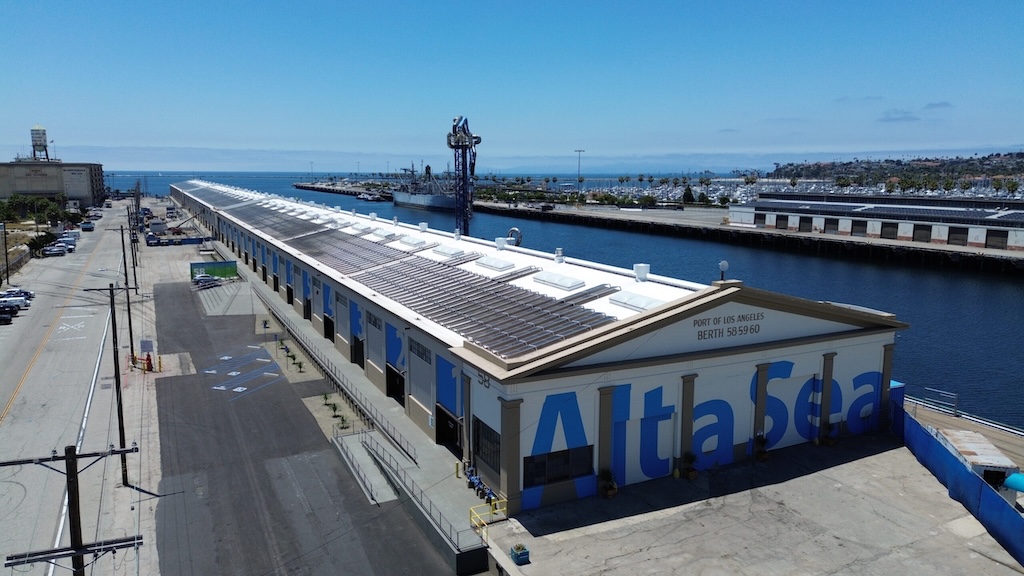
Deep Blue Decade Initiative, or DBDI, based at AltaSea’s 35-acre campus at the Port of Los Angeles, connects marine research to market-ready solutions — from regenerative aquaculture and coral restoration to wave and tidal energy. Through partnerships in Jordan, Indonesia, Tanzania, and Tonga, the initiative is expanding a proven model of collaboration to regions with both high vulnerability and high potential.
These are not theoretical pilots. Voyacy Regen, founded by Philippe and Ashlan Cousteau, is building “shield reefs” that protect coastlines while supporting local economies. The UN Joint SDG Fund is testing blended finance structures for sustainable blue economies. Through DBDI, AltaSea is helping align these efforts to turn innovation into investment-ready opportunity.
Blended capital: The missing current
If the ocean is our greatest climate ally, finance is the missing current. Investors often see ocean ventures as too early, too small, or too risky. That’s where blended finance changes the equation: combining philanthropic, public, and private capital to de-risk innovation and unlock markets that would otherwise go untapped.
Pegasus Capital has shown what’s possible. Through its partnerships with the Global Fund for Coral Reefs and the Subnational Climate Fund, Pegasus structures investments that build resilience and returns — often in places conventional finance avoids.
In West Africa, for example, a partnership between the United Nations Development Programme and private investors is forming Ifria Cold Chain Development to build solar-powered refrigeration networks that reduce food waste, cut emissions, and boost rural incomes. This model shows that climate capital can improve daily life as well as long-term goals.
A new asset class
Through the Deep Blue Decade Initiative, AltaSea is now collaborating with private partners to unlock catalytic blue capital that can flow to new regional hubs. Together, these efforts aim to prove that investing in the ocean is not charity — it’s opportunity.
At AltaSea, startups are already demonstrating how nature-based innovation can scale commercially. Marine tech firms on our campus are developing renewable wave-energy systems, while others are advancing regenerative ocean farming that captures carbon and replaces resource-intensive fertilizers and plastics.
These ventures represent a new generation of climate solutions — grounded in science, viable in the market, and ready for financing that reflects both their promise and their purpose.
To build a true blue economy, we must connect innovation with scale. Blended finance provides that bridge — bringing in early, risk-tolerant capital to prove what works and invite larger investors as solutions grow. That’s how early-stage ocean ventures become sustainable businesses that deliver both returns and resilience.
People and place
Every blue investment is also a community investment. As Dr. Sylvia Earle’s Honu Hope Spots show, conservation succeeds when local communities share in both ownership and benefit. Ecotourism revenues fund marine research while sustaining livelihoods — proof that environmental and economic resilience can grow together.
The Deep Blue Decade Initiative is built on the same principle. Across its hubs, local residents, Indigenous leaders, and young entrepreneurs are trained in STEM and ocean stewardship. These partnerships ensure the blue economy’s growth is inclusive, equitable, and rooted in place.
It’s not enough to innovate in the lab. We must ensure the people most affected by climate change also participate in, and profit from, the solutions.
Trillion dollar opportunity
If 2024 marked global consensus on phasing out fossil fuels, then 2025 must mark investment in what comes next: wave energy, regenerative aquaculture, and reef restoration among them.
Governments can set enabling policy. Philanthropy can absorb early risk. Institutional investors can scale proven models. Together, these actors can unlock a blue economy projected to reach $3 trillion by 2030 — a sector spanning food systems, renewable energy, carbon markets, and coastal infrastructure.
The capital is there. The solutions exist. The challenge is connection — and that’s where blended finance delivers.
Delivering for the ocean and for investors
The “decade of delivery” won’t be won in conference rooms; it will be built in ports, reefs, and coastal labs like AltaSea, where innovation meets investment.
At Climate Week, when Tony Blair sat down with Arnold Schwarzenegger for what they called a “fireside chat,” I joked that maybe it’s time to rename these sessions “sun-powered chats.” The moment captured something important: humor, humility, and hard-earned experience from decades of trying, failing, and trying again.
That same spirit is essential at COP30 in Brazil. Progress won’t come from promises alone, but from persistence — the kind that keeps scientists, entrepreneurs, and communities working together even when politics lag behind.
As Churchill reminded us, humanity usually finds the right path — but only after trying everything else first.
If we can channel that same determination toward the ocean, this just might be the decade we finally get it right.
Terry Tamminen is the president and CEO of AltaSea at the Port of Los Angeles.
Guest posts on ImpactAlpha represent the opinions of their authors and do not necessarily reflect the views of ImpactAlpha.