Dutch decarbonization startup RIFT this week raised €83 million in Series B financing from the Dutch pension fund PGGM and other European institutions. The scale-up deal was welcomed by Europe’s early-stage heavy funding scene as a signal of growing appetite among European investors for homegrown climate innovation ready for commercialization.
The shift reflects a newly urgent desire for energy resilience and technological sovereignty as old alliances crumble and new geopolitical risks erupt. The widening Iran war is threatening oil and gas supplies, just four years after Russia’s invasion of Ukraine jolted European energy markets. The AI buildout is putting a further strain on suppliers and prices.
While Europe has more climate tech startups than ever before, a lack of growth capital is stopping many of them from reaching their full potential. Seed stage funds abound, but growth-stage investors that can help startups build their first commercial plants have been scarce.
European Series B rounds on average pull in 20% less than those in the US, according to a recent report by World Fund, a Berlin-based venture capital firm founded five years ago to invest in climate scale-ups.
An annual Series B shortfall of $2.7 billion means that around 37 European climate tech startups are unable to raise enough money to move from prototype to production each year, World Fund estimated.
Last month, Kembara, a deep tech and climate growth fund managed by Spanish venture capital firm Mundi Ventures, announced a €750 million ($892 million) first close towards what it hopes will be a €1 billion ($1.3 billion) fund that will invest in Series B and C rounds of promising companies.
Deep tech is “where the biggest problems are going to be solved,” Kembara’s Yann de Vries told ImpactAlpha. “This is where the biggest returns are going to be made. And this is where sovereignty is also going to be decided, because Europe has finally realized that they are not in control of these core technologies.”
The fund, which was anchored by a €350 million ($417 million) commitment last year from the European Investment Fund, drew investments from European sovereign wealth funds, large foundations, banks and corporations.
Industrial decarbonization
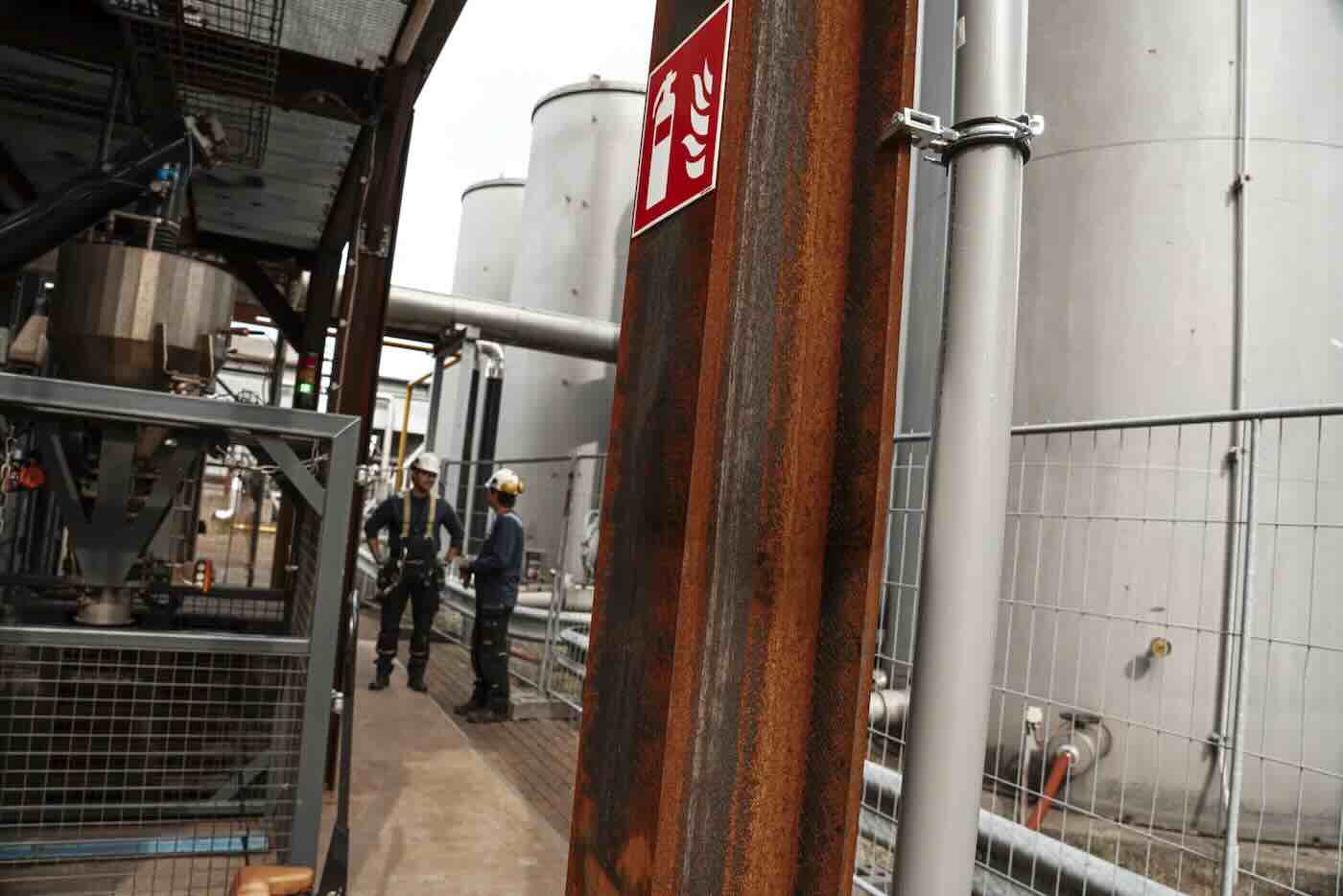
RIFT, which spun out of Eindhoven University of Technology five years ago, is pioneering iron fuel cell technology to decarbonize energy-intensive industries such as food and beverage, pulp and paper, ceramics and special chemicals that have traditionally relied on fossil fuels.
The startup’s Series B round is “exceptional” for a hardware and cleantech company at this stage, according to PGGM, which teamed up with Invest-NL, the Dutch national investment institution, Rubio Impact Ventures and regional Dutch development agencies to finance the round. RIFT was also selected for a €30.7 million project under the EU Innovation Fund.
PGGM, Invest-NL and Rubio Impact also invested in RIFT’s Series A round in 2024. The consortium has closely followed RIFT’s development and sees “strong potential for tangible industrial impact,” said Tim van den Brule, investment director at PGGM Infrastructure.
“Many industrial innovations stall in the transition from demonstration to realization. We have deliberately chosen a financing structure that provides capital through to execution, enabling the first commercial project to move into operation.”
PGGM made the investment on behalf of the Dutch healthcare pension fund, PFZW, which set a climate and energy transition mandate in 2024. That mandate, which includes a €1 billion allocation to European climate tech startups, “is deployed through a combination of direct and indirect stakes,” Van den Brule said.
RIFT’s iron fuel technology burns fine iron powder to generate circular and carbon-free heat of up to 2,000 degrees Celsius for industrial applications. The burning process produces iron oxide, or rust, as a byproduct, which can be easily captured and turned back into iron powder using renewable hydrogen.
This makes iron fuel technology a sustainable alternative for industrial heat, which is one of the world’s biggest emitters of greenhouse gases and notoriously hard to decarbonize. It also furthers Europe’s autonomy aims.
The financing will allow RIFT to move “into the next phase, focusing on preparation and execution of our first commercial project,” its CEO Mark Verhagen told ImpactAlpha.
RIFT’s two industrial pilot projects are currently providing district heating to 500 households in two Dutch cities. The firm will start building a commercial plant in either the port of Antwerp or Rotterdam in 2027.
Verhagen said he was able to overcome what he called a “chicken and egg” problem of trying to secure financing from investors wary of committing fully until a project moves into the next growth phase, by locking in multi-year funding from his existing investors.
“Most of the companies facing that moment of final investment decision actually don’t get any money,” Verhagen said.
European scale-ups
RIFT is just one of a spate of growth-oriented climate tech deals this year in Europe. Berlin-based Cloover landed a $22 million equity financing round led by MMC Ventures and QED Investors to build “an AI operating system” that enables households to become energy independent. That was complemented by a $1.2 billion debt facility Cloover will use to finance residential solar and battery installations.
Clover, said MMC’s Oliver Richards, “is tackling one of the largest and most structurally important opportunities in the European energy transition.”
The German state of Bavaria set aside €400 million in state funding towards a €2 billion commercial fusion power plant developed by Munich-based fusion energy startup Proxima Fusion. German VC firm UVC Partners led a $24 million Series A funding round for Metafuels, to help the Swiss startup commercialize its sustainable aviation fuel production. Energy Impact Partners, Contrarian Ventures, RockCreek, Verve Ventures and Fortescue Ventures also took part.
Proparco, Swedfund, and British International Investment jointly invested €50 million in Hummingbirds, a French developer of nature-based solutions.