Danish tech venture Be My Eyes connects blind and low-vision individuals with volunteers for support with everyday tasks, like reading food labels or finding a flight gate at the airport. Its eight million sighted volunteers support more than 750,000 global users in real time via its free app.
The company has raised $6.1 million in a Series A extension round, backed by Enable Ventures, an impact manager that invests in tech designed by and for people with disabilities.
Be My Eyes will use the funding to develop Be My AI, which uses Open AI’s Chat GPT-4 to help companies like Microsoft, Hilton and Meta provide visual interpretation products and services. Microsoft is using the service on its Disability Answer Desk to help customers with Excel spreadsheets and software downloads. It has helped Microsoft cut customer service calls from 20 minutes to four, while improving customer satisfaction, By My Eyes’ Mike Buckley told ImpactAlpha.
“This is becoming a business imperative. We can walk into any company and make a credible ROI argument that’s hard to ignore,” he said.
Inclusive AI
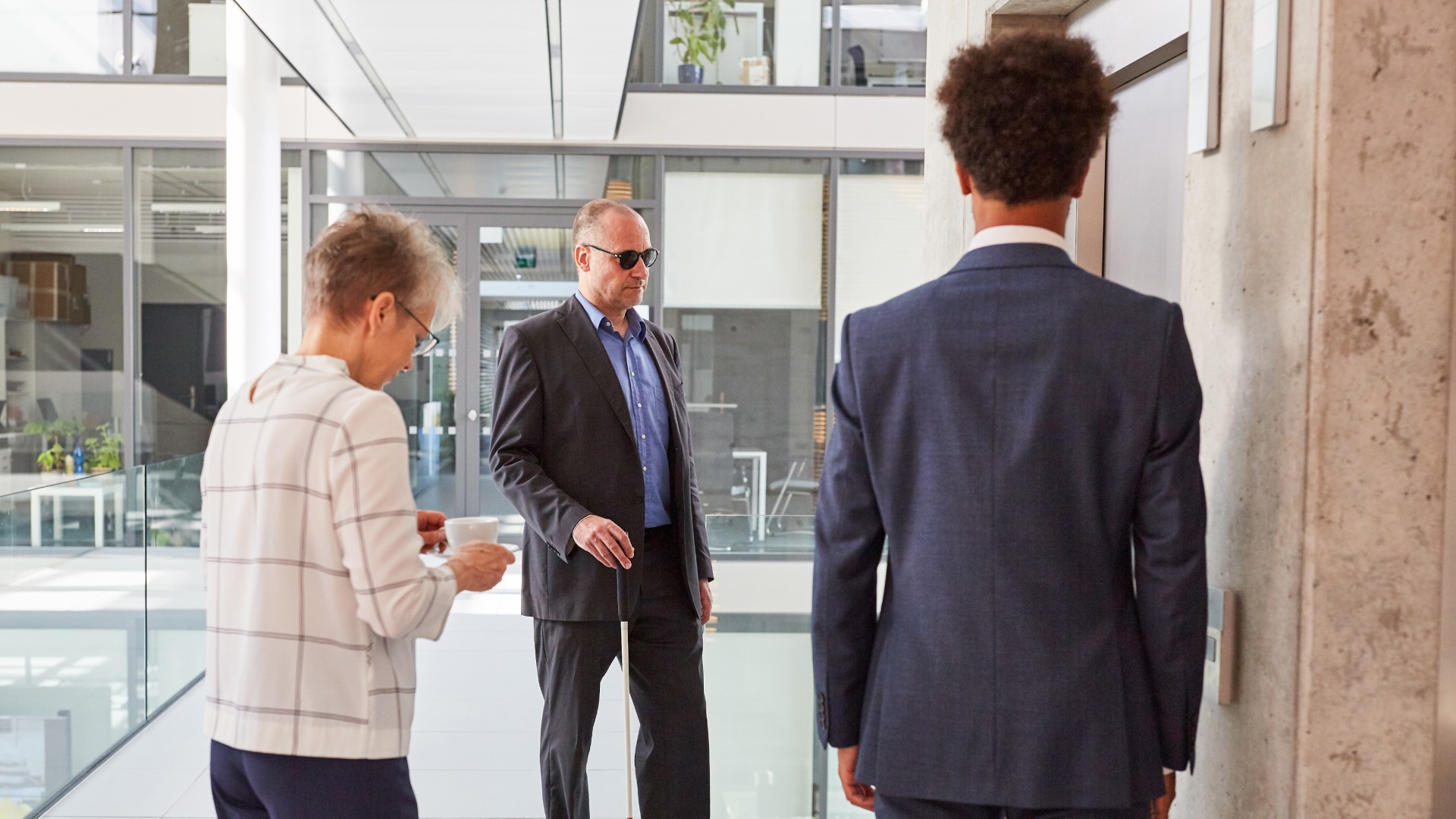
Be My Eyes was started a decade ago by Hans Jørgen Wiberg, a Danish furniture maker whose vision was failing. The company has collected millions of blind user experiences, and last year began leveraging that user data to help Open AI tune its language models to the lived experience of blind people (including distinguishing images of service dogs from other pets, and identifying the white canes used by blind individuals). The Be My Eyes app hosts more than 3.5 million AI-assisted sessions and adds about 16,000 new users each month.
“Be My Eyes is the exemplar of AI for good,” said Regina Kline of Enable Ventures.
With more than 1.7 billion people worldwide contending with some type of disability, Enable Ventures sees its investment lens as “a way to find the most emerging and applicable use cases for AI and other leading edge technologies with human centered design,” said Kline. “Inclusive design creates altogether better technology. We think that has a longer life cycle in the market than anything else right now.”