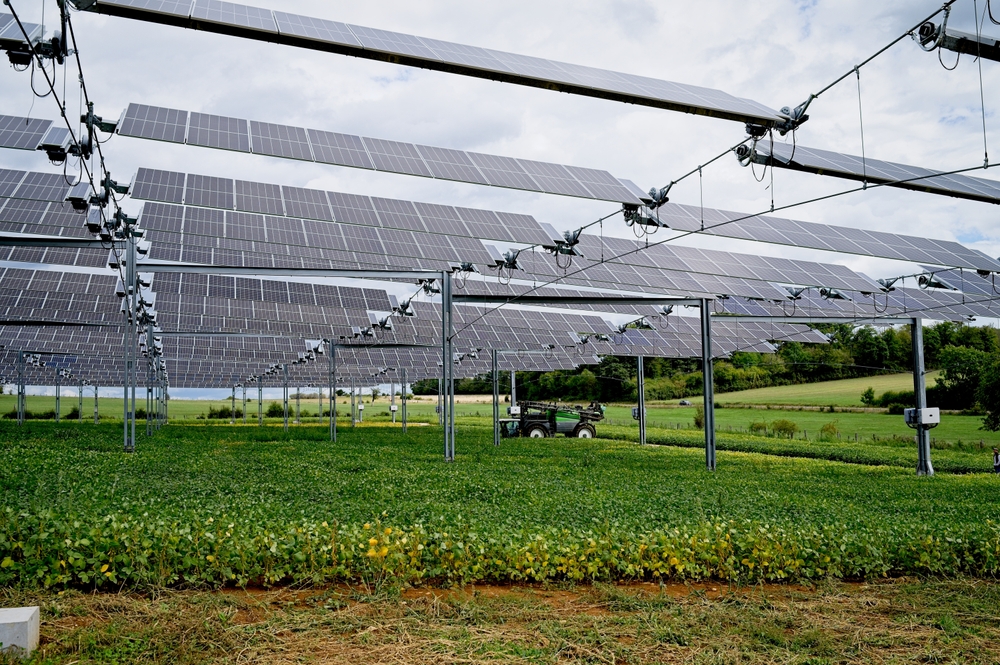

A “farmer-friendly” developer, owner and operator of solar and energy storage, Doral Renewables raised $1.3 billion in construction debt for three Mammoth solar installations in Indiana. The three projects will generate 300 megawatts of energy each, part of a larger 1.3 gigawatt facility expected to power nearly 275,000 households by late next year.
Doral, based in Philadelphia, specializes in “agrivoltaic” farming, with livestock grazing and crops grown underneath and between the solar panels. The Mammoth Solar project leases land from 65 farming families, providing extra income for farmers and diversifying what are often mono-cropped fields.
Tax equity
The deal was arranged by KeyBanc Capital Markets, Banco Santander and HSBC Bank and comprised $412 million in construction loans, $614 million in tax equity bridge loans and a $259 million letter of credit facility.
Truist offered a $200 million tax equity commitment for one of the Mammoth projects. The tax credits, a critical component of US solar construction, are at risk of being eliminated in the Republican budget and tax bill. KeyBanc’s Nadav Hazan said the company “looks forward to the impact Mammoth will have on Indiana’s economy going forward.”
The deal follows a $400 million minority equity investment in Pennsylvania-based Doral by Dutch pension fund administrator APG last year, on behalf of Dutch pension fund for government and education sector employees, ABP.
Red state renewables
Republican-led states including Oklahoma, Nevada and North Dakota have been among the biggest adopters (see, “The surprising states leading the US to wind and solar energy abundance”).
Mammoth Solar will be one of the largest solar facilities in the US when it is completed. The three projects currently under construction will use 20,000 tons of Indiana-sourced steel and over $1 million worth of solar modules made in the US.
Doral has secured long-term power purchase agreements with utility companies for all three installations. Its portfolio comprises some 15 gigawatts of solar output in 20 states across the US.