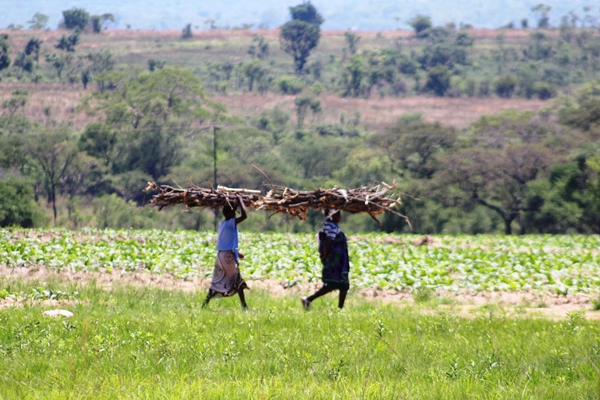

Micro crop-insurance provider Pula and farm input providers like Acre Africa and Apollo Agriculture are stretching limited public and concessional financing to maximize its impact.
Such case studies are essential at a time when “there’s less oxygen in the room” for investment in low and lower-middle-income countries, especially in the social sectors, said Dalberg’s Kusi Hornberger at a recent catalytic capital roundtable.
“Models for the moment,” hosted by Dalberg, the Catalytic Capital Consortium and Scaling Impact, presented practical examples for grantmakers, impact-first investors, impact ventures and ecosystem players to scale high-impact interventions as overseas development assistance and foreign aid retreats.
Kenya-based Pula was one of the earliest providers of crop insurance for East Africa’s smallscale farmers. It built its micro-insurance platform using public subsidies. As adoption grows in new markets, it has been able to phase out the subsidies. The company’s footprint extends across Africa, Asia and Latin America; it is expanding into livestock insurance and other new product lines.
ACRE Africa is a licensed insurance intermediary offering risk management solutions to mitigate agricultural and climate-related risks in Africa. ACRE Africa has a physical presence in Kenya, Rwanda, Tanzania, Zambia and Nigeria with projects in Uganda, Ghana, Malawi, Senegal, Nigeria, Zimbabwe, Ethiopia and Somali.
Also based in Kenya, Apollo Agriculture unlocks the potential of small-scale farmers with best-in-class inputs, financing, insurance, and training. Their goal is to bring commercial farming to everyone; providing farmers the financing they need so they can buy better products, increase their harvest, and turn their subsistence farming into commercial farming.
Local mobilization
There’s a growing realization among catalytic capital providers that engaging local investors and ecosystem organizers is the key to long-term sustainable development.
“We’re increasingly focused on mobilizing local capital and working through domestic institutions,” said Conor Brosnan, CEO of Ireland-based Small Foundation. “The goal is to understand what localized financing really looks like in practice and how to make it work across diverse national systems.”
Small is a member of the Growth Firms Alliance, a coalition of philanthropic funders that also includes Argidius, Visa Foundation, and others working to unlock the potential of growth-oriented small and medium-sized enterprises in emerging markets. By bringing catalytic capital investors together, GFA aims to coordinate resources and strategies that support local capital mobilization and drive inclusive economic growth. The initiative focuses on firms committed to scaling revenue and employment, recognizing them as vital engines for job creation, innovation, and community resilience in low-income economies.
“Family foundations and corporate philanthropies are among the most flexible actors in this ecosystem,” said Conor Brosnan of Ireland-based Small Foundation. “We see that as a superpower, and we’re trying to use it to mobilize more local capital and support early-stage enterprise development.”