The disappearance of grant funding from USAID conversely accelerated the growth of Bamako-based OKO Finance, one of the early adopters of parametric insurance for farmers. Such insurance, which provides coverage and payouts en masse based on incident triggers, like a drought or wind speeds, can be more expedient and cost-effective than requiring policyholders to file individual claims, depending on how payout triggers are set.
The company launched in 2017 with parametric crop insurance policies for farmers in Mali – a market that attracts little startup interest and private investment. Today it insures some 30,000 farmers in Mali, Angola, Cote d’Ivoire, Mozambique, Senegal and Togo and has paid out close to $500,000 in claims.
OKO has succeeded in raising several small seed equity rounds over the years, but grant funding has been critical to its growth. When USAID imploded in February, the loss of funding for OKO “accelerated their trajectory into becoming commercially viable and more sustainable,” said Maelis Carraro of early-stage climate tech investor Catalyst Fund, which has invested $200,000. “The mindset for founders is shifting to how to make the business model work without grants.”
Partnership model
Insurance penetration in Africa is extremely low, due largely to the limited number of tailored or affordable products. Parametric insurance reduces the costs and burdens of underwriting and processing individual small policies and claims. OKO uses satellite data to assess weather patterns and sets payout triggers based on specific weather conditions. It sells its policies to farmers via agricultural input sellers or companies with farmer purchasing contracts.
“Rather than trying to sell the policies to farmers directly, which is really hard, they integrate the covers within other products,” Carraro told ImpactAlpha.
OKO also partners with mobile services companies, microfinance institutions and other financial services providers to embed its crop insurance into their products.
ELeaf, which offers satellite-based crop monitoring and data services, as well as irrigation and insurance solutions, is one of its partners, as is telecom company Orange. The company relies on insurer SanlamAllianz for underwriting.
Working through farmers’ known services providers helps with adoption and renewal because they’re securing the insurance from a trusted source.
“It drives really high renewal rates, which for many crop insurance pilots would usually be the achilles heel,” added Catalyst’s Sydney Thiam.
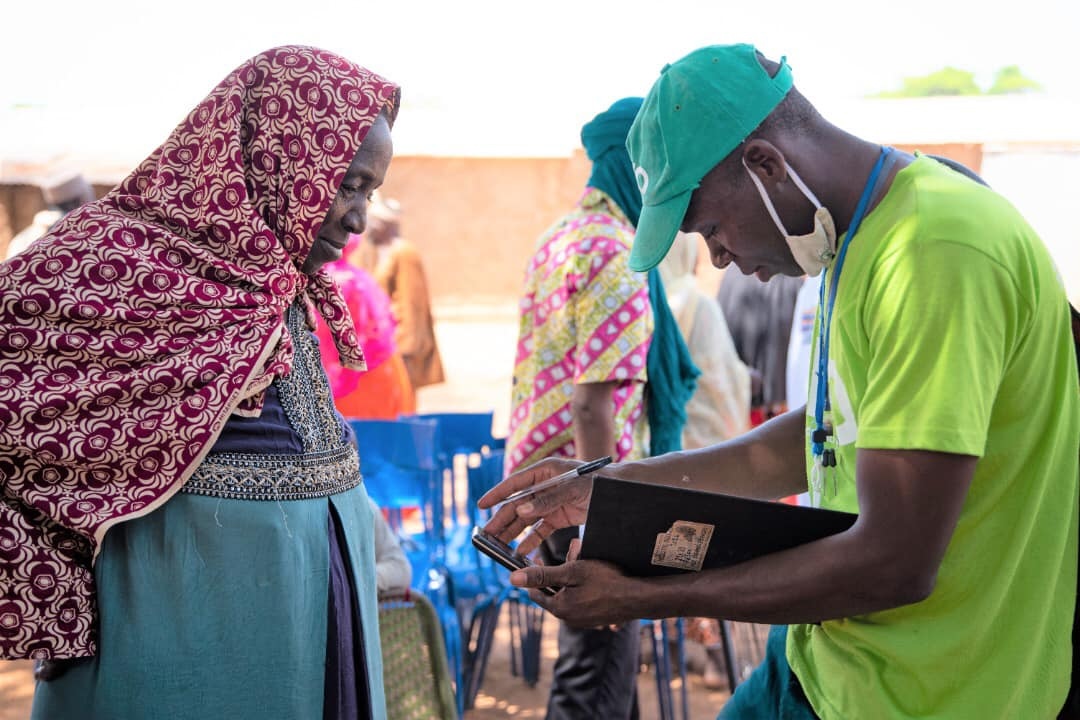
The startup also partnered with UN Women to reach more female farmers. OKO’s female clientele increased 15% to 1,100 farmers.
Tech for climate resilience
Catalyst Fund’s investment includes $150,000 for business model expansion, including onboarding more microfinance institutions, agricultural input providers and commodity buyers. The remaining funds will be used for technical assistance and venture building support.
OKO is among more than 20 other investments in Catalyst’s first fund, which adds a climate resilience lens to Catalyst’s focus on inclusive fintech in Africa. Catalyst began as a fintech accelerator at BFA Global, supporting more than 60 companies catering to underserved populations in Africa. With the fund, it’s added a climate resilience lens to its strategy.
“Africa is a continent with abundant renewable energy, incredible talent that’s already building and natural resources that can serve as carbon sinks. You can pilot solutions that can be scaled to the world,” said Carraro. “What we see across the continent are innovators who can be leaders in climate action and not just recipients of support and aid.”
Catalyst is on track for a second close of the fund by the end of this year, following its $8.6 million first close in 2023. It’s aiming to raise $40 million.
A growing concern for Catalyst’s team is the speed with which startups like OKO can be scaled relative to the accelerating climate crisis.
“Climate adaptation on the continent is underfunded. We see droughts and floods accelerating,” observed Thiam. Meanwhile, it can take startups years to build trust around new and unfamiliar products and services. “If we don’t back and scale these models today, women and vulnerable communities could be left exposed.”