
Let’s be honest: when investment managers hear about a new global climate treaty, the collective eye-roll is almost audible.
Decades of diplomacy have delivered a masterclass in performative action, with the only significant emissions drop in recent memory being the accidental byproduct of a global pandemic. That was a catastrophe, not a policy success.
So when a proposal for a “Fossil Fuel Non-Proliferation Treaty” emerges, the skepticism is earned.
This time, the proposal may have stumbled upon the right diagnosis, even if it’s still not the complete cure.
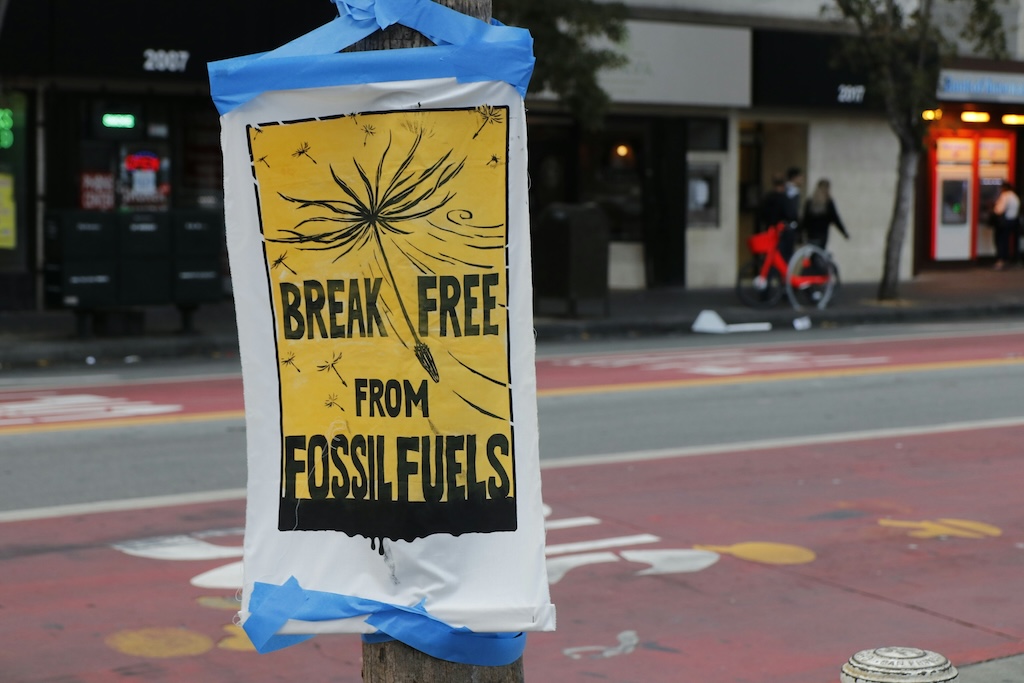
The Fossil Fuel Non-Proliferation Treaty is a proposed international agreement modeled after the nuclear weapons non-proliferation framework. Championed by a growing coalition of nations, cities, and civil society groups, it calls for three core commitments: ending new fossil fuel expansion, phasing out existing production, and supporting a just transition for affected workers and communities.
Supply side
Unlike previous climate agreements that focus primarily on reducing consumption, the non-proliferation treaty targets the supply side—the continued financing and development of new coal, oil, and gas projects.
The design flaw in past agreements is stunningly obvious: they focus exclusively on the demand side of the climate equation. Countries promise to use less fossil fuel, while largely ignoring the trillions in subsidies and capital incentivizing producers to extract more. It’s like trying to cut with one half of a pair of scissors. The treaty, to its credit, finally aims to grab the other handle. By targeting supply, it recognizes that the core problem is the continued flow of capital to new extraction projects.
Is a treaty the silver bullet? Of course not. The real engine of transformation is, and always will be, capital allocation into the key drivers of the Next Economy:
Investing in productivity drivers. The race is won by making solar, wind, geothermal, energy storage, and other renewables radically cheaper and more efficient than fossil fuels. A relentless focus on deploying capital to the innovators scaling these solutions is the most direct path to displacing incumbents.
Correcting market failures. The fossil fuel industry is propped up by immense subsidies. Ending these distortions and implementing robust carbon pricing are essential to reveal the true, uncompetitive nature of fossil fuels and allow capital to flow efficiently to superior, high-growth innovations. On a level playing field, solar already wins.
Building infrastructure for abundance. A clean energy economy requires modern infrastructure. We must streamline investment and permitting for electrical grids, charging networks, and energy storage technologies that will form the backbone of a post-scarcity economy.
This is where a supply-side treaty stops being just another piece of paper. It can act as a crowbar to pry open a stuck system. By establishing a binding framework to phase out production and coordinate the elimination of subsidies, a treaty provides the policy certainty that de-risks long-term investments in clean infrastructure. It sends an unambiguous signal to capital markets that the fossil fuel era has a state-sanctioned endpoint, making the investment case for the Next Economy even more compelling.
Picks and shovels
So, if this hybrid approach of policy-plus-investment accelerates the transition, where should an investor look for the “picks and shovels” that will build the new system?
The new grid: brains and brawn. The existing electrical grid is a 20th-century relic unfit for a world of decentralized renewable energy. The opportunity lies in companies rebuilding it from the ground up.
This includes the “brawn”—manufacturers of transformers, advanced conductors, and high-voltage direct current (HVDC) systems essential for moving wind and solar power over long distances.
Just as crucial is the “brains”—software firms developing smart grid platforms, energy management systems, and cybersecurity needed to operate a complex, decentralized network.
The electrification toolkit: components and materials. Electrifying everything from transportation to heating requires a massive build-out of supporting hardware.
Look beyond the EV brands to companies supplying indispensable components: specialized semiconductors and power electronics that manage energy flow in vehicles and chargers, and innovators in battery chemistry and materials science making energy storage cheaper, safer, and more efficient. Copper, the literal metal of electrification, will see sustained demand, benefiting not just miners but also innovators in recycling and processing technologies.
Industrial and building dfficiency. As carbon is increasingly priced into the system (or at least sees its subsidies and incentives reduced), efficiency becomes a primary driver of corporate profitability.
The “picks and shovels” here are companies that provide the tools for decarbonization: manufacturers of next-generation insulation, smart thermostats, heat pumps, and the automation and control systems that slash energy consumption in factories and commercial buildings.
The most durable solutions are forged by powerful combinations. The most effective response is a decisive, two-handed approach: using intelligent policy to dismantle the old, risky system while investors do what they do best—finance the more productive, efficient, and profitable world that comes next.
A supply-side treaty breaks the policy logjam. It sends an unambiguous signal to capital markets that the fossil fuel era has a state-sanctioned endpoint. For investors willing to look beyond the headlines, that signal points directly to where the next decades of returns will be built.
Erika Karp is president of Green Alpha Investments. She previously was founder and CEO of Cornerstone Capital Group and held leadership roles at UBS and Credit Suisse.
Garvin Jabusch, is co-founder and chief investment officer at Green Alpha.