
Berkshire Hathaway has long had a hold on the imagination of impact investors, and not just for its $1 trillion-plus market capitalization.
As a permanent holding company, Berkshire Hathaway can take ownership of companies, improve their operations and hold them for the long term, without the artificial deadlines imposed by the 10-year structure of typical private equity funds. That kind of patient capital and focus on operational excellence could sustain long term impact as well.
But efforts to create “the Berkshire Hathaway of impact” have foundered on asset owners’ concerns about liquidity – that is, most want to know when they’re going to get their money back.
The Ford Foundation is taking a longer view, making its largest mission investment to date to anchor Nine Dean, a new permanent holding company launched this week by Aren LeeKong, who left as head of private lending for Carlyle Group in March. Nine Dean is seeking to buy middle-market operating companies with stable cash flows and large work forces and create value by investing in what LeeKong calls their most valuable asset – their employees.
Ford Foundation has made “quality jobs” a key focus in its $1 billion carveout for “mission investments” from its $16 billion endowment.
“Nine Dean aims to be a permanent partner—one that measures success not in quarters, but in generations,” LeeKong said in a statement. “We believe that by aligning with all stakeholders and prioritizing quality jobs, we can help businesses prosper for decades to come.”
Bloomberg reported that Nine Dean already is targeting its first deal, a company with an enterprise value of between $150 and $300 million.
Impact exits
The typical 10-year fund has long been an awkward structure for making impact investments. Just when a company’s operations are finally humming, it’s often time to sell.
That not only deprives investors of the chance to build value, but subjects companies to the risk that the new buyer may not be truly committed to preserving the company’s social mission. “Exits” have long been a weak spot in impact management and measurement.
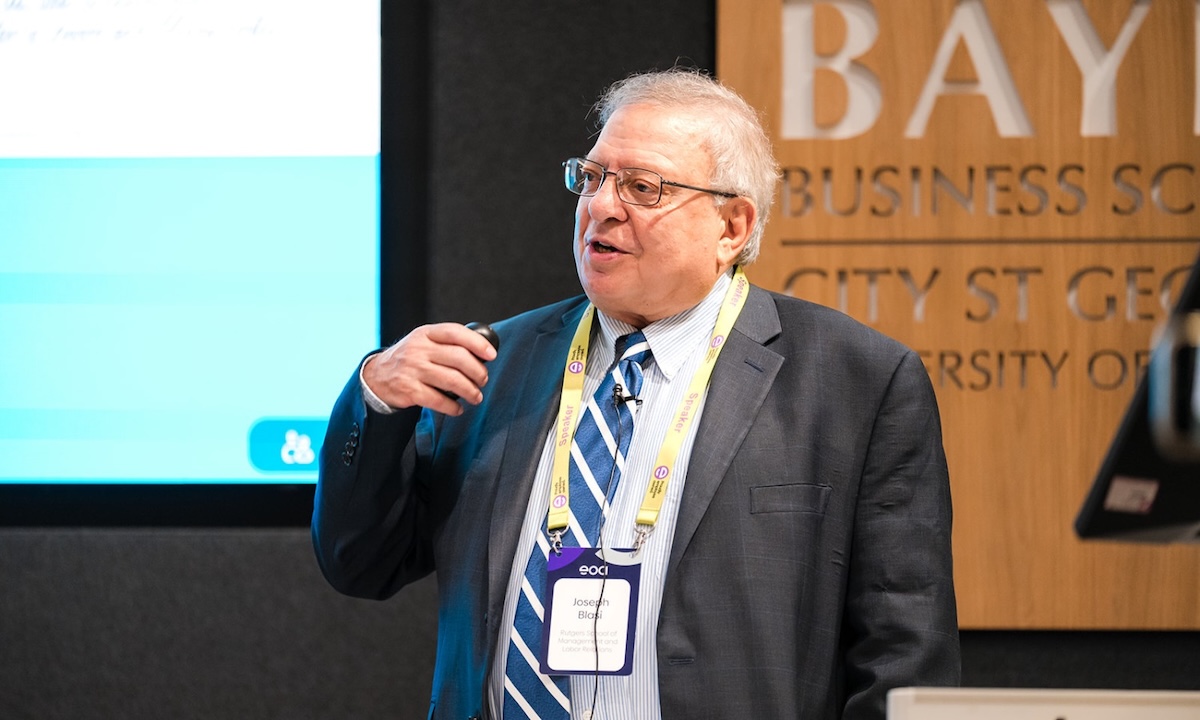
Andrew Kassoy, a partner in Nine Dean and a founder of B Lab, the nonprofit that certifies mission-driven B Corps, said most private equity and strategic corporate buyers lack the structure or patience to build mission-led businesses for the long term.
“We’ve seen a lot of companies that did more traditional private equity or corporate sales end up finding that after two or three years of having good luck maintaining their mission, a lot of that started to fall off as the players changed,” Kassoy told ImpactAlpha. “An increasing number of companies were saying, ‘Why don’t these kind of holding companies exist?’”
Kassoy is also an advisor to Singapore-based Arowana, which last month launched a $S120 million (US$93 million) B Corp holding company, AIC Group Holdings. A group of B Lab veterans are developing a similar holding company in Latin America.
“I believe we will see more and more of these vehicles globally as people come to realize how broken are the existing capital markets for values-led businesses,” Kassoy wrote on LinkedIn.
Quality jobs
Roy Swan, who heads Ford’s mission investments, is a longtime advocate of higher quality jobs, including employee ownership (disclosure: Ford Foundation is an investor in ImpactAlpha). With its grant dollars, Ford was one of the first outside contributors to Ownership Works, the nonprofit private-equity industry vehicle launched by KKR’s Pete Stavros (for background, see our Q&A, “Employee ownership is a competitive advantage in private equity”).
Ford’s mission investment portfolio includes HCAP Partners, which provides mezzanine debt and private equity for medium-sized businesses and helps them add opportunities for career advancement, wealth creation and health and well-being (listen to the podcast, “Finding alpha with a ‘gainful jobs’ strategy”).
Lafayette Square, which emphasizes low- to moderate income workers and communities, focuses on employee benefits through its “worker solutions” platform (see, “Lafayette Square is banking on low-income communities and worker solutions”).
“World-class operations are not achievable without meaningful investment in corporate culture and human capital,” Swan said in a statement.
Swan introduced LeeKong to Zeynep Ton, a co-founder of the Good Jobs Institute and a professor at MIT’s Sloan School of Management. The institute highlights companies, including Trader Joe’s, Costco and QuikTrip, that have outperformed their peers in customer satisfaction and financial performance, in part by prioritizing jobs fair compensation, comprehensive benefits, and career advancement opportunities.
Such companies, she said, “create a powerful ripple effect that extends beyond individual well-being to improve customer value, reduce turnover, fuel productivity, and foster sustainable business growth.”
Liquidity concerns
Impact-oriented holdcos have experienced varying degrees of success raising capital. In 2018, ImpactAlpha wrote that “breaking the chains of the 10-year fund is harder than it looks.”
Ford did not disclose the size of its investment in Nine Dean, but Kassoy said the commitment “gives us the capital to make a pretty significant first transaction.” He said Nine Dean was looking to raise several hundred million dollars. Additional financing strategies will become possible as the portfolio grows, he says, including stock transactions that leverage the value of the other holdings.
“There have been some other holding companies, but their size presents real challenges if you have more audacious goals,” he said. “If you want to buy sizable companies, buy brand names that you’ve heard of, make significant changes at those companies, you need to have sufficient scale.”
He said mechanisms are available to provide liquidity to investors, including redemption periods and public-markets strategies, but no such provisions have yet been made.
“The kind of investors we are having conversations with are not demanding that,” he said. “In the short term, it’s important that we have the right kind of investors so we have the patience to build for the long term.”