
Climate tech has matured rapidly over the past five years. Dedicated investment funds now exist where there were once only generalist investors, and the sector has attracted growing attention from corporates and governments alike. The ecosystem today is far more robust than it was in its earliest days.
As the sector has matured, universities are also playing a part, providing supportive environments for technical ideas that need time to mature, translational capital to move discoveries closer to market and access to infrastructure that individual startups cannot afford. At their best, universities create ecosystems where research, teaching and public service converge to accelerate innovation.
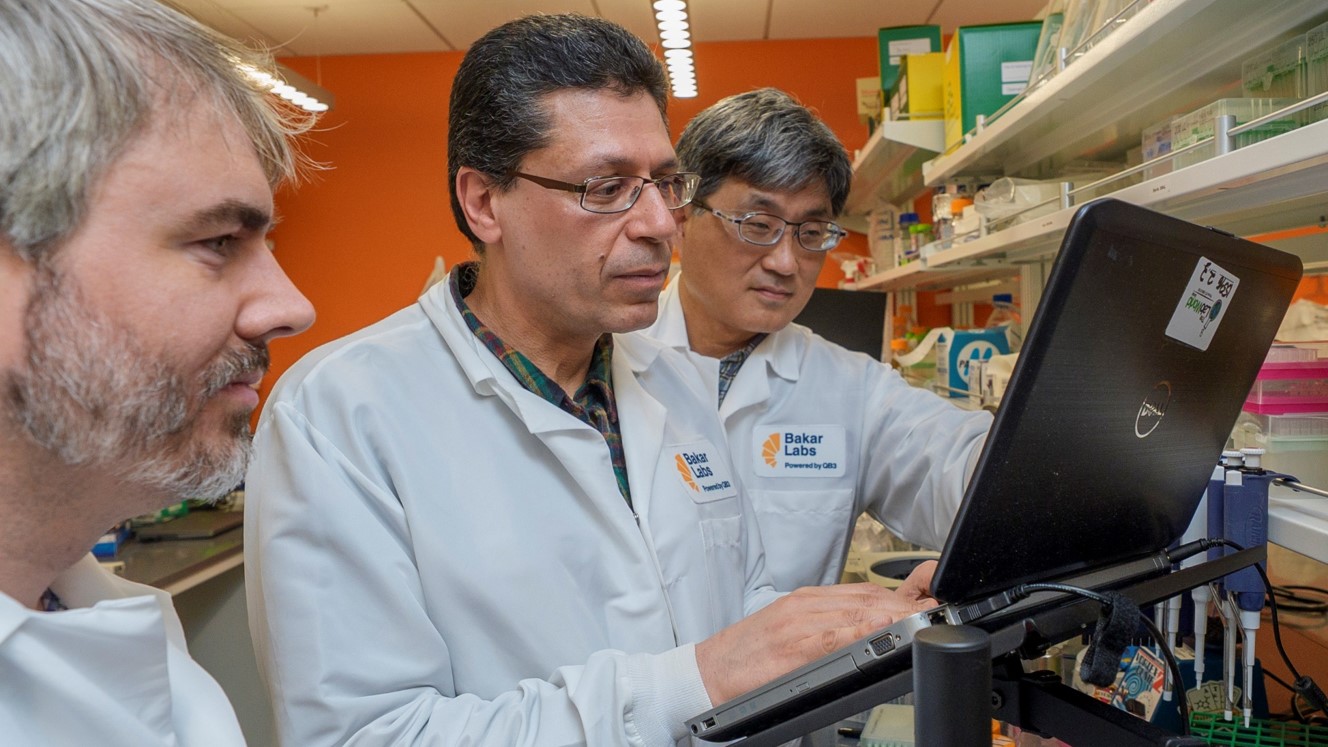
UC Berkeley offers a compelling case study. Through Bakar Labs, Berkeley’s incubator for startups advancing biotech, energy, and materials technologies, and QB3, UC’s multicampus hub for entrepreneurship, the university has become a testing ground for how public institutions can align with entrepreneurs. Startups gain access to new technologies, advanced equipment and a pipeline of student talent, while the university experiments with new financial structures that allow it to stay invested in a venture’s long-term trajectory.
Equity and reinvestment as alignment tools
One of the most important shifts has been how universities approach intellectual property. Where once they demanded significant upfront licensing fees, now Berkeley and others instead often take small equity stakes in startups spinning out campus-generated IP. For universities, equity participation is both a vote of confidence in the technologies they help generate and a mechanism to reinvest in mission. This change has reframed the institution’s role as a long-term partner with a vested stake alongside founders.
Berkeley has extended this model further. Nine venture funds affiliated with the campus operate on a “shared-carry” model in which they invest in spinoffs and return a stream of profit to the university. This creates a cycle where successful exits amplify future support for research and entrepreneurship. In practice, this means public capital can compound over time – a structure more typically associated with private venture capital.
The economic and societal impact is already visible. Over 25 years, QB3 has helped more than 300 companies raise upwards of $14 billion and create 17,000 jobs in California. In the past few years alone, Bakar Labs tenants and alumni have raised nearly $850 million and created over 450 jobs.
Why academic incubators are different
The university model also differs meaningfully from private incubators. MIT’s Engine and Stanford’s recent initiatives sit alongside independent hubs such as NewLab and Greentown Labs. Each plays an important role, but academic incubators are uniquely embedded in knowledge ecosystems.
For climate ventures, this matters. Developing a new material, battery chemistry or carbon capture method often requires direct collaboration with faculty and postdocs, access to highly specialized instruments and the ability to test ideas in a protected environment. Berkeley’s model enables access at reasonable rates to tens of millions of dollars’ worth of shared equipment and expertise that startups could not purchase on their own.
The academic setting also turns the incubator into a classroom. At Berkeley, more than 125 students have interned with university-linked startups across Bakar Labs, gaining entrepreneurial experience while contributing to technical progress. For founders, that pipeline delivers motivated talent. For students, it builds career paths into biotech and climate innovation that might otherwise feel out of reach.
Private-sector incubators excel at convening corporate partners and investors, but their business models often depend on costly sponsorships or fees. The university model lowers barriers to entry while embedding ventures in a culture of interdisciplinary research and teaching. Both approaches are necessary, and together they expand the options available to entrepreneurs tackling climate challenges.
Scaling beyond elite campuses
The next question is how to spread these models more widely. Today, they are still concentrated at top-tier universities with large alumni networks and proximity to capital. Yet climate ventures are emerging in every geography, from the Midwest to the Global South.
Expanding beyond elite campuses will require patience and adaptation. Not every university can replicate the Bay Area’s density of investors and serial entrepreneurs, but every public institution holds valuable intellectual property, researchers with breakthrough ideas and a mandate to serve its community. Sharing playbooks openly, embedding staff from other universities to learn on-site and forming regional consortia are promising ways to accelerate adoption. (UC Berkeley recently published Startup Campus, literally a playbook detailing how the university evolved its entrepreneurial ecosystem.)
In a time when federal funding is scarce, university alumni and philanthropists can play an outsized role. For example, Bakar Labs for Energy & Materials is backed by a foundation. In general, philanthropic sources cannot match the scale of dollars from Washington, but they can be highly impactful and catalytic.
Investment in incubators and university-affiliated venture funds offers philanthropists the opportunity to multiply their impact beyond a one-time donation. Motivated alumni can be the first investors to join an initiative and use their influence to bring in others. (This was the case with QB3’s Mission Bay Capital and QB3@953, an incubator that was later renamed MBC Biolabs.)
A campus does not have to start big. The original QB3 Garage opened in 2006 with 2,000 square feet and held six companies, a path that eventually led to QB3’s opening of the 92,000 square foot Bakar Labs incubator at Berkeley in 2021.
There are signs of momentum. Delegations from nearly every continent in the world as well as across the U.S. have visited Berkeley to study its incubator facility, equity structures, translational funding and industry partnerships. The interest suggests that what has emerged in California and Massachusetts is not an anomaly but an early prototype for a more global approach to university-driven climate innovation.
The path forward
Climate tech has matured, with dedicated funds, corporate commitments and government programs helping the sector grow stronger than it was just a few years ago. The next step is ensuring the most technical, early-stage ventures can thrive within that ecosystem. Universities are showing how this can be done, by blending research, education and entrepreneurship into a single model that supports founders over the long term.
The Berkeley case demonstrates that public institutions can take equity in startups, reinvest returns into their mission and provide the resources private markets alone cannot. The broader lesson is that universities can act as launch pads and long-term partners for climate ventures, helping ideas move from the lab into the marketplace.
If more institutions take up this role, the flow of climate innovation will accelerate. There is an opportunity to redefine what universities mean for society. Yes, they are centers of knowledge, but they are also engines of transformation for the climate era.
David Schaffer is the director of Bakar Labs and QB3, and Shilpi Kumar is the director of partnerships for Bakar Labs for Energy & Materials.
Guest posts on ImpactAlpha represent the opinions of their authors and do not necessarily reflect the views of ImpactAlpha.