Imagine a corporation that invested billions training its workforce, then as a matter of policy refused to let them work, and shot the ones who complained.
That isn’t a thought experiment. It’s the country of my birth.
During the January protests in Iran, over a dozen members of my family were shot or imprisoned. One is facing imminent execution for temporarily closing his business as an act of protest in solidarity with the people of Iran.
Whether Iran’s structural break arrives in five months or five years, what comes next will be one of the most consequential reconstruction efforts of the 21st century. The conditions enabling it were created at enormous human cost, which any honest framework must acknowledge.
As investors, we are accustomed to underwriting both sides of the ledger: upside created and downside avoided. Iran’s eventual reconstruction sits at an unusual junction of both. The downside avoided is historically rare in its specificity: a government whose institutional architecture has been engineered to export instability, through proxy conflicts, refugee flows, nuclear escalation, and the systematic destabilization of its neighbors, replaced by one whose incentives realign toward mutual prosperity and regional integration.
The upside is a knowledge economy with civilizational depth, a diaspora already mobilized, and a strategic position at the hinge of Asia, the Gulf, and the Mediterranean.
I spend my professional life on systemic investing: structuring capital to generate viable returns while moving the broader system in a direction more consequential than the investment itself. Returns vary. One fund we manage on behalf of a state agency isn’t optimizing for financial yield. It’s catalyzing economic activity to de-risk a critical sector for the longer-term resilience of the state economy. A second, designed for sub-Saharan Africa, blends concessional and commercial capital to build the financial architecture a national economy needs to participate in global supply chains on its own terms. The common thread: the system-level outcome is part of the underwriting, not a side effect.
The question I find myself returning to is what systemic investing would look like at the scale of a country, applied to the rebuilding of Iran’s economy after nearly half a century of tyranny and sanctions.
Relational poverty
Iran’s regime has pursued a deliberate strategy of relational poverty for nearly five decades. It has pitted neighbor against neighbor, criminalized civil society, suppressed women’s agency, and treated trust and pluralism as existential threats to its authority, all on the operating premise that internal repression and international power projection could coexist. They cannot. Sanctions squeeze an economy. The deliberate destruction of social trust ensures it cannot adapt.
The rial has lost 96% of its value since 2018. The IMF ranks Iran’s inflation fourth-highest in the world, behind only Venezuela, Sudan, and Zimbabwe. Iran loses over $50 billion a year to brain drain, exceeding its annual oil revenues. Ninety-six percent of patents filed by Iranian-born inventors between 2007 and 2012 were registered abroad.
Most damning of all: female labor force participation sits at roughly 14% in a country where women are the majority of university graduates. This is not cultural preference. UN experts and Human Rights Watch describe it as gender apartheid, a legal architecture in which husbands can bar wives from employment, women’s court testimony carries half the legal weight of men’s, and the state responds with lethal force when women protest, as it did when it killed Mahsa Jina Amini in 2022.
A nation cannot dismantle its relational fabric and remain economically viable. Relational poverty, sustained long enough, becomes national collapse.
Trust-building
Iran’s conditions are distinctive: a population of 93 million people, the majority under 35, sitting on top of degraded 20th-century infrastructure that, paradoxically, frees Iran from the sunk costs every advanced economy is currently struggling to retrofit. A workforce rebuilt from scratch can be built AI-native from day one. Energy systems can be decentralized, renewable, and citizen-owned by design. A financial system can leapfrog directly into auditable, interoperable digital payments architecture of the kind that has transformed economies like India’s.
The opportunity is real. The harder question is the one that determines whether capital deployed into this reconstruction compounds or evaporates: through what architecture does it flow?
Marshall Plan-level capital deployed through centralized state institutions in a country with no functioning ones gets captured by old regime remnants, new oligarchs, or whichever faction holds the apparatus when the wire hits. The Colombian peace process, the closest operational model we have for reconstruction-as-trust-building, teaches the inverse lesson with equal clarity. Capital decentralized into communities without security guarantees, transparent audit, and competing economic alternatives gets captured by violence and corruption from the bottom.
Reconstruction works only when capital is deployed through localized, trust-building mechanisms backed by hard international auditing and a security architecture that protects the local leaders doing the work.
The white paper I have just published, The Wealth of a Nation: The Relational Imperative for Iran’s Future Economy, argues that the trust dimension is not a soft variable to be addressed after the hard economics. It is the hard economics. For nearly two decades, across more than 100 countries, this premise has been the through-line of our work at SecondMuse: that economies are networks of human relationships, that trust lowers transaction costs, and that the institutions built on that trust are what allow markets to innovate and absorb shocks. We call it the Relational Imperative.
The intellectual foundation is not ours alone. Francis Fukuyama, Robert Putnam, Douglass North, and Daron Acemoglu established it decades ago. What practitioner experience adds is operational specificity. In the Iranian context, the relational architectures that determine economic resilience are interpersonal trust, women’s economic agency, minority legal inclusion, contract enforceability, information openness, local institutional density, and diaspora investment participation. Each is individually measurable. Each has been deliberately destroyed. Each can be deliberately rebuilt.
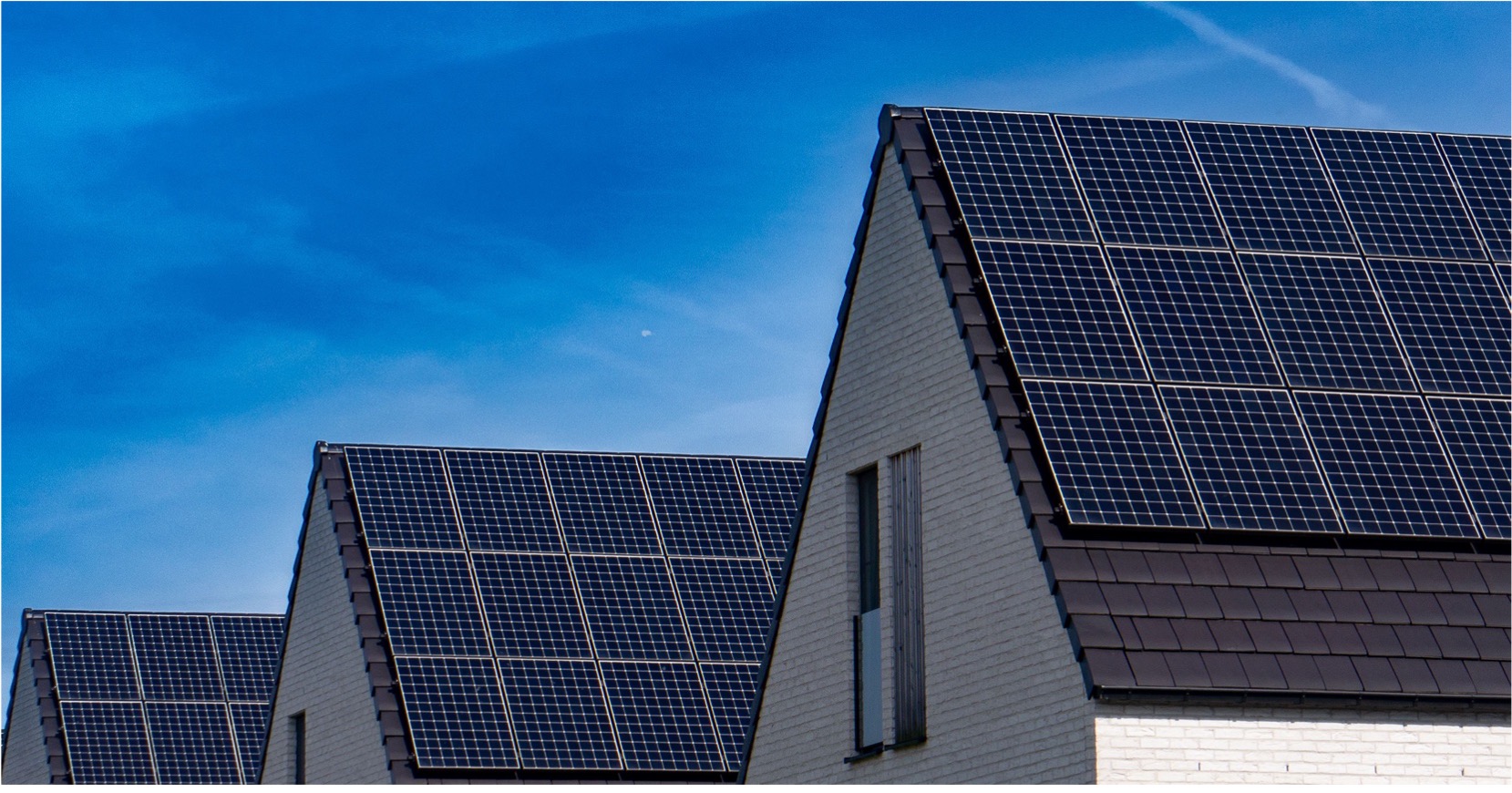
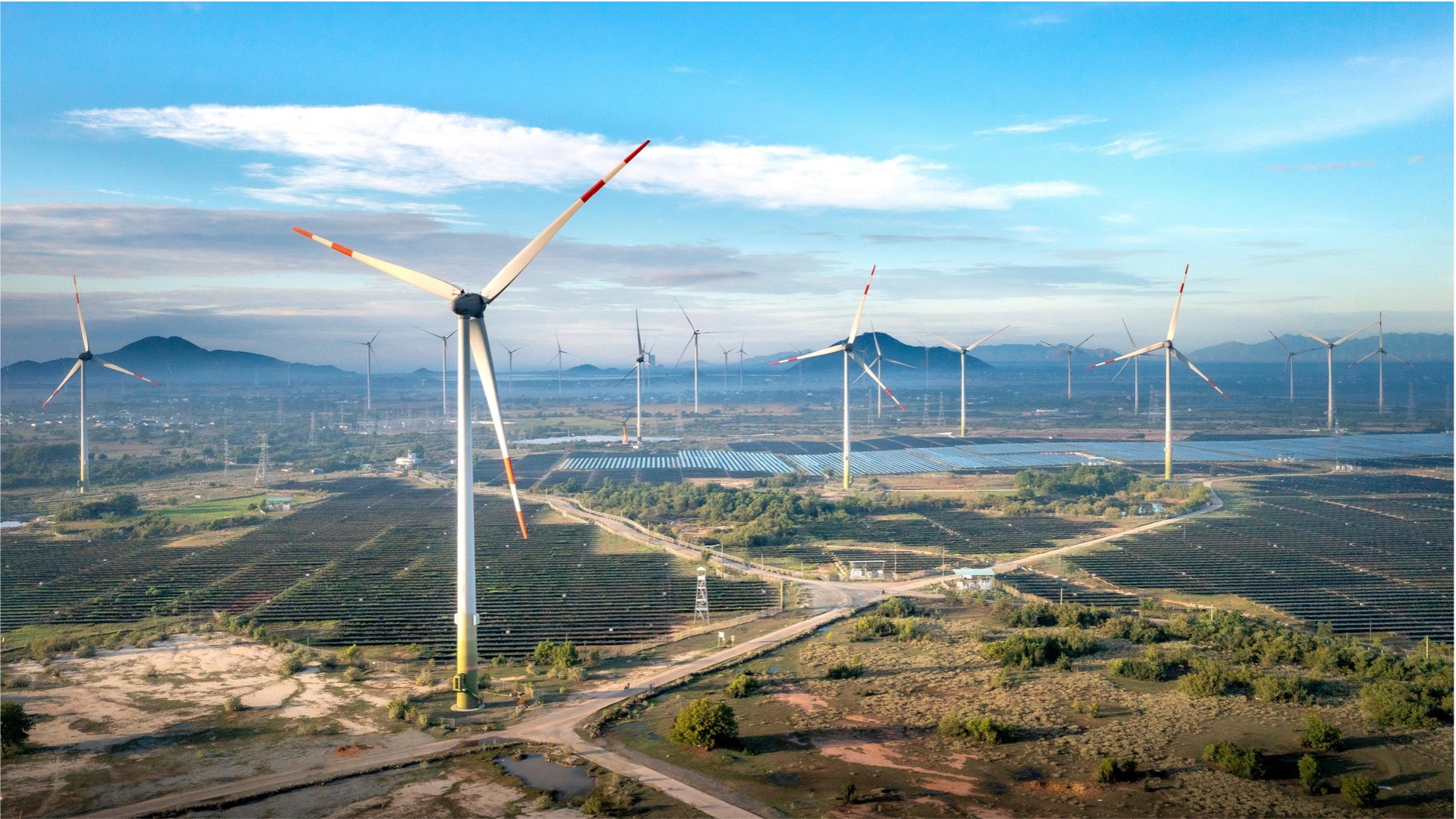
That rebuilding maps to investable sectors with global competitive logic: Persian-language AI serving a market of more than 110 million speakers worldwide; decentralized renewable energy in a country with over 300 days of sunshine and 90% of its land suitable for solar; water and climate analytics built on world-class Iranian expertise in a region facing existential resource pressure.
The diaspora that could fund and staff this transformation is already organized. On February 14, 2026, more than one million Iranians rallied across cities worldwide in a single coordinated day of action; German authorities described the Munich demonstration as the largest Iranian-focused gathering in European history.
This is distributed capital, mentorship, and global network access waiting for vehicles designed to route value back to the communities doing the work. Capital deployed through transparent, locally governed, internationally audited frameworks can do what the Marshall Plan and the Asian Tigers each did in their own way: turn reconstruction itself into the engine of economic transformation.
Capital at this scale always weighs idealism against returns. The balance is real; the dichotomy is not. Iran is the negative proof: what is destructive of people and the environment is destructive of the economy.
The positive corollary holds with equal force. What is good for people and the environment is good for the economy. They are not separate ledgers to be reconciled. They are the same ledger, observed at different timescales. That is the premise of systemic investing, and Iran’s reconstruction may prove its largest available case.
The last 47 years have proven that you cannot build a rich economy on a bankrupt society. The future of the Iranian economy is not buried beneath its soil. It is held in the minds, the hands, and the relationships of its people.
And it is held in the seriousness with which Iranians, supported by international partners, design the architecture through which capital reaches the ground.
Todd Khozein is co-founder and CEO of SecondMuse.
Guest posts on ImpactAlpha represent the opinions of their authors and do not necessarily reflect the views of ImpactAlpha.