(Editor’s note: Back in 2024, Bandung, Indonesia-based eFishery was heralded as the first aquaculture unicorn, with a $1.4 billion valuation and investors that included SoftBank, Temasek – and Aqua-Spark, the Netherlands-based impact investor in sustainable fish farming ventures. That came crashing down last year when investigators found that eFishery had for years inflated its revenues numbers; in 2024, the company reported a $16 million profit when in reality it had suffered a $35 million loss. At least $300 million in investors’ money is unaccounted for. The company’s collapse caused Aqua-Spark to mark down its own asset valuation by nearly half, to about $300 million. Aqua-Spark’s founders, Amy Novogratz and Mike Velings submitted this guest post to share their reflections publicly for the first time.)
It has been more than a year since we learned that eFishery had been fabricating numbers. We have not spoken publicly about it until now, not because we wanted to avoid it, but because we couldn’t.
The company was under investigation, the situation was still unfolding, and our attention needed to be where it mattered most: with our team, our investors, and doing everything we could to support our portfolio and the broader ecosystem through the fallout.
We believe moments like this should not be left unexamined, not for our sake, but because silence on something this significant helps no one. The ecosystem deserves transparency, and there are things here worth saying openly.
What the CEO of eFishery and the people around him did was wrong and they are answering for it in court. They systematically inflated performance data to attract capital and sustain a fiction that did not reflect reality. There is no version of a difficult funding environment, or pressure to perform, that makes that acceptable.
We also want to say something that we don’t think has been said clearly enough: eFishery did not need to go in this direction. It was a real company with real technology and a genuinely important vision, connecting smallholder fish farmers to markets, financing, and better inputs, and empowering them with the tools to lift their practices and their livelihoods. It should have become an enduring, impactful business. It should have spawned others like it. The tragedy is not just what was lost. It is what was possible, and what was thrown away.
We also want to speak directly to our investors. We know that some of you suffered real financial loss, and that for many, this came after an already difficult few years in a challenging market. The timing was brutal. We felt that. We still feel it. And while this was not something we caused, it happened inside something we built, and we have never lost sight of that.
When we learned what had happened, we went through something that will be familiar to many of you. Shock first. Then anger. Then a kind of grief that doesn’t resolve on a schedule. What made it harder was the nature of the trust that had been broken. We had worked alongside this team for years, learned from them, challenged them, advocated for them. Discovering that the people you had held up were not who you believed them to be is a different kind of wound.
We share this not to center our own experience, but because we suspect many of you felt it too, and it deserves to be stated plainly rather than smoothed over. We have asked ourselves hard questions about what we missed and why. And it has changed us. We are more rigorous, more disciplined investors because of it.
What carried us through those dark months was something we did not take for granted: the response of so many of our investors. People who stood up, expressed their continued belief in the mission, and made clear they believed in us as a team. It reminded us of why this community exists and what it is capable of. We are deeply grateful for it.
Patient capital
Part of what made eFishery’s rise so significant was what it was bringing into the sector. Mainstream technology investors, large institutional funds, capital that rarely finds its way into aquaculture. For a space that has long struggled to attract investors beyond dedicated impact funds, that crossover mattered enormously. It was evidence that this industry could compete for serious money on its own merits. When the fraud came to light, that pipeline didn’t just slow. It closed. Rebuilding confidence with investors who took a chance and got burned is hard, slow work. That too is what was stolen.
We are also conscious of the moment in which all of this happened. Trust and accountability already feel scarce. People are hedging. Institutions are retreating. We are not going to add to that. We would rather stand here, say what happened, say how it felt, and say what we believe. And what we believe is this: do not let one company’s failure define this industry.
The world needs significantly more protein by 2050. Wild fisheries have been flat since the 1980s. Conventional aquaculture cannot scale on its current input base, as fishmeal and fish oil are finite and already under pressure. The transformation of feed ingredients, farming systems, and production technology is not optional. It is the only path to the volumes the world requires.
And that transformation is already underway, built by companies that have proven their technology, established commercial operations, and survived the hardest phase of any industry’s development. What they need, and what has never existed in sufficient quantity, is capital patient enough to match the pace of what they are building.
These are not moonshots. They are operational businesses working on some of the most important challenges of our time, building real assets, progressing more slowly than they should because the capital isn’t there. The sector is chronically underfunded, not because the fundamentals aren’t strong, but because the attention hasn’t followed. eFishery briefly changed that. We cannot let its failure reverse it permanently.
The companies still doing the work didn’t stop. Through a year that shook the industry, through difficult capital markets, through the weight of having the sector’s most visible name turn out to be a fraud, they kept going. That says something. Look at them.
Over the past year, we have interrogated our own assumptions about how we assess founders, verify performance data, and hold governance standards under pressure rather than just on paper. And after more than 11 years building this sector, through its earliest days and every difficult moment, including this one, we are more committed to it than ever. We know what is being built here. We know why it matters. And we are not going anywhere.
We hope investors will step in, too. This industry is too important, and too close to where it needs to be, to be defined by one bad actor.
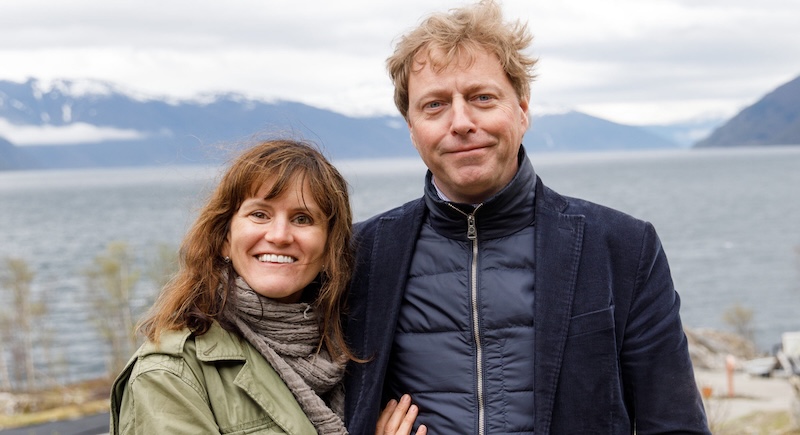
Amy Novogratz and Mike Velings are the founders of Aqua-Spark.
Guest posts on ImpactAlpha represent the opinions of their authors and do not necessarily reflect the views of ImpactAlpha.